











Cleaning healing stones – How to do it right
Cleaning Healing Stones – Why It's Important and How to Do It Correctly

Cleaning healing stones means freeing a stone from accumulated energies and restoring its natural radiance. Whether you're bringing a new crystal home or regularly caring for an old companion, cleaning is the first and most important step in stone care. In this article, you'll learn which methods really work, which stones you should never put in water, and how often you should clean your crystals.
At Crystal Paradise, we have been guiding our customers through the world of minerals for many years – from our own experience, we know: those who regularly care for their stones enjoy them more in the long term. Both on a material and an energetic level.
Why you should clean healing stones
Crystals and healing stones consist of mineral structures that have grown in the earth over millions of years. The Mohs hardness – a scale from 1 to 10, developed by Friedrich Mohs in 1812 – describes the scratch hardness of a mineral. Among other things, it determines how sensitive a stone is to water, salt, or heat. Selenite, for example, has a Mohs hardness of 2, amethyst 7, and diamond is at the top with a Mohs hardness of 10.
In crystal healing, it is believed that crystals absorb and store energies from their surroundings. An amethyst worn daily is said, according to traditional belief, to become "saturated" over time. Regular cleaning is supposed to release these accumulated impressions – similar to rinsing out a sponge.
From a purely practical point of view, cleaning also makes sense: skin oil, dust, and residues can dull the surface of a polished stone. A freshly cleaned rose quartz or labradorite simply shines more beautifully.
You can learn more about choosing the right stones for you in our Healing Stones Lexicon for Beginners.
Overview of the most important methods for cleaning healing stones
1. Cleaning with running water
The best-known method is rinsing under running, lukewarm water. The water temperature should not exceed 30 °C – too strong temperature fluctuations can damage sensitive stones. Hold the stone under the water for 1 to 3 minutes. Visualize everything old flowing away with the water.
Important: This method is only suitable for water-resistant stones with a Mohs hardness of at least 6. Stones such as celestite, selenite, pyrite, or malachite should never come into contact with water.
2. Cleaning with earth
Burying in earth is one of the oldest known cleaning methods. Place the stone in natural garden soil for 24 to 48 hours – not in potting soil with artificial fertilizer. According to tradition, the earth absorbs energetic residues and at the same time gives the stone new earth energy. Afterwards, rinse the stone carefully, provided it is water-resistant.
3. Cleaning with smoke (smudging)
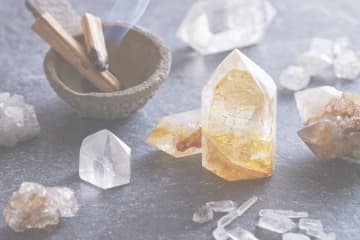
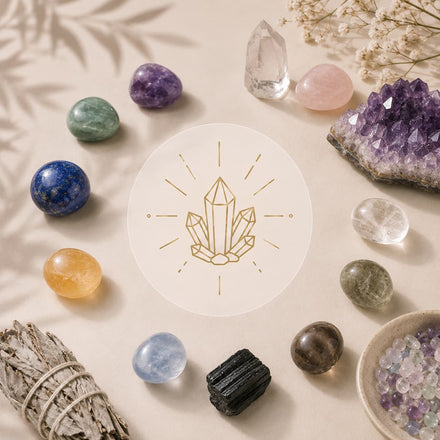
Smudging with white sage, Palo Santo, or frankincense is a gentle method suitable for all types of stones. Hold the stone in the smoke for 20 to 30 seconds. This method is particularly suitable for sensitive stones such as selenite (Mohs hardness: 2) or calcite.
4. Cleaning with light – moonlight or diffuse sunlight
Placing stones in moonlight – preferably during a full moon for 6 to 8 hours – is considered a particularly gentle method. Direct sunlight, however, should be used with caution: stones like amethyst, rose quartz, or fluorite can lose their color with prolonged direct sun exposure. Diffuse daylight for 2 to 4 hours is a safe alternative.
5. Cleaning with sound (singing bowls)
Metal or crystal singing bowls produce vibrations that, according to tradition, are supposed to release energetic blockages. This method is suitable for all stones – even fragile ones. Simply place the stone in or next to the singing bowl and make it sing for 3 to 5 minutes.
6. Cleaning with other stones
Certain stones are considered self-cleaning and can energetically clear other crystals. Traditionally, these include: kyanite, selenite plates, and clear quartz. Simply place the stone to be cleaned on a larger selenite plate or in a clear quartz geode for 12 to 24 hours.
Which stones should not be cleaned with water
This is one of the most common questions – and one of the most important. Some minerals react chemically with water or dissolve. Mineralogical basics for individual stone types can be found, for example, in the extensive database of Mineralienatlas Mindat.org, one of the world's largest mineralogical reference sources. Here is a clear list of stones that you should never put in water:
- Selenite (Mohs hardness: 2) – dissolves with prolonged water contact
- Pyrite – oxidizes and can form sulfuric acid
- Malachite – releases toxic copper compounds upon contact with water
- Celestite / Celestin – very soft and water-soluble
- Calcite – sensitive to acids and water
- Turquoise – porous surface, absorbs water
- Angelite – can change with water contact
- Azurite – contains copper compounds that are water-sensitive
You can find a detailed cleaning guide for sensitive celestite in our article Cleaning, Charging & Proper Care for Celestite.
Practical tips for cleaning healing stones – How to do it correctly

From our years of experience with hundreds of types of stones, we recommend the following basic rules:
- Identify the stone before cleaning: Know your stone and its Mohs hardness. If in doubt, choose a water-free method.
- Regularity is more important than intensity: A short weekly cleaning is better than an elaborate cleaning every 3 months.
- Do not use aggressive cleaning agents: Neither dish soap nor alcohol or chemical cleaners – they can permanently damage the surface.
- Charge after cleaning: Cleaning and charging go together. A cleaned stone can then unfold its energy anew.
- Always clean freshly purchased stones first: Every stone passes through many hands before it reaches you – transport, storage, exhibition. A first cleaning is a beautiful ritual of taking possession.
What comes after cleaning is just as important: charging. You can learn all about it in our collection Charging Healing Stones – How to Activate the Full Power of Your Crystals.
How often should you clean healing stones?
There is no universally applicable rule. The frequency depends on the use:
- Stones worn daily (e.g., as a pendant or bracelet): clean at least once a week
- Stones in living spaces (decoration, Feng Shui): every 2 to 4 weeks
- Meditation stones: after each intensive session
- New stones: immediately after receipt
- Stones after stressful situations: immediately afterwards
If you also use healing stones for meditation, feel free to read our article Choosing the right healing stones for meditation – there you will find suitable recommendations for various practical situations.
Special cleaning instructions for popular stones
Cleaning Amethyst
Amethyst has a Mohs hardness of 7 and is well water-resistant. Rinsing briefly under lukewarm water for 2 minutes is perfectly fine. However, avoid direct sunlight for longer than 30 minutes – the purple iron-manganese pigment can fade. Moonlight or smudging are the gentlest alternatives. More about this in our article Cleaning & Charging Amethyst.
Cleaning Rose Quartz
Rose quartz (Mohs hardness: 7) is robust and tolerates brief rinsing without problems. Moonlight is also excellent – overnight for 6 to 8 hours. Direct sunlight for several hours can fade the delicate pink color.
Cleaning Labradorite
Labradorite has a Mohs hardness of 6 to 6.5. Brief rinsing is possible, but saltwater should be avoided. Particularly gentle methods include smudging or singing bowls. You can find everything else in our article Cleaning, Charging & Caring for Labradorite.
Frequently Asked Questions

How often do I need to clean healing stones?
This depends heavily on the usage. Stones worn daily should be cleaned at least once a week. Decorative stones in living spaces are sufficient with cleaning every 2 to 4 weeks. After intensive use or stressful situations, immediate cleaning is recommended.
Can I clean all healing stones with water?
No. Stones with a Mohs hardness below 6 or certain chemical properties – such as selenite, pyrite, malachite, or celestite – should never come into contact with water. In these cases, choose a water-free method like smudging, moonlight, or singing bowls.
Do I also need to charge healing stones after cleaning?
Yes – cleaning and charging complement each other. Cleaning removes old energy patterns, while charging gives the stone new energy and alignment. Full moon nights or placing them on a clear quartz geode for 12 to 24 hours are particularly popular for this.
What is the gentlest method to clean healing stones?
Smudging with white sage, Palo Santo, or frankincense, as well as cleaning with singing bowls, are considered the gentlest methods. Both are suitable for all types of stones – even delicate minerals with low

Written by Christian Neumayer

Leave a comment
This site is protected by hCaptcha and the hCaptcha Privacy Policy and Terms of Service apply.