







Identifying Real Crystals
What indicates natural growth
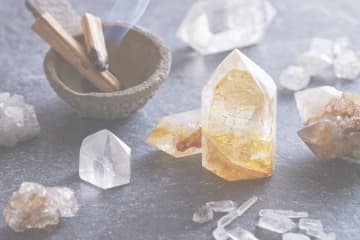
A naturally grown crystal shows its history of formation visibly on the piece: color zones that follow the growth surfaces, inclusions, fine striations, small irregularities. A cultured one is too perfect for that, a dyed one too uniform.
The most frequent question we receive is also the most difficult: Is this stone real? It can't be answered in one sentence, but it can be learned. Because every growth form reveals something about how a crystal originated — and what can be done to it afterwards.
On these pages, you will therefore find both: how a form originates in nature, and how you can distinguish it from something that has been enhanced. Not secret knowledge, but what we ourselves pay attention to when purchasing.
Why do you also mention what you can't identify?
Because security that doesn't exist helps no one. Hydrothermally grown amethyst, for example, often cannot be reliably distinguished from natural amethyst with the naked eye — only a gemological laboratory can provide certainty. We prefer to state this rather than make a promise we cannot keep.
What does "treated" mean to you?
Treated means: naturally grown, but subsequently altered — heated, dyed, irradiated, or coated. This is completely common in trade and not reprehensible. It just needs to be mentioned so you know what you're buying.
Do you have a piece you're unsure about? Write to us – ideally with one photo against the light and one with incident light. We will tell you honestly what we see, and just as honestly where we reach our limits.