








Cleanse, Charge & Care for Labradorite
Cleaning Labradorite: Step by Step to Radiant Labradorescence

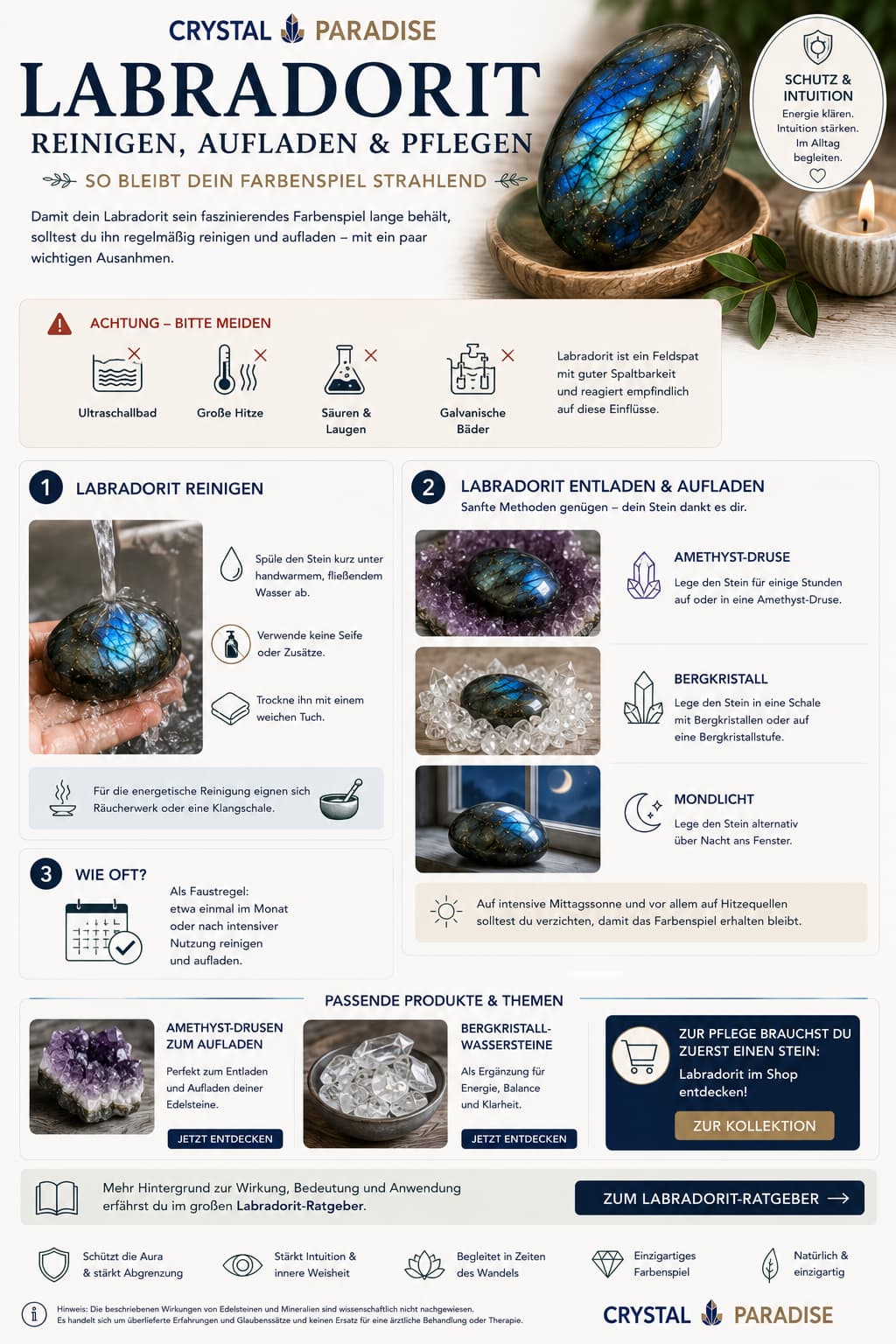
Cleaning labradorite is easier than many think – and at the same time more important than some suspect. The short answer: rinse labradorite under lukewarm, running water (max. 30 °C) preferably, dry it immediately with a soft cloth, and then charge it energetically on an amethyst geode or in moonlight. What to absolutely avoid and which methods we at Crystal Paradise recommend after years of experience working with minerals, you'll learn in this detailed care guide.
What Is Labradorite? A Brief Mineralogical Classification
Labradorite belongs to the feldspar group – more specifically to the plagioclase series. Its chemical composition is a mixed crystal of albite and anorthite. The Mohs hardness is between 6 and 6.5. This makes it robust enough for everyday use, but not insensitive to chemicals or impacts.
Its best-known feature is labradorescence: a metallic play of color in blue, green, gold, and sometimes violet. It results from the refraction of light on fine layered structures inside the stone. This optical phenomenon is described in mineralogy as adularescence or labradorescence and is scientifically documented on Mindat.org.
The main sources are Labrador (Canada), Madagascar, and Finland. A particularly color-intense variety comes from Finland: spectrolite. The stone was first described in 1770 on the Labrador Peninsula and named after it.
The feldspar structure has good cleavage in two directions. This is the reason why mechanical cleaning methods or strong temperature changes can damage this stone.
You can learn more about origin, symbolism, and traditional properties in the detailed labradorite guide.
Cleaning Labradorite: Physical Cleaning Step by Step
Physical cleaning removes dust, skin oils, and residue. It's the foundation for everything else.
The Right Method
- Prepare the water: Use lukewarm, running water. The temperature should not exceed 30 °C.
- Briefly rinse the stone: Hold the labradorite under the running water for about 20 to 30 seconds.
- No soap or cleaning agents: Additives can penetrate the fine structures and permanently cloud the labradorescence.
- Dry immediately: Gently pat dry with a soft, lint-free cloth – for example, microfiber – rather than rubbing.
- Avoid air drying: Water droplets leave limescale marks that can affect the play of color.
What to Absolutely Avoid When Cleaning Labradorite
In our showroom in Feldkirchen bei München, customers regularly ask us about the most common mistakes. Here are the most important ones:
- Ultrasonic bath: The vibrations can cause cracks along the cleavage planes.
- Steam cleaner: High heat above 60 °C permanently damages the structure.
- Acids and bases: Even mild cleaners like vinegar attack the surface.
- Galvanic baths: Absolutely unsuitable for labradorite jewelry.
- Abrasive sponges or brushes: Scratch the polished surface and reduce shine.
- Direct midday sun: Intense UV radiation can cause the colors to fade over time.
For further information on safe cleaning methods for all healing stones, see our article Cleaning and Charging Crystals Properly.
Energetic Cleansing: How to Discharge Your Labradorite
Besides physical cleaning, there is energetic cleansing. In crystal healing lore, stones are thought to absorb energies over time and should occasionally be discharged. Whether you believe this or not – it doesn't hurt, and many methods gently care for the stone at the same time.
Smoke Cleansing
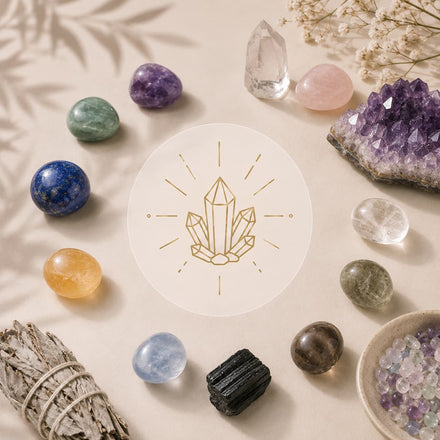
White sage, palo santo, or frankincense have been used for centuries to cleanse rooms and objects. Pass the smoke around the stone for about 1 to 2 minutes. A gentle method with no physical risk at all.
Singing Bowl
According to tradition, the vibrations of a singing bowl are said to help release accumulated energies. Place the labradorite next to or inside a singing bowl and let the bowl sound for 2 to 3 minutes.
Earth Method
Bury the stone for 24 hours in the earth – either in the garden or in a pot with untreated soil. Then rinse gently and dry.
Charging Labradorite: The Best Methods

Cleaning is followed by charging. According to traditional practice, the goal is to give the stone new energy.
Amethyst Geode
One of the most effective and at the same time gentlest methods. Place the labradorite on an amethyst geode for at least 4 to 8 hours. According to traditional crystal healing, the geode acts both as a discharger and a charger. In our shop you'll find a curated selection of agatized amethysts from Uruguay – particularly powerful specimens that we hand-select ourselves.
Clear Quartz
In crystal healing, clear quartz is considered a universal amplifier. Place the labradorite in a bowl with clear quartz points or on a clear quartz specimen. Here too: a minimum exposure time of 4 hours is recommended.
Moonlight
Moonlight is the classic charging source – particularly full moon light is traditionally said to cleanse and activate stones. Place the labradorite by the window overnight (approx. 8 hours). Window glass filters UV radiation, making this method suitable for sensitive stones as well.
What to Avoid When Charging
Intense midday sun is not a suitable charging source for labradorite. UV radiation and heat can weaken the play of color over time. Morning or evening sun for a maximum of 30 minutes is unproblematic.
Detailed instructions for all common charging methods can be found in the collection Charging Healing Stones.
How Often Should You Clean and Charge Labradorite?
As a rule of thumb: once a month is a good rhythm for stones worn or used regularly. With intensive use – for example, as a daily piece of jewelry or meditation companion – every 2 weeks is also fine. Stones that are only displayed decoratively can be cleaned less often – about every 3 months.
There are also situational occasions for an extraordinary cleaning:
- After emotionally stressful periods or intense conversations
- After purchasing a new stone (to remove energy from previous owners or transport)
- After a long trip or a move
- When the stone appears dull or the play of color diminishes
Caring for Labradorite: Long-Term Enjoyment of the Stone
Storage
Labradorite should be stored separately from other stones. Its Mohs hardness of 6 to 6.5 makes it susceptible to scratches from harder minerals such as quartz (hardness 7). A soft cloth or a padded box is ideal. Those who collect several pieces will find particularly decorative specimens in our collection Labradorite Freeforms, which also look wonderful displayed individually.
Wearing and Using
As a gemstone, labradorite is robust enough for everyday use. However, it should be removed during sports, housecleaning with cleaning agents, or bathing. Perfume and skin creams can dull the surface over time. The mineralogical properties of feldspar minerals, which include labradorite, are documented in detail at the Mineralienatlas – one of the leading German-language reference databases for minerals.
Patina and Polishing
If the surface appears somewhat dull over time, a labradorite can be re-polished by a specialist. Unlike soft stones, this is quite possible with a stone of hardness 6 to 6.5. We're also happy to advise you in person in our showroom in Feldkirchen bei München.
Browse our collection: all labradorite stones at a glance – from raw specimens to polished freeforms.
Frequently Asked Questions

Can I clean labradorite in water?
Yes – but with limitations. A brief rinse under lukewarm water (up to max. 30 °C) is fine. However, labradorite should not be left in water for a prolonged period, as feldspar minerals can react chemically with extended water contact. Salt water is also unsuitable, as salt can attack the surface.
How do I know if my labradorite needs cleaning?
A clear sign is a dull or hazy appearance even though the stone is dry. If the play of color seems less intense than usual, cleaning is also advisable. Additionally, an initial cleaning after purchase is always recommended to remove residue from transport and storage.
Which charging stones pair best with labradorite?
Amethyst geodes and clear quartz are considered particularly suitable in crystal healing. Both minerals have a Mohs hardness of 7, making them harder than labradorite – so when in direct contact, make sure to use a soft base or sufficient distance so the labradorite's surface doesn't get scratched.
Can I charge labradorite together with other stones?
In principle, yes. It's important that the stones don't touch and scratch each other. An amethyst bed or a clear quartz bowl offers enough space for several stones at once. We recommend storing each type of stone separately and allowing sufficient distance during charging.
How long does the effect of a charge last?
In traditional crystal practice, it is assumed to be about two to four weeks – an experiential estimate without scientific evidence. Those who wear their labradorite daily tend, based on experience, to charge it more often than someone whose stone sits decoratively on a shelf. A practical guideline rather than a fixed schedule: charge the stone when you happen to be holding it and want to give it your attention. The mindful moment is the real benefit.

Written by Christian Neumayer

Leave a comment
This site is protected by hCaptcha and the hCaptcha Privacy Policy and Terms of Service apply.