







Buy Antimonite – Stibnite as a fascinating crystal for collectors and healing applications
Buy Antimonite – What You Should Know About Stibnite

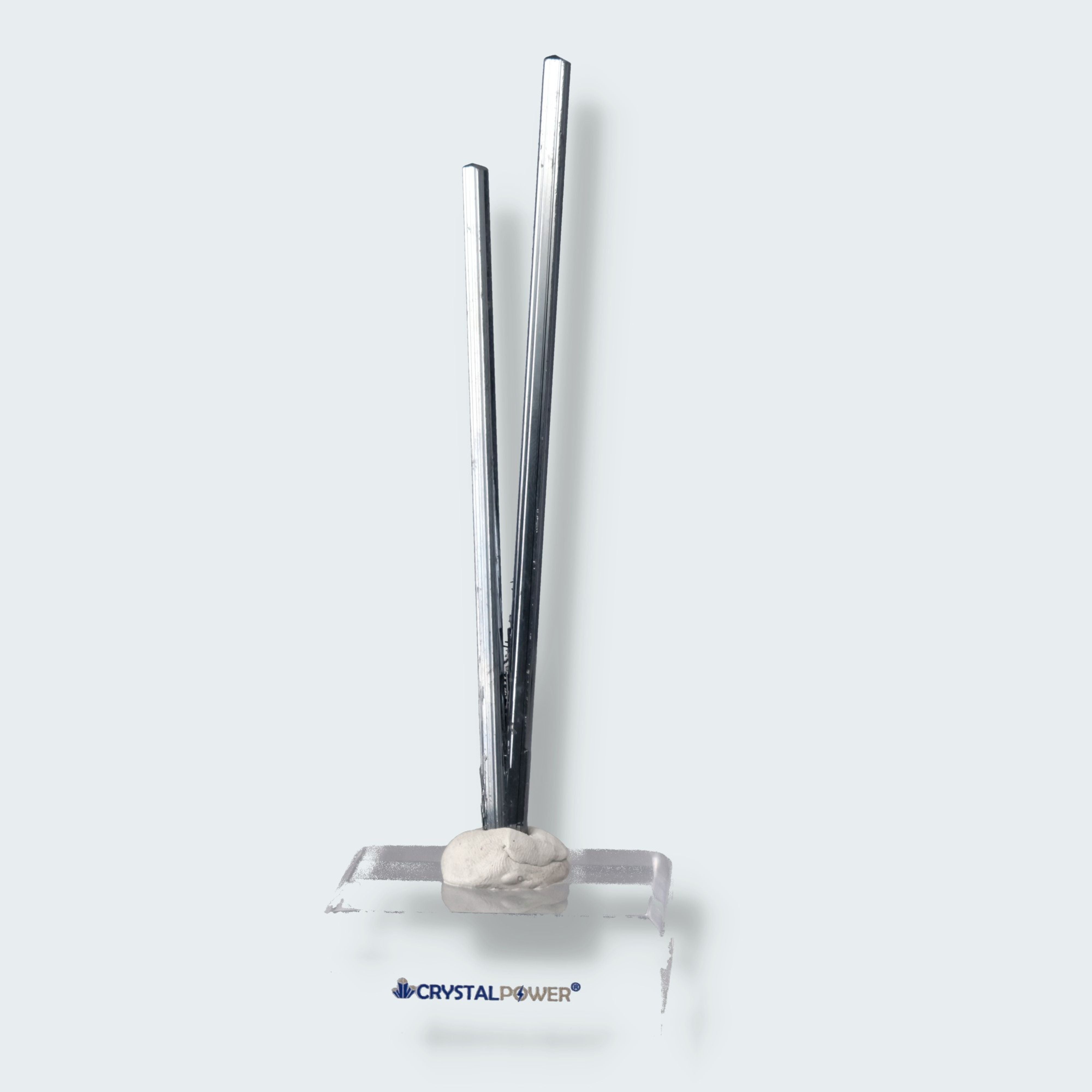
Buy Antimonite – but what exactly is behind this fascinating mineral? Antimonite, scientifically known as Stibnite (Sb₂S₃), is an antimony sulfide mineral with one of the most spectacular crystal forms in the mineral world. The long, silver-gray prismatic crystals with metallic luster and often curved or striated growth make Antimonite an absolute highlight in any collection. As one of the most important antimony ores, it is mined worldwide – and as a collector's piece it has been sought after for centuries. In this article you'll learn everything you need to know before buying: mineralogical facts, spiritual meaning, care instructions, and what really matters when buying.
Mineralogical Classification: What Exactly Is Antimonite (Stibnite)?
Antimonite belongs to the sulfide group of minerals. Its chemical composition is Sb₂S₃ – antimony(III) sulfide. The mineral crystallizes in the orthorhombic crystal system and forms characteristic, columnar to needle-shaped crystals. According to the mineralogical reference database Mindat.org, Stibnite is among the most sought-after collector minerals worldwide.
The Most Important Mineralogical Data at a Glance
- Chemical formula: Sb₂S₃ (antimony(III) sulfide)
- Crystal system: Orthorhombic
- Mohs hardness: 2 – making Antimonite one of the very soft minerals
- Density: approx. 4.6 g/cm³ – unusually heavy for its size
- Color: Lead-gray to black, with strong metallic luster
- Streak color: Gray to blackish
- Melting point: approx. 550 °C
- Cleavage: Perfect in one direction
Particularly striking is the pronounced flexibility of the thin crystal needles. Stibnite crystals can reach lengths of over 30 cm – specimens of this size are true rarities and command high prices on the collector market. The most common trade pieces range between 5 and 15 cm in length.
The Most Important Localities Worldwide
Antimonite is found on every continent. The most significant deposits are located in:
- China – the world's largest producer, especially in Hunan Province
- Japan – classic, often very aesthetic specimens from the Shikoku region
- Romania – historic deposits, known since the 18th century
- Bolivia and Peru – rich South American deposits
- Mexico – high-quality collector specimens, especially from the state of San Luis Potosí
- Germany – historic deposits in Saxony and the Harz, barely active today
Chinese specimens dominate the market today. Japanese and Mexican pieces, on the other hand, are considered especially high-quality collector specimens with clear, well-formed crystal faces.
History and Cultural Significance of Antimonite
Antimonite has a history spanning thousands of years. Already in ancient Egypt, it was used more than 5,000 years ago as a raw material for the legendary eye makeup "kohl." The finely ground black substance served both cosmetic purposes and protection from the glaring desert sun.
In the 17th and 18th centuries, antimony was considered an important element of alchemy. The Swiss physician and natural scientist Paracelsus (1493–1541) studied antimony compounds intensively. The work "Triumphal Chariot of Antimony" by Basilius Valentinus, published in 1604, is among the most famous alchemical writings of all time. As documented by the Mineralienatlas, Antimonite was already known as an ore in Germany during the Middle Ages and was mined in historic mining regions such as the Ore Mountains (Erzgebirge).
Today, Antimonite is mined industrially as the most important antimony ore. Antimony is found in flame retardants, batteries, and alloys. As a collector's piece, however, Stibnite is sought after worldwide for its extraordinary aesthetics.
Spiritual Meaning and Energetic Properties

Beyond its scientific fascination, Antimonite holds its own symbolic depth in holistic stone work. It is important to emphasize that these properties represent spiritual traditions without scientific evidence.
In stone lore, Antimonite is traditionally described as a stone of transformation and clarification. It is traditionally said to support inner clarity and focus. According to tradition, it is said to help release old patterns and open new perspectives.
Spiritually, Antimonite is regarded in some traditions as a stone associated with the third eye. According to traditional practice, it is said to sharpen intuition and inner vision. For those who meditate, it is sometimes recommended as a companion for deep introspection – for instance together with other powerful stones. Anyone interested in the best companions for meditation will find valuable guidance in the article The Best Crystals for Meditation at Home.
The metallic-silver appearance of Stibnite is associated in many spiritual traditions with lunar energy, femininity, and reflection. This makes it an aesthetically and symbolically exceptional companion.
Buy Antimonite – What to Look for When Buying
Anyone wanting to buy Antimonite faces some important decisions. Quality, origin, and authenticity play a central role. From our own experience working with mineral collectors and years of working with collector's pieces, we at Crystal Paradise know: the most common mistakes when buying Antimonite are unclear origin information and missing information about specimen quality. That's why in our shop we place great importance on complete transparency for every piece.
Quality Criteria for Antimonite Specimens
When buying an Antimonite specimen, you should pay attention to the following points:
- Crystal formation: The clearer and more complete the individual needles or prisms are formed, the more valuable the specimen.
- Luster: Fresh, metallic luster is a sign of undamaged surfaces. Dull or oxidized spots diminish the value.
- Origin: Specimens from Japan or Mexico are considered particularly high-quality. Chinese pieces vary greatly in quality.
- Size: Specimens from 10 cm in length are interesting for serious collectors. Sample pieces over 20 cm are rare.
- Integrity: Breaks or glue repairs significantly lower the collector's value. Pay attention to transparency from the seller.
Properly Caring for Antimonite
With a Mohs hardness of only 2, Antimonite is very delicate. These care instructions must be followed:
- No water: Antimonite should never be cleaned with water. Moisture can cause the surface to tarnish.
- Dry dusting: Use a soft brush or a dry microfiber cloth.
- Do not place in the sun: Direct sunlight can cause the surface to become dull over time.
- Separate storage: Due to its low hardness, Stibnite scratches easily. Store it separately from other minerals.
- Caution when handling: Antimonite contains antimony, a heavy metal. Wash your hands after touching it. Not suitable for children under 12 years of age.
Learn more about the fascinating world of collector minerals in our blog article Buy Mineral Collector's Pieces Online.
Antimonite Compared to Other Collector Minerals
Antimonite doesn't stand alone as a collector stone. Anyone enthusiastic about rare and visually impressive minerals should also take a look at related pieces.
A particularly fascinating comparison can be made with Crocoite: like Antimonite, Crocoite captivates with rare crystal forms and intense aesthetics. While Stibnite fascinates with its metallic silver-gray, Crocoite impresses with flaming orange-red.
For collectors who prefer classic transparency and light refraction, clear quartz points are an ideal complement to an Antimonite specimen. The contrast between the dark metallic luster of Stibnite and the clear white of clear quartz is aesthetically extremely effective.
In the field of crystal decor, Antimonite can be used excellently as a statement piece. As a centerpiece on a bookshelf or sideboard, a well-formed Stibnite specimen is guaranteed to catch the eye. For further inspiration on crystal decor, we recommend the article Buy Crystal Decor: Elegance for Your Home.
Frequently Asked Questions

What Is the Difference Between Antimonite and Stibnite?
Antimonite and Stibnite refer to the same mineral – antimony(III) sulfide with the chemical formula Sb₂S₃. Stibnite is the internationally used scientific name, derived from the Latin "stibium" (antimony). Antimonite is the alternative term frequently used in German-speaking countries. Both names refer to one and the same mineral.
Is It Safe to Buy Antimonite – Is the Mineral Toxic?
Antimonite contains antimony, a heavy metal that is toxic in high quantities. As a collector's piece, the mineral is safe under normal handling. Important: wash your hands after touching it, do not touch your mouth or eyes, and keep it out of reach of small children. Displayed as room decoration on a shelf, there is no significant risk. However, the mineral should not come into contact with water or food.
What Quality Grades Exist When Buying Antimonite?
The market roughly distinguishes between museum quality (perfectly formed crystals, no damage, documented origin), collector specimens (well-formed crystals, minor

Written by Christian Neumayer

,%20is%20an%20antimony%20su...)
Leave a comment
This site is protected by hCaptcha and the hCaptcha Privacy Policy and Terms of Service apply.