







Amethyst as Water Stone & Gemstone Water
Amethyst as a Water Stone & Gemstone Water – Everything You Need to Know

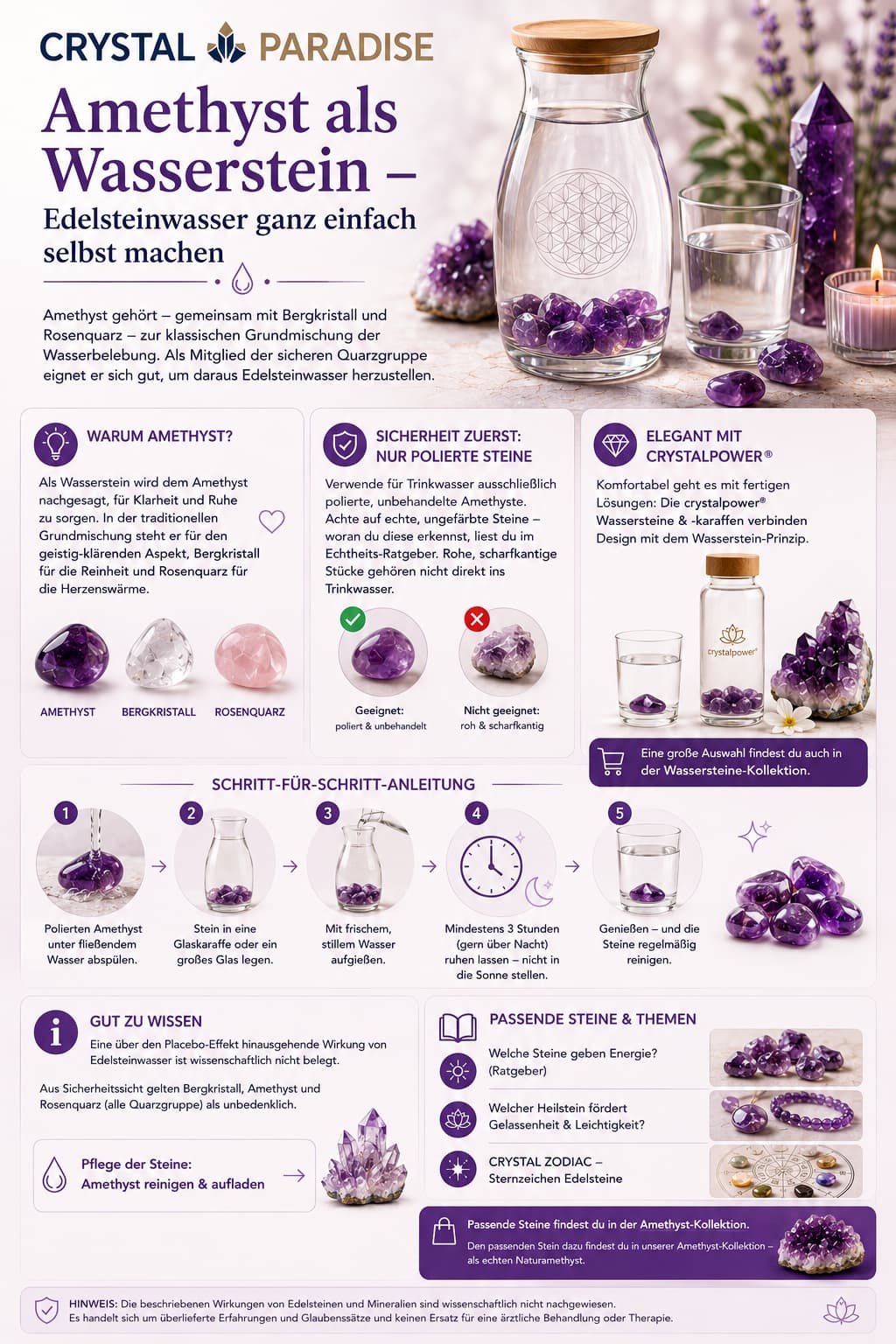
Amethyst as a water stone and for making gemstone water is one of the most popular applications of this violet quartz mineral in the world of holistic wellness. Polished amethyst tumbled stones or special water stones are placed in drinking water – with the goal of enriching the water on a subtle energetic level. Amethyst belongs to the quartz group, has a hardness of 7 on the Mohs scale, and has been regarded for centuries as one of the most significant healing stones in European and Asian tradition. In this article, you will learn how gemstone water with amethyst is prepared, what you should pay attention to when choosing it, and which forms are particularly suitable.
What Is Gemstone Water and How Does the Application Work?
Gemstone water is drinking water that has been prepared through direct or indirect contact with healing stones. The idea behind it is not new. Already in ancient times, cultures in Europe and Asia used gemstones symbolically in connection with water. Today, water stones are experiencing a renaissance in modern everyday wellness.
Basically, two methods can be distinguished:
- Direct method: The stone lies directly in the water. Only water-resistant stones with a hardness of at least 6 and without soluble mineral components are suitable for this.
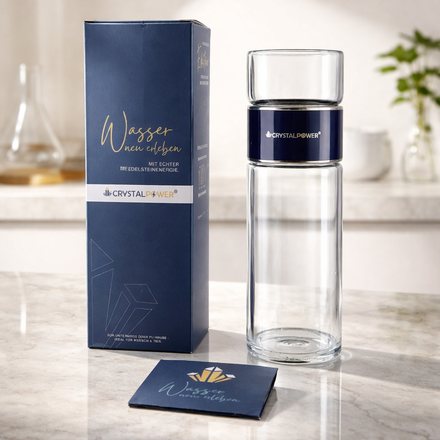
- Indirect method: The stone lies outside the water, e.g., in a glass vessel next to the drinking vessel or in a special double-walled bottle. This method is considered universally safe and suitable for almost any stone.
Amethyst, with its hardness of 7, is considered well suited for the direct method in water stone practice. It is chemically stable and does not release harmful substances into the water – provided it is untreated and of verified quality. Mineralogically, amethyst consists of silicon dioxide (SiO₂), which is considered chemically very inert. Further mineralogical background information can be found, for example, at the Mindat Mineral Atlas, an internationally recognized mineralogical reference database.
Amethyst as a Water Stone & Gemstone Water – Properties and Traditions
In traditional stone healing lore, amethyst is described as one of the most powerful stones for inner calm and clarity. It is often used for evening rituals, meditations, or as a conscious drinking ritual.
Specifically, amethyst gemstone water is said to embody the following qualities in stone healing lore:
- Traditionally associated with inner balance and mental clarity
- Regarded in holistic tradition as a companion during restless moments and hectic times
- Said, according to tradition, to sharpen awareness and foster intuition
- Associated with the crown chakra (7th chakra) and the third eye chakra (6th chakra)
- Handed down as a protective stone in many spiritual traditions for over 2,000 years
These descriptions come from spiritual and folkloric sources. They do not replace medical advice and have no scientific evidence. If you would like to explore the spiritual aspects of amethyst in more depth, you will find detailed information in our article Amethyst for Sleep, Meditation & Chakra.
Which Amethyst Forms Are Suitable as Water Stones?
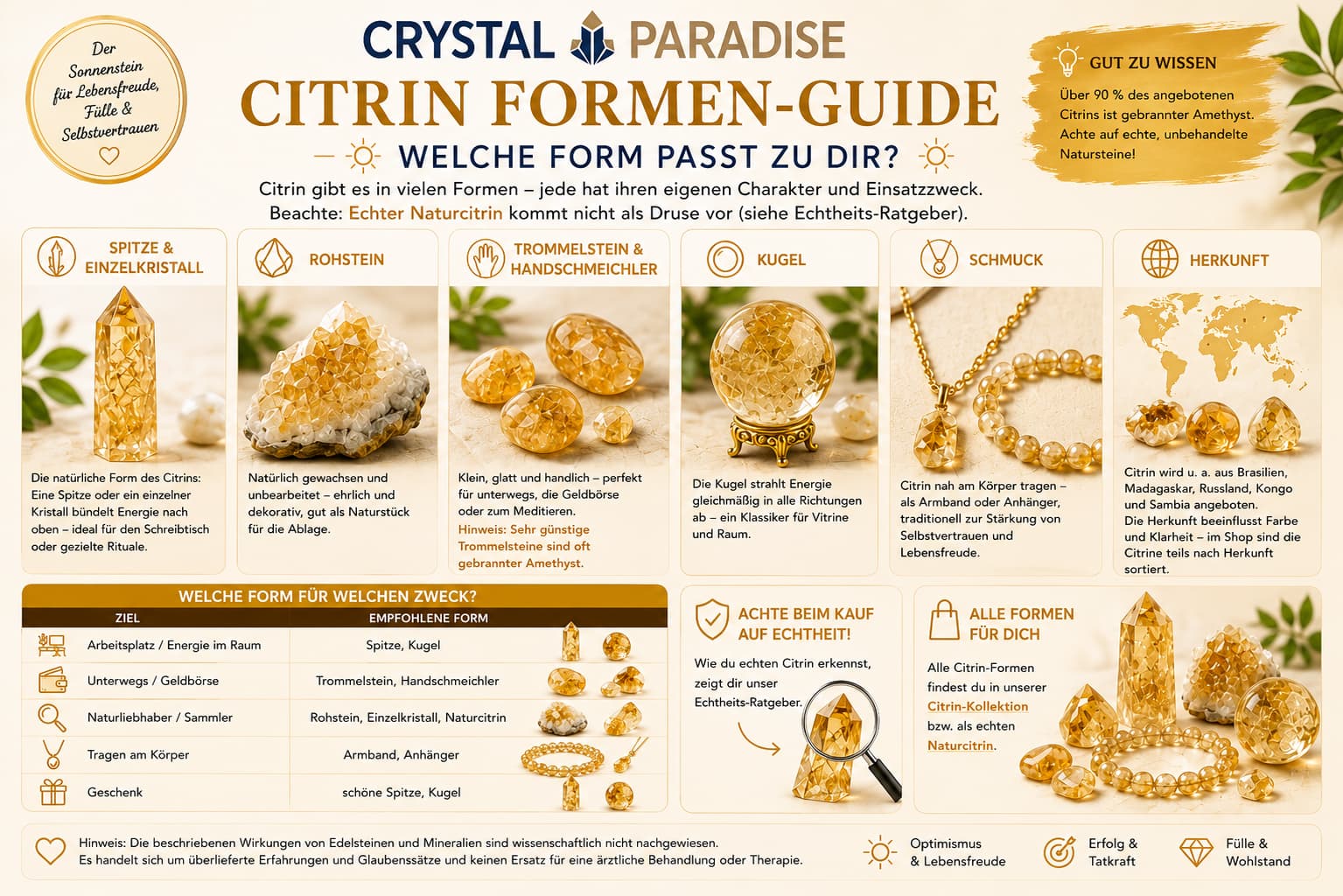
Amethyst Tumbled Stones
The ideal form for gemstone water is amethyst tumbled stones. They are rounded and polished, have no sharp edges, and are easy to clean. Their compact shape makes them practical for glass carafes, drinking bottles, and water jugs. The typical size ranges between 2 and 4 cm.
Amethyst Points and Spheres
Polished amethyst points and spheres are also used as water stones – especially in larger glass vessels or carafes. They also look decorative on the dining table or desk.
Raw Amethyst Pieces
Raw amethysts are less suitable for the direct water method, as porous surfaces are harder to clean. However, they are very well suited for the indirect method or as an energy stone next to the glass.
Would you like to compare different forms? Our Amethyst Forms Guide gives you a detailed overview of all common amethyst forms and their applications.
How to Prepare Amethyst Gemstone Water Correctly – Step by Step

Preparation is simple and requires no special knowledge. Based on years of experience working with water stones, we recommend the following procedure in our shop:
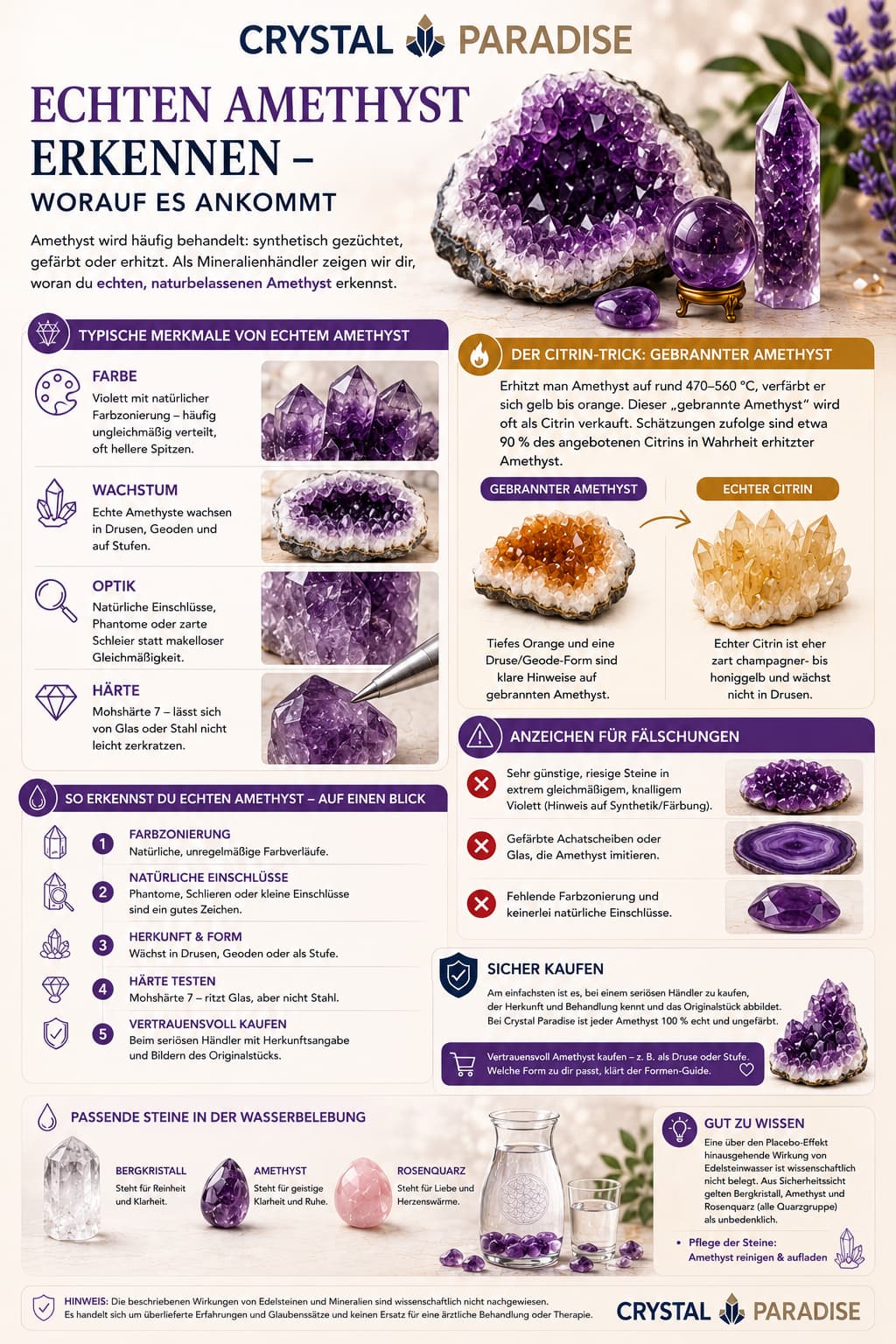
- Check the stone: Only use genuine, untreated amethyst. Dyed or coated stones are not suitable. We explain how to recognize genuine amethyst in our article Recognizing Genuine Amethyst.
- Clean the stone: Rinse the amethyst thoroughly under lukewarm water before first use. Do not use water above 40 °C, as strong heat can affect the color.
- Placing: Place 2 to 4 tumbled stones (depending on vessel size) in a clean glass carafe or glass vessel.
- Filling with water: Fill with still, high-quality drinking water. Good-quality tap water is also possible.
- Steeping time: Let the water steep for at least 4 to 8 hours – overnight is ideal. Some users prefer a steeping time of up to 12 hours.
- Storage: Store the finished gemstone water in the refrigerator. Use it within 24 hours.
Safety and Quality of the Amethyst Water Stone
Not every amethyst is automatically suitable for water applications. Be sure to pay attention to the following points:
- Authenticity: Only genuine, natural amethyst without treatment or coating is suitable.
- Hardness: Amethyst has a hardness of 7 on the Mohs scale – it is chemically stable and water-resistant.
- Surface: Polished stones are easier to clean and more hygienic than raw specimens.
- Vessel material: Use only glass or stainless steel – never plastic, which can release plasticizers.
- Regular cleaning: Clean the stones thoroughly under running water every 3 to 4 days.
When preparing beverages with stones, hygiene and safe materials should always be a priority. General information on food safety can be found on the official website of the German Federal Institute for Risk Assessment (BfR).
Please note: Gemstone water is not a substitute for medical treatment. It is a spiritual-ritual practice without clinical proof of effectiveness.
Amethyst as a Water Stone Compared to Other Gemstones
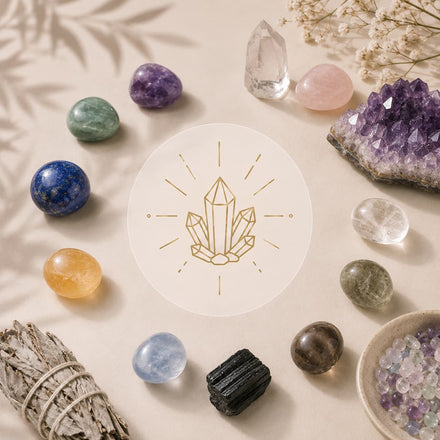
Amethyst is not the only stone used for gemstone water. Clear quartz is considered a classic, neutral water stone. Rose quartz is traditionally associated with opening the heart and gentleness. Citrine is said, according to tradition, to bring energy and lightness.
If you would like to explore gemstone water with clear quartz, you will find our selection at Clear Quartz Water Stones for Sale. Interesting comparisons are also offered by our articles on Rose Quartz as a Water Stone & Gemstone Water and Citrine as a Water Stone & Gemstone Water.
Each stone carries its own symbolism. The choice is ultimately very personal – and is allowed to be a joyful one.
Amethyst as a Water Stone & Gemstone Water in Practice – Our Recommendation
From our own experience, we at Crystal Paradise know that the quality of the source stone is crucial. We hand-select our amethyst tumbled stones according to strict criteria: transparent origin information, natural coloring, and flawless surface quality. Amethysts for water applications preferably come from Brazil and Uruguay – regions that have been known for exceptional amethyst quality for decades.
Anyone who would like to experience the application in a stylish ritual vessel can discover our crystalpower® water stone bottles. They were specially developed for safe gemstone water preparation and combine design with function. Also visit us at our showroom in Feldkirchen near Munich – we will personally advise you in choosing the right water stone for your needs.
Frequently Asked Questions

Is amethyst really safe as a water stone?
Yes – genuine, untreated amethyst with a hardness of 7 is chemically stable. It does not release harmful substances into the water. Important: use only natural, uncoated stones and clean them regularly. Buy amethyst water stones only from trustworthy sellers who disclose authenticity.
How long does amethyst need to steep in water for gemstone water to form?
A steeping time of at least 4 hours is recommended. 8 to 12 hours is optimal – many users therefore prepare the gemstone water overnight. The finished water should be used within 24 hours and stored in the refrigerator.
Which amethyst form is best suited as a water stone?
Polished amethyst tumbled stones are the most practical and hygienic choice. Their smooth surface is easy to clean. Polished spheres and points are also suitable. Raw, unpolished amethysts are less recommended for the direct water method but can be used for the indirect method.
Can I drink amethyst gemstone water daily?
Many users use gemstone water as a daily ritual. There are no known risks when using genu

Leave a comment
This site is protected by hCaptcha and the hCaptcha Privacy Policy and Terms of Service apply.