







Obsidian - created by volcanoes
Obsidian Stone – Nature's Volcanic Glass

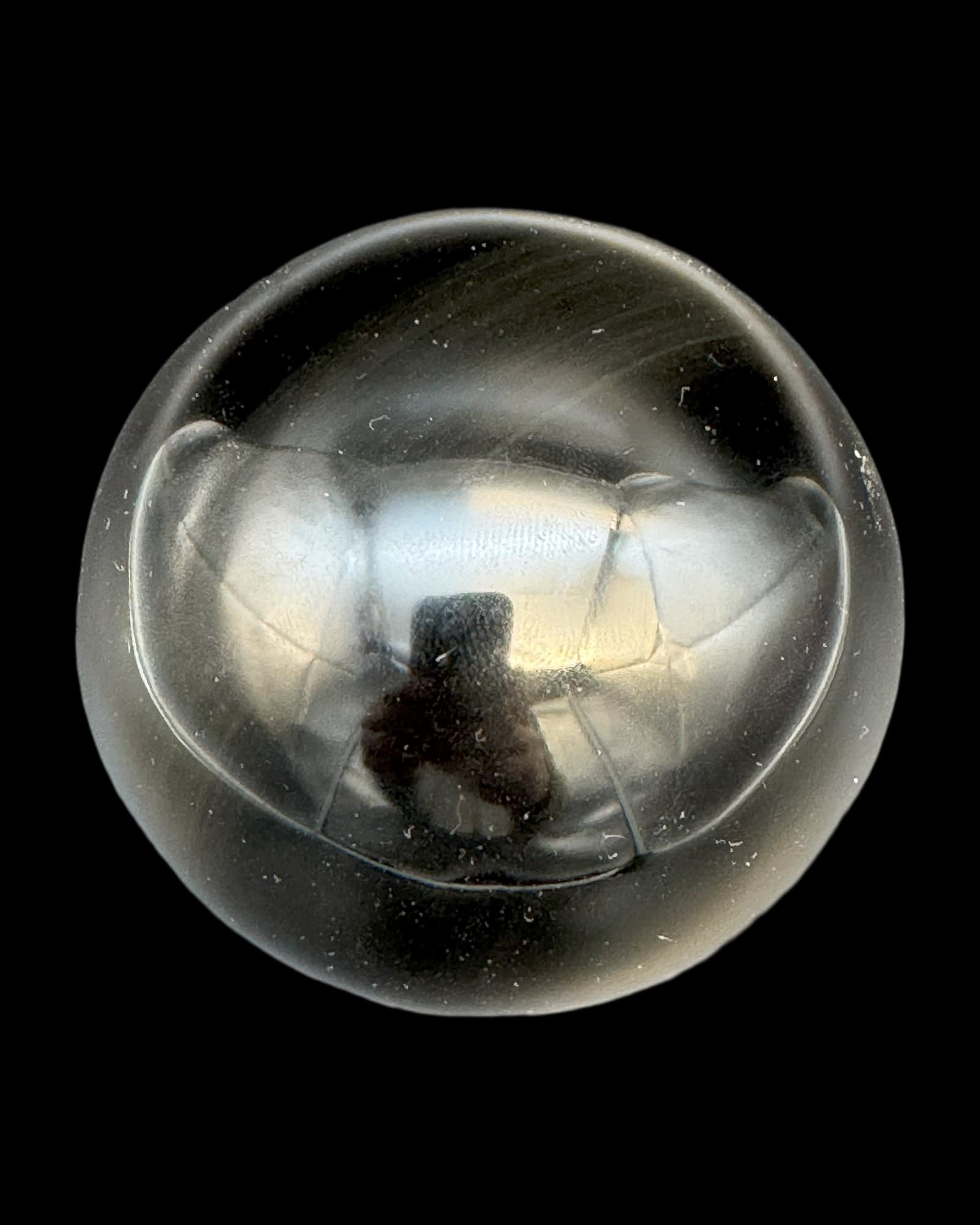
The Obsidian Stone is no ordinary mineral – it is solidified volcanic glass. More precisely, obsidian forms when silicon-rich lava cools so quickly that no crystal structures can grow. The result is a glassy, amorphous rock with a silicon dioxide content of up to 75%. Its deep black color, conchoidal fracture, and glassy luster make it unmistakable. Obsidian has fascinated people for millennia – as a tool, as jewelry, and as a spiritual companion. In this article, you'll learn everything about the origin, properties, and traditional meanings of this extraordinary volcanic glass.
Formation and Mineralogical Classification of the Obsidian Stone
Strictly speaking, obsidian does not belong to the minerals, but to the rocks – more precisely, to the volcanic glasses. It is classified within the rhyolite rock class. Its formation is closely tied to active volcanic regions.
When lava with a high silica content reaches the Earth's surface and cools within a few hours to days, it solidifies in a glassy form. Ionic lattices have no time to form. This creates an amorphous solid with a conchoidal fracture and sharp edges. The Mindat.org mineral database lists obsidian among the volcanic glasses with a detailed mineralogical description.
Physical Properties
- Mohs hardness: 5 to 5.5 – relatively soft for a rock
- Density: approx. 2.4 g/cm³
- Fracture: conchoidal and extremely sharp – obsidian blades were sharper than early metal blades
- Color: mostly deep black, rarely mahogany-colored, mottled, or with white snowflake inclusions
- Luster: glassy to silky
- Chemical composition: predominantly SiO₂ (approx. 70–75%), with proportions of Al₂O₃, Fe₂O₃, and other oxides
Stone Age cultures already used the exceptionally sharp fracture edges over 10,000 years ago. Archaeological finds document the use of obsidian as knives, arrowheads, and scrapers on multiple continents simultaneously.
Regions of Origin Worldwide
Obsidian is found wherever volcanic activity exists or existed. The most significant deposits are:
- Mexico and Central America: The Aztecs and Maya used obsidian for ritual objects and tools. The site of Teotihuacán was an important trading center.
- Iceland: Intense volcanic activity yields high-quality black obsidian.
- USA (Oregon, Idaho): Significant deposits exist in the Snake River region and around Obsidian Cliff in Yellowstone National Park.
- Turkey and Armenia: One of the oldest trading regions – finds date back to the 7th millennium BCE.
- Ethiopia and Kenya: The East African Rift as a volcanically active zone with high-quality deposits.
- Italy (Lipari Islands): Already traded across the Mediterranean in the Neolithic period.
Each deposit differs slightly in its mineral content. With modern analytical methods, the exact origin of an obsidian piece can be determined. This is fascinating for archaeologists and collectors alike. The Smithsonian Magazine describes impressively how scientists have used obsidian origin analysis to reconstruct ancient trade networks.
Varieties of the Obsidian Stone
Not all obsidian is the same. Depending on cooling conditions and mineral additions, optically very different varieties emerge.
Black Obsidian
The most common form. The deep black color results from finely distributed magnetite crystals. It appears massive, noble, and powerful.
Snowflake Obsidian
White to gray cristobalite inclusions create a pattern like snowflakes on the black base mass. Especially popular in the Snowflake Obsidian Collection at Crystal Paradise. This variety looks ornamental and is ideal as jewelry or a collector's piece.
Mahogany Obsidian
Reddish-brown to mahogany-colored streaks form due to hematite or limonite inclusions. The warm coloring makes it a popular design element in jewelry making.
Rainbow Obsidian
Under certain lighting conditions, metallic, iridescent colors shimmer across the surface. This is caused by thin layers of magnetite nanocrystals that refract light.
Gold and Silver Sheen Obsidian
A similar mechanism as with rainbow obsidian – here golden or silver reflections are visible. Very rare and correspondingly sought after by collectors.
If you'd like to compare different obsidian varieties directly: In our showroom in Feldkirchen near Munich, many pieces are available to touch and examine. We recommend viewing the pieces under different lighting conditions – especially with rainbow obsidian, light determines everything.
Obsidian in History, Culture, and Spirituality

Significance in Ancient Cultures
Few stones are as deeply rooted in human history as obsidian. In Mesoamerica, it was considered sacred. The Aztecs crafted ceremonial masks, sacrificial knives, and mirrors for shamanic rituals from it. The Aztec god Tezcatlipoca – "Smoking Mirror" – was closely associated with obsidian. Obsidian mirrors served as divination instruments.
In ancient Greece and Rome, obsidian was crafted into jewelry and small sculptures. Pliny the Elder described it around the year 77 CE in his Naturalis Historia and named it after a Roman named Obsius, who allegedly discovered it in Ethiopia.
Traditional Spiritual Properties
In stone healing lore and spiritual tradition, the Obsidian Stone is attributed a special protective effect. According to traditional lore, it is said to possess the following qualities:
- Considered an energetic protective stone that guards against negative influences – as traditionally passed down.
- Regarded in stone healing lore as a "mirror of truth" and said to invite self-reflection.
- Said to address the root chakra and, according to tradition, convey to the wearer a feeling of grounding and stability.
- Traditionally used for the energetic cleansing of rooms.
- According to traditional folk belief, it is associated with letting go of unconscious patterns.
If you're interested in other stones with strong symbolic meaning, you'll find a well-researched overview in our blog article on healing stones for the soul. Also worth reading: our healing stones properties table with over 30 stones at a glance.
Buying Obsidian – Recognizing Quality and Proper Care
Quality Characteristics When Buying
From years of experience in the mineral trade, we at Crystal Paradise know: the quality of obsidian varies greatly. When buying, you should pay attention to the following points:
- Transparency about origin: Reputable dealers name the country of origin. Mexican or Icelandic obsidian differs from Armenian obsidian.
- Surface condition: High-quality pieces show an even luster without cloudiness or structural cracks.
- No resin sealing: Some vendors seal pieces to hide flaws. Genuine obsidian does not need this.
- Weight: Obsidian feels relatively light for its size – its density is about 2.4 g/cm³, below that of quartz.
- Sharpness of fracture edges: Raw pieces have knife-sharp edges. Caution when handling untreated raw pieces!
In our Obsidian shop at Crystal Paradise, we carry hand-selected pieces of various varieties – from raw fragments to polished spheres, tumbled stones, and pendants.
Care and Cleaning
Obsidian is relatively low-maintenance, but sensitive. Some important notes:
- Mechanical cleaning: Lukewarm water and a soft cloth are sufficient. Do not use hard brushes.
- No ultrasonic cleaners: The vibration can enlarge existing microcracks in obsidian.
- Caution with temperature fluctuations: Polished pieces cannot tolerate sudden temperature changes. Differences of more than 30–40 °C can lead to cracks.
- Storage: Due to its Mohs hardness of only 5 to 5.5, obsidian can be easily scratched. It's best to store it separately or in velvet pouches.
- Energetic cleansing (spiritually traditional): In crystal work, it is recommended to regularly cleanse obsidian in fresh air or on selenite – according to tradition, without scientific evidence.
An interesting comparison is also worthwhile with Moldavite – also a natural glass of extraterrestrial origin, formed by meteorite impacts.
Frequently Asked Questions

Is obsidian a gemstone or a mineral?
Obsidian is neither a gemstone in the classic sense nor a mineral. It is a volcanic natural glass – an amorphous rock without crystalline structure. Nevertheless, it is treated and valued like a gemstone in the jewelry and healing stone sectors. Its silicon dioxide content is around 70–75%, which places it chemically close to quartz – but without its crystal lattice.
How can I recognize genuine obsidian?
Genuine obsidian shows a characteristic conchoidal fracture, a glassy luster, and feels cool to the touch. It has a Mohs hardness of 5 to 5.5 – a steel knife will easily scratch it. Black glass or resin often appear too uniform and too warm.

Written by Christian Neumayer

Leave a comment
This site is protected by hCaptcha and the hCaptcha Privacy Policy and Terms of Service apply.