







Pyrite (Fool's Gold / Fool's Gold)
Pyrite Fool's Gold: The Golden Mineral with Deceptive Potential

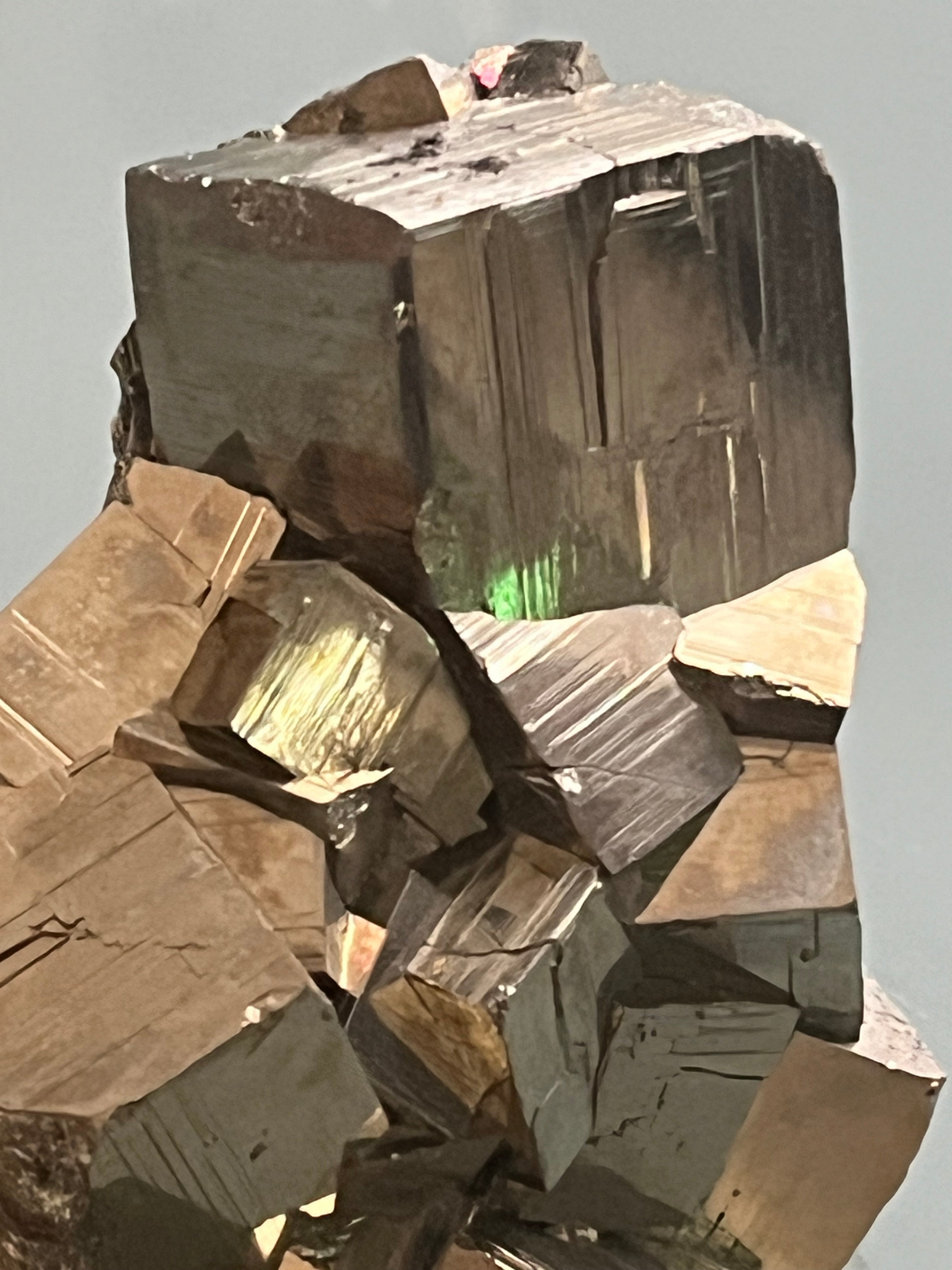
Pyrite, also known as Fool's Gold or in German as Katzengold, is an iron-bearing sulfide mineral with the chemical formula FeS₂. It belongs to the sulfide class and crystallizes in the cubic crystal system – often in perfect cubes or pentagonal dodecahedrons. Its metallic golden color and characteristic luster have fascinated gold prospectors, collectors, and mineral lovers for centuries. Pyrite Fool's Gold is not real gold, but one of the most beautiful and energetically valued minerals in the world.
Mineralogical Classification: What Exactly Is Pyrite?
Pyrite is the most common sulfide mineral in the Earth's crust. It forms under very different geological conditions – in igneous, sedimentary, and metamorphic rocks. This versatility makes it a mineralogical all-rounder.
Physical Properties at a Glance
- Chemical formula: FeS₂ (iron(II) disulfide)
- Mohs hardness: 6–6.5 – making pyrite significantly harder than real gold (hardness 2.5–3)
- Density: approx. 5.0 g/cm³
- Crystal system: cubic
- Color: brass-yellow to golden yellow, metallic luster
- Streak color: greenish-black to black – a crucial distinguishing feature from real gold
- Cleavage: indistinct to conchoidal
The name pyrite comes from the Greek word pyr (fire), since pyrite produces sparks when struck. It was already used as a firestone in antiquity. This knowledge dates back at least 2,000 years.
Why Is Pyrite Called "Fool's Gold"?
The English term Fool's Gold refers to its deceptive resemblance to real gold. During the Middle Ages and the great gold rushes of the 19th century, inexperienced prospectors were regularly deceived by pyrite. This cost some of them time, money, and hopes. The German term Katzengold tells the same story. Today, Pyrite Fool's Gold is a sought-after collector's item – not despite, but because of this fascinating history.
Origin and Localities: Where Does Pyrite Come From?
Pyrite is found worldwide. However, the finest specimens come from a few particularly productive regions.
Notable Localities Worldwide
- Navajún, Spain: This is where spectacular cubic crystals with near-perfect geometry form. These pieces are considered reference specimens among collectors.
- Peru (Huanzala Mine): Produces large, multi-faceted pyrite crystals with exceptional luster.
- Kalimantan, Indonesia: Known for iridescent rainbow pyrite with unique color reflections. More on this in our article New Treasures from Indonesia: Pyrite and Rainbow Pyrite from West Kalimantan.
- Tuscany, Italy: Historically significant, producing elegant crystal clusters.
- South Africa and the USA (Colorado): Massive pyrite in rock formations, often together with quartz and other minerals.
At Crystal Paradise, we place great importance on transparent origin information. Every piece of pyrite in our shop comes with locality information – because authenticity and provenance should never be taken for granted.
Pyrite Fool's Gold: Energetic Significance and Spiritual Tradition
Beyond its mineralogical fascination, pyrite is a highly regarded mineral in crystal healing lore. It should always be noted: these attributions come from spiritual traditions – not from medicine.
Traditional Attributions in Crystal Healing Lore
In crystal healing lore, pyrite is traditionally associated with protection, vitality, and mental clarity. The following properties are attributed to the stone according to traditional lore:
- Protective stone: According to traditional lore, pyrite is said to protect against negative energies and form a protective shield around the wearer.
- Willpower and determination: In crystal healing lore, pyrite is considered a stone that is said to promote assertiveness and mental strength.
- Creativity: According to some traditions, pyrite is said to stimulate creative thinking and inspire new ideas.
- Grounding: The mineral is traditionally said to ground the wearer and strengthen the connection to the material world.
- Solar plexus chakra: In chakra-based systems, pyrite is often assigned to the third chakra – the center for self-confidence and personal power.
If you're interested in the spiritual dimensions of other minerals, read our article on Rose Quartz Meaning: The Stone of Unconditional Love.
Pyrite and Zodiac Signs
Traditionally, pyrite is associated primarily with the zodiac signs Leo, Capricorn, and Taurus. This connection is not scientific, but culturally handed down – part of a centuries-old symbolic language that links minerals and celestial signs.
Pyrite vs. Rainbow Pyrite: The Key Differences

Our range includes both classic pyrite and the spectacular rainbow pyrite. Both are varieties of the same mineral – but differ considerably in appearance.
With rainbow pyrite, thin oxidation layers on the surface create an iridescent play of colors in blue, green, gold, and violet. This optical phenomenon is called interference color. Classic pyrite, on the other hand, shows the typical metallic golden luster without a color spectrum. You'll find a detailed comparison of both varieties in our article Pyrite vs. Rainbow Pyrite – A Mineralogical Comparison.
Pyrite in Rock Crystal: When Two Minerals Unite
A particularly sought-after combination is rock crystal with pyrite inclusions. This natural combination occurs when pyrite is enclosed during quartz formation. The golden inclusions in the clear crystal look like stars in a glass body – aesthetically unique and mineralogically fascinating.
In our shop you'll find a handpicked selection of rock crystal with pyrite for sale – each piece a one-of-a-kind natural specimen. If you're specifically looking for pure pyrite pieces, you'll find what you need in our pyrite collection.
Care and Cleaning of Pyrite
Pyrite is hard, but sensitive to moisture. Improper care can lead to oxidation – the so-called pyrite disease. The mineral reacts with atmospheric humidity to form sulfuric acid and iron sulfates, which destroys the surface.
Care Tips for Pyrite
- No water: Never soak pyrite in water or wipe it with a wet cloth.
- Store dry: A relative humidity below 50% is ideal. Caution is advised in damp basements or bathrooms.
- Cleaning: Carefully dust with a dry, soft cloth – that's completely sufficient.
- Storage: Store separately from other minerals to avoid scratches due to the hardness of 6–6.5.
- Direct sunlight: Prolonged UV exposure can promote surface changes.
From our own experience, we recommend storing pyrite pieces in a closed display case or box with a desiccant – especially in regions with high humidity. In our showroom in Feldkirchen near Munich, we're happy to advise you personally on the proper care of your minerals.
Buying Pyrite: What Should You Look Out For?
Not everything that shines golden is real pyrite. And not every pyrite is of the same quality. When buying, you should pay attention to the following characteristics:
- Streak test: Real pyrite leaves a black to greenish-black streak on rough ceramic – gold leaves a golden-yellow streak.
- Hardness test: Pyrite scratches glass easily (hardness 6–6.5). Gold is significantly softer and does not do this.
- Locality information: Reputable dealers state the piece's place of origin.
- No coatings: Beware of lacquered or artificially treated stones sold as natural pyrite.
At Crystal Paradise, we source our minerals directly from trustworthy suppliers and mines worldwide. You'll find information about our trade show appearances and new range additions regularly on our blog, for example about our successful trade show appearances in Landshut and Nuremberg in November 2024.
For mineralogically sound background information, we also recommend the database of the Mindat.org mineral atlas on pyrite as well as the descriptions of the German Mineralogical Society in the Mineralienatlas.
Frequently Asked Questions

What is the difference between pyrite and real gold?
Pyrite and gold look similar at first glance, but differ significantly in their properties. Pyrite has a Mohs hardness of 6–6.5, while gold has only 2.5–3. Pyrite leaves a black streak in the streak test, while gold leaves a golden-yellow one. Pyrite is also more brittle and has a density of about 5.0 g/cm³ – gold is significantly heavier at around 19.3 g/cm³. These simple tests help reliably identify Pyrite Fool's Gold.
Can pyrite get wet?
No – pyrite should never come into contact with water under any circumstances. The mineral reacts with moisture and oxygen to form sulfuric acid and iron sulfates. This process slowly but permanently destroys the surface of the stone. Store pyrite dry and clean

Written by Christian Neumayer

Leave a comment
This site is protected by hCaptcha and the hCaptcha Privacy Policy and Terms of Service apply.