







Ametrine - colors of amethyst and citrine combined
Ametrine – When Two Worlds Merge into One Stone

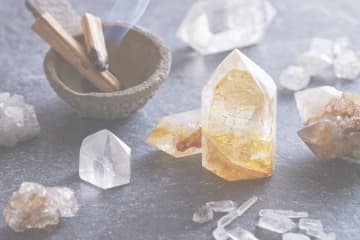
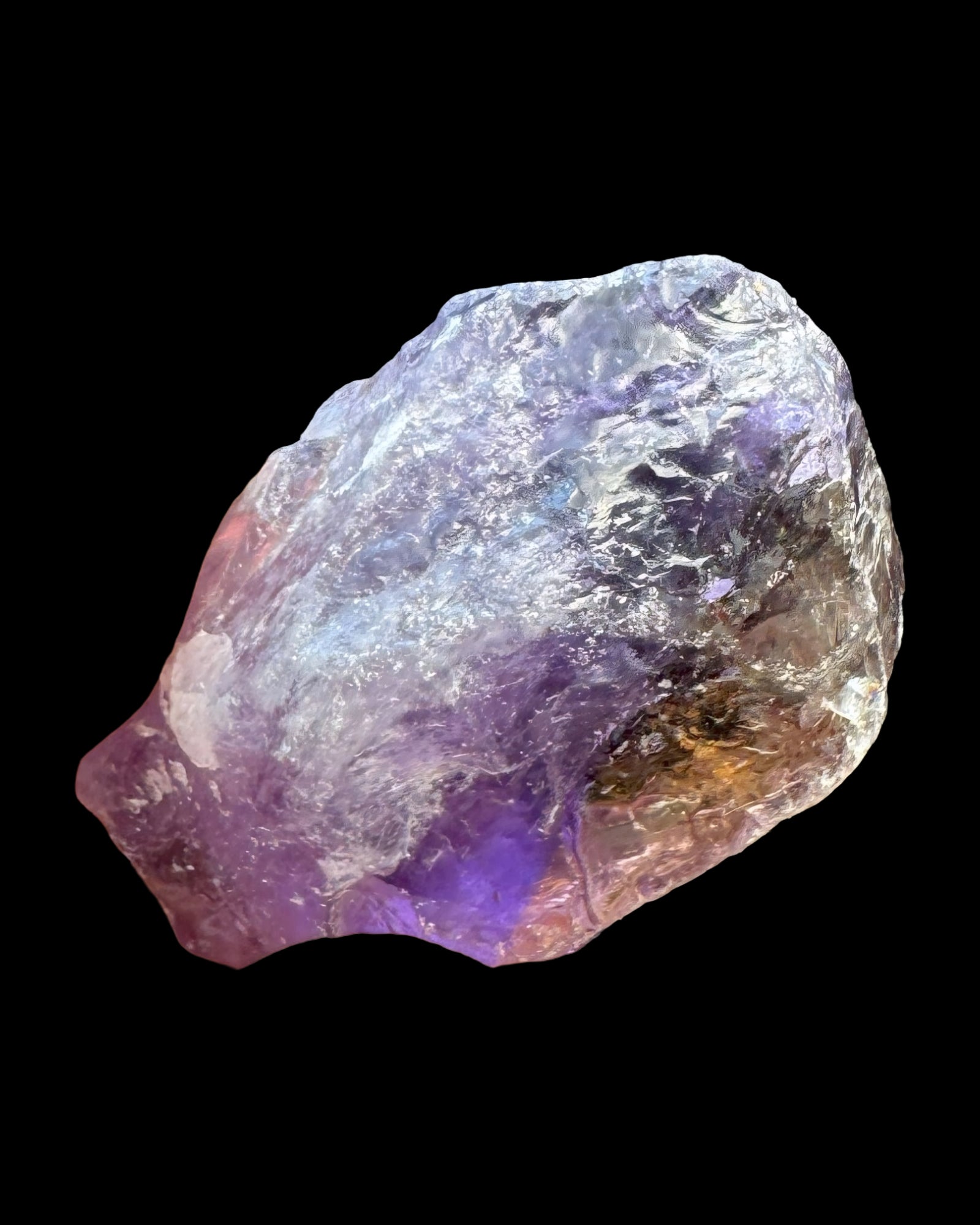
Ametrine is a natural quartz mineral that combines the colors of amethyst and citrine in a single stone. This fascinating two-color appearance does not arise through treatment or chance, but through a precise geological peculiarity during crystal formation. The violet portion contains iron in a higher oxidation state, while the golden-yellow area contains it in a lower one. The result is a gemstone of extraordinary beauty – and worldwide uniqueness.
Anyone wanting to buy ametrine quickly encounters a paradox: the stone seems like a rarity, but in nature it is actually found at only one commercially significant deposit in the world. How that's possible, what makes it mineralogically so special, and why it's equally popular among collectors and wellness enthusiasts – you'll learn all of that here.
Origin and Geology: The Stone from the Anahí Mine
Almost all commercially traded ametrine in the world comes from a single mine: the Anahí Mine in eastern Bolivia, near the border with Brazil. The mine is located in the Santa Cruz de la Sierra region, at about 500 meters above sea level. It has been mined for centuries – the first records date back to the 17th century, when Spanish conquistadors brought the stone as a wedding gift for the Spanish queen.
This also explains the romantic nickname: "The Stone of the Anahí Princess." The legend tells of an indigenous princess who, as a sign of peace, handed over one of the most valuable mines of her community to her Spanish husband.
Mineralogical Classification
Ametrine belongs to the group of quartzes, more specifically to macrocrystalline quartz. The chemical formula is SiO₂. The hardness is 7 on the Mohs scale – identical to amethyst and citrine, since all three share the same mineralogical base. This makes ametrine robust enough for everyday use as a jewelry stone.
The color division arises from an uneven temperature distribution during crystallization. In zones that were exposed to temperatures above 300 °C, the iron remains in an oxidation state that appears violet. In cooler areas, the typical yellow citrine color develops. Both zones grow within the same crystal – a geological rarity that makes naturally formed ametrine so distinctive.
Synthetic vs. Natural Ametrine
Since the 1990s, synthetically produced ametrine from the lab has also existed. It is visually almost indistinguishable from the natural stone. At Crystal Paradise, we exclusively offer natural, untreated ametrine crystals. From our years of experience in the mineral trade, we know: collectors and connoisseurs value verifiable authenticity far more than visual flawlessness. Genuine ametrine carries the signature of nature – with all its lively irregularities.
Ametrine Properties: Color, Forms, and Quality Characteristics
The typical color distribution shows a clear two-zone pattern: one half of the crystal appears in rich violet, the other in warm gold to orange. The transition can be sharp or gradual. Pieces with a balanced 50/50 ratio of colors are especially sought after.
- Raw crystals and hand specimens: Show the natural growth form and color zoning particularly impressively.
- Faceted gemstones: Used for jewelry; the cut can either blend the color zones visually or clearly separate them.
- Tumbled stones: Compact, polished pieces – ideal as a pocket companion or for beginners.
- Freeforms and sculptures: Hand-polished one-of-a-kind pieces for home decor.
- Cabochons and pendants: Classic jewelry variant that displays the color zones flatly.
High-quality ametrine pieces are characterized by clarity, color saturation, and a sharp color transition. Cloudy or pale pieces are natural but less sought after. In our showroom in Feldkirchen near Munich, you can hold ametrine in your hand and check the color separation in daylight – an experience no screen can replace.
Ametrine in Crystal Healing Lore: Traditional Significance

In the world of healing stones, ametrine is considered particularly multifaceted – not least because it energetically unites two stones in one. It should be explicitly noted: all of the following attributes are spiritual traditions, not scientifically proven facts.
In crystal healing lore, ametrine is traditionally attributed the following qualities:
- Clarity and decisiveness: According to tradition, it is said to help resolve duality and inner contradictions.
- Creativity and focus: The combination of amethyst's calm and citrine's energy is described in crystal healing lore as balancing.
- Chakra connection: Traditionally associated with both the crown chakra (violet) and the solar plexus chakra (yellow).
- Stone of transformation: In many spiritual traditions, it is considered a companion for personal transformation processes.
- Protection and cleansing: Similar to amethyst, ametrine is also attributed a protective and clarifying energy.
For more on the spiritual aspects of the related amethyst, our article on amethyst for sleep, meditation, and chakra is also worth reading.
Care and Cleaning of Ametrine
With a hardness of 7, ametrine is relatively easy to care for. Nevertheless, there are a few points to consider to keep the stone in optimal condition permanently.
Physical Care
Ametrine is sensitive to strong heat and direct sunlight. Prolonged UV exposure can fade the violet coloring – this effect is irreversible. No other quartz shows this phenomenon as clearly as amethyst and its varieties. Therefore, do not store ametrine permanently in direct sunlight.
For cleaning, lukewarm water with a soft cloth is sufficient. No ultrasonic cleaners, no steam cleaning. Chemical cleaners can damage the polished surface.
Energetic Care (according to spiritual tradition)
In spiritual practice, it is recommended to regularly cleanse and charge ametrine. Traditionally, methods such as placing it on clear quartz or selenite, brief moonlight, or smudging with sage are described – all without direct sunlight.
Discover Ametrine at Crystal Paradise
In our ametrine collection at Crystal Paradise, you'll find hand-selected specimens in various shapes and quality grades – from simple tumbled stones to striking raw crystals. All pieces are natural, untreated, and documented by locality.
If you'd prefer to hold the stones in your hand before buying: our showroom in Feldkirchen near Munich is open for personal consultation. Our experts will help you find the right piece for yourself or as a gift.
As a fitting counterpart, we also recommend a look at our amethyst hand specimen collection – the violet geodes from Brazil and Uruguay complement ametrine both visually and thematically. Anyone wanting to learn more about the special features of natural citrine will find valuable background information in the article about natural citrine from Brazil.
For mineralogically interested collectors and beginners alike, it's worth looking at the Mindat entry on ametrine, which offers extensive mineralogical data, localities, and images. Further scientific background on the coloring of quartz varieties is provided by Gem News International.
Frequently Asked Questions

Where does ametrine come from, and why is there only one main deposit?
Almost all commercially traded ametrine worldwide comes from the Anahí Mine in Bolivia. The specific combination of temperature conditions, iron content, and crystallization conditions that gives rise to natural ametrine occurs extremely rarely worldwide. This makes the Bolivian stone so special and explains its collector value. There are occasional finds in Brazil and India, but these are commercially insignificant.
How do I recognize genuine ametrine and distinguish it from synthetic stones?
Genuine ametrine typically shows an irregular, lively color distribution with slight inclusions and natural growth traces. Synthetic ametrine from lab cultivation is often of perfect clarity and shows a too-even color separation. If in doubt, a gemologist or an experienced dealer like Crystal Paradise can help. We generally recommend paying attention to transparent origin information when purchasing.
What colors and quality grades exist for ametrine?
The color palette ranges, for the violet portion, from delicate lavender to deep violet, and for the yellow portion, from light gold to strong orange-yellow. High-quality pieces show a balanced ratio of both colors, high transparency, and a high-contrast transition. Cheaper qualities may be paler or more intermixed. For jewelry, strongly colored, clear pieces with a clear 50/50 pattern are preferred.
Can ametrine be kept in water or used as a water stone?
With a hardness of 7, ametrine is in principle water-resistant and does not release toxic substances into water. Brief contact with water for cleaning is harmless. Permanent immersion in water is not recommended, however, as this can cause the polished surface to become dull over time. Other quartzes are better suited for water stone products. Ametrine should never be stored in water bottles in the sun for extended periods.
Note: The properties mentioned are spiritual traditions without scientific evidence. Crystal Paradise

Written by Christian Neumayer

Leave a comment
This site is protected by hCaptcha and the hCaptcha Privacy Policy and Terms of Service apply.