







Buy natural citrine from Brazil – Why genuine natural citrine from Minas Gerais is so rare, valuable, and unadulterated
Natural Citrine Brazil – What Makes Genuine Natural Citrine So Special?

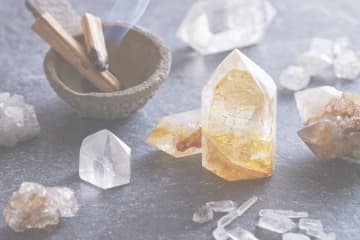
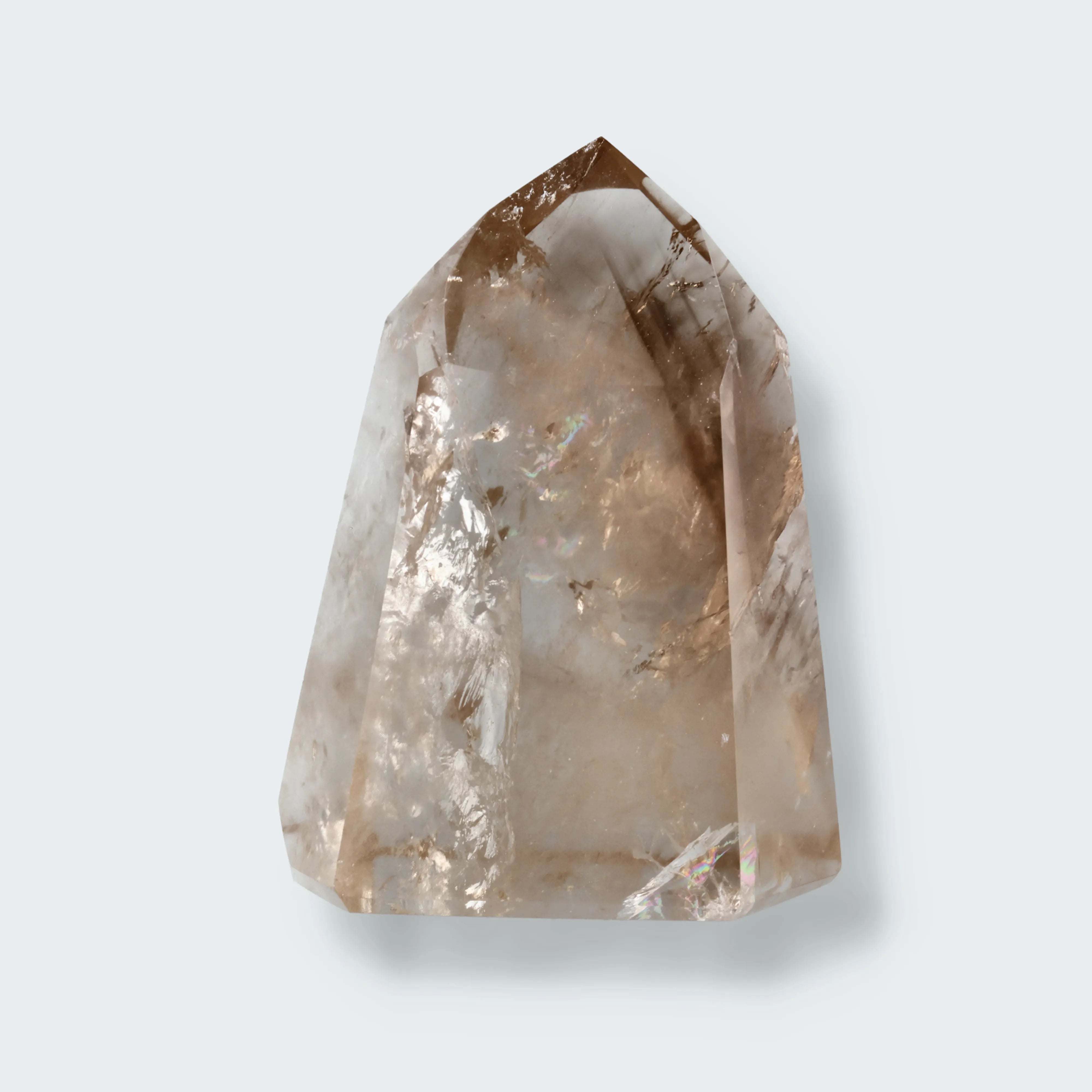
Natural citrine from Brazil is one of the rarest and most sought-after quartz varieties in the world. Unlike burned amethyst, which dominates over 95% of the market, genuine natural citrine forms through natural heat and iron inclusions in the rock – without human intervention. The color ranges from delicate golden yellow to deep honey orange. Finds from the Brazilian province of Minas Gerais are considered the worldwide quality benchmark. Anyone looking for untreated, authentic citrine can hardly avoid Brazil.
Minas Gerais – Heart of the World's Best Citrine Deposits
The state of Minas Gerais is located in southeastern Brazil. Its name means "General Mines" in Portuguese – and that is no coincidence. Since the 17th century, gemstones and minerals have been intensively mined here. The region is home to some of the most significant pegmatite formations on Earth.
Pegmatites are coarse-crystalline plutonic rocks. They form during the final phase of magma cooling. Crystals can grow extremely slowly over millions of years. The results are impressive: fully formed quartz crystals with vivid color and high transparency. According to the Mineralienatlas, one of the leading German mineral databases, Minas Gerais is among the most productive discovery regions for quartz varieties worldwide.
Why Minas Gerais Produces Exceptional Citrine Specimens
The mineralogical conditions in Minas Gerais are unique. Iron ions in the quartz lattice react to natural geothermal warmth. Temperatures between 200 and 300 degrees Celsius in the rock create the characteristic yellow coloring. This process usually takes several million years.
This is exactly why genuine natural citrine specimens are so rare. The geological conditions must be exactly right over a very long period of time. Even in Minas Gerais, only certain areas are productive – such as the regions around Governador Valadares and Teófilo Otoni.
If you are interested in other Brazilian minerals, you will find a curated selection in the Crystal Paradise range: Buy minerals from Brazil.
Natural Citrine vs. Burned Amethyst – The Crucial Difference
Many stones on the market circulate under the name "citrine." Most of them, however, are heated amethyst. By burning at temperatures around 470 to 560 degrees Celsius, the violet color of amethyst changes to an orange-yellow tone. The result looks visually similar – but is a completely different story mineralogically.
The Gemological Institute of America (GIA), the world's most renowned gemology institution, confirms that most commercially sold citrine consists of heated amethyst or smoky quartz. Genuine natural citrine is therefore an exception – not the standard.
How to Recognize Genuine Natural Citrine
- Color: Natural citrine shows delicate golden yellow or honey tones, often unevenly distributed. Burned amethyst often appears more intensely orange-reddish, especially at the tips.
- Transparency: Genuine natural citrine is often clear to slightly milky. Very intense, even orange coloring is a warning sign.
- Origin details: Reputable dealers specifically name Minas Gerais or comparable locations. Vague origin information should be questioned critically.
- Price: Genuine natural citrine costs significantly more than burned amethyst. Unusually low prices are an indication of treated material.
- Certificate or dealer statement: Trustworthy shops vouch for the authenticity of their stones and provide information upon request.
In our shop, drawing on years of experience, we place the greatest importance on transparent origin information. Every natural citrine we offer is hand-selected and checked for authenticity. You can find our collection here: Buy untreated citrine.
Mineralogical Facts About Natural Citrine Brazil
Citrine belongs to the quartz group of minerals. Its chemical composition is SiO₂ – silicon dioxide. The yellow to orange-yellow color arises from Fe³⁺ ions (trivalent iron) in the crystal lattice.
Important mineralogical characteristics at a glance:
- Hardness: 7 on the Mohs scale – making citrine very scratch-resistant and suitable for everyday use.
- Crystal system: Trigonal – typical for all quartz minerals.
- Density: approx. 2.65 g/cm³.
- Refractive index: 1.544 to 1.553 – responsible for the characteristic luster.
- Color: Light yellow to deep golden orange, depending on iron content and storage temperature.
Interesting fact: Ametrine, a natural mixed mineral of amethyst and citrine, forms when temperature zones within the same crystal were different. More on this in the article: Ametrine – Colors of Amethyst and Citrine United.
Spiritual Meaning and Traditional Attributions

Citrine has been called a stone of joie de vivre and inner strength for centuries. In traditional stone healing lore, it is regarded as the stone of the sun. It is said to strengthen self-confidence and support creativity.
According to traditional lore, natural citrine is said to help transform negative energies. Dealers and collectors describe its effect as uplifting and motivating. In many spiritual traditions, it is considered one of the few stones that does not require energetic cleansing.
It is traditionally attributed to harmonize particularly well with the solar plexus chakra – the energy center associated with willpower and self-assertion. These attributions stem from crystal and stone healing lore, which relies on centuries-old traditions.
If you're interested in crystals and energy in everyday life, we also recommend: Find Your Inner Balance: How Crystals Can Energetically Enhance Your Home.
Care and Storage of Natural Citrine
Citrine is very robust with a hardness of 7. Nevertheless, you should keep a few points in mind so that your stone stays beautiful for the long term.
Cleaning
Citrine can be easily cleaned with lukewarm water and a soft cloth. Do not use aggressive cleaning agents. Ultrasonic cleaners are not recommended for pieces with inclusions or fissures.
Light Sensitivity
Citrine is light-sensitive. Permanent, direct sunlight can fade the color over months. Ideally, do not keep your stone permanently in direct sunlight. A spot in indirect daylight is ideal.
Storage
Store citrine separately from other stones. Since it is very hard itself, it can scratch softer minerals. A soft cloth or a padded box protects both it and your other collector's pieces.
Citrine from Brazil at the Crystal Paradise Showroom Feldkirchen
At Crystal Paradise in Feldkirchen near Munich, you can experience natural citrine specimens and crystals from Minas Gerais live. In our showroom, we have hand-selected specimens on display – from delicate individual crystals to impressive specimens and geodes.
We recommend that anyone seeing genuine natural citrine for the first time hold it in their hands. The weight, the luster, and the vivid golden color are immediately noticeable compared to treated stones. Anyone who cannot visit in person will find our entire selection of citrine from Brazil directly in our online shop.
In addition to Brazilian citrines, we also carry specimens from other regions of the world. Each origin brings its own characteristics. Those who love comparisons will also find citrine from Russia, citrine from Zambia, and citrine from the Congo with us.
Frequently Asked Questions

What is the difference between natural citrine and burned amethyst?
Natural citrine forms through geothermal processes inside the earth over millions of years. The coloring is the result of iron ions and natural heat. Burned amethyst is industrially heated at approximately 470–560°C to produce a similar color. While the crystal structure remains identical, the formation history and rarity value are fundamentally different. Genuine natural citrine is significantly rarer and correspondingly more valuable.
How do I know if my citrine from Brazil is really untreated?
Reputable dealers state the exact location of discovery – ideally the region in Minas Gerais. Genuine natural citrine crystals show a delicate, often uneven yellow coloring. Intense, homogeneous orange tips are typical for heated amethyst. At Crystal Paradise, we vouch for the authenticity of our stones and provide detailed origin information upon request at any time.
Can I buy citrine from Brazil as a gift?
Absolutely. Natural citrine from Minas Gerais is an extraordinary and meaningful gift. Whether as an individual crystal, a specimen for the living room, or a jewelry stone – it combines aesthetic value with a long history. For gifts, ideally choose pieces with proof of origin so that the special provenance can also be communicated.
What other citrine origins exist besides Brazil?
Besides Brazil, natural citrine also comes from Russia, Zambia, and the Congo, among others. Each region produces its own color characteristics and crystal forms. Minas Gerais, however, is considered worldwide as the most important and best-known origin for high-quality natural citrine specimens.
Note: The spiritual effects and attributions mentioned are traditional beliefs from stone healing lore. They do not represent scientifically proven statements and are in no way a substitute for medical advice or treatment.

Written by Christian Neumayer



Leave a comment
This site is protected by hCaptcha and the hCaptcha Privacy Policy and Terms of Service apply.