







Chrysocolla: Fascinating gemstone with unique color variety
Chrysocolla – The Blue Wonder Stone from the Copper Ore Deposits of the World

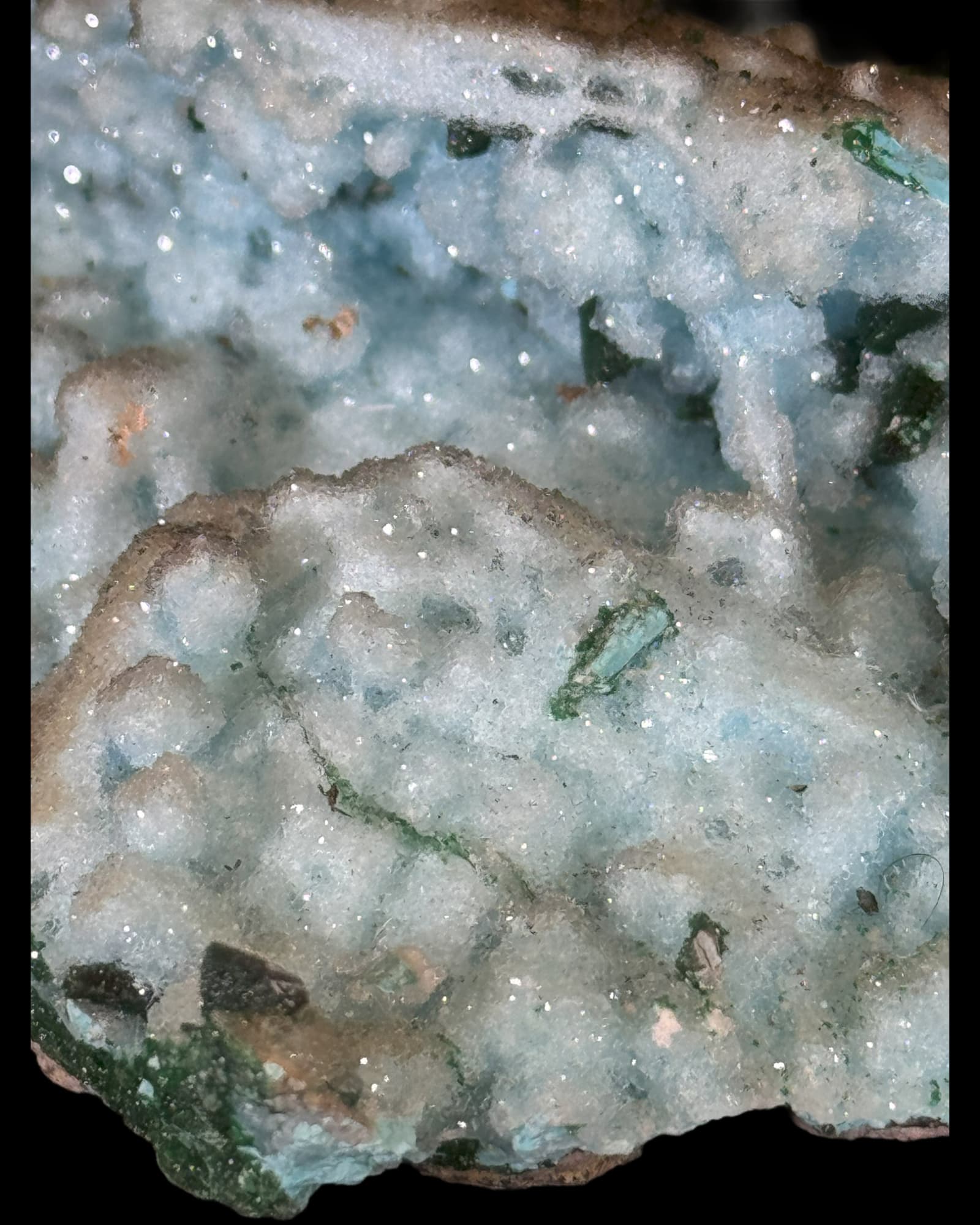
Chrysocolla is a fascinating blue-green copper silicate mineral with the chemical formula Cu₂H₂Si₂O₅(OH)₄. The stone is formed through the weathering of copper-bearing rock layers and is one of the most sought-after collector's and healing stones worldwide. Its characteristic hues range from delicate turquoise through luminous sea blue to deep blue-green – a play of color that instantly captivates every viewer. In our showroom in Feldkirchen near Munich, we see every day how people are fascinated by this stone at first sight.
Mineralogical Classification: What Makes Chrysocolla Special?
Mineralogically, chrysocolla belongs to the group of layer silicates. The name derives from ancient Greek: "chrysos" means gold, "kolla" means glue. This glue was used in antiquity for soldering gold.
The most important mineralogical characteristics at a glance:
- Chemical formula: Cu₂H₂Si₂O₅(OH)₄ – a basic copper silicate
- Mohs hardness: 2.5 to 3.5 – comparatively soft and sensitive
- Luster: Glassy to waxy, sometimes matte
- Crystal system: Amorphous to orthorhombic
- Specific gravity: 2.0 to 2.4 g/cm³
- Color: Turquoise, blue-green, sky blue – depending on copper content
- Transparency: Opaque to translucent
Chrysocolla often occurs together with other copper minerals. These include malachite, azurite, and cuprite. This association makes many pieces especially decorative and mineralogically interesting.
Origin and Locations: Where Does Chrysocolla Form?
The most significant deposits are located in copper-rich regions of the world. The best-known occurrences come from:
- Peru – home to the famous "Peruvian chrysocolla" with intense blue coloring
- USA (Arizona, Nevada) – classic mining regions such as the "Inspiration" mine yield high-quality pieces
- Chile – the Atacama region is one of the most productive copper ore landscapes in the world
- Congo and Zambia – African occurrences with vivid hues
- Israel (Timna Valley) – a historically significant site, known for over 5,000 years
- Russia (Urals) – yields some remarkably clear specimens
In our range at Crystal Paradise, we pay attention to documented origin information. We always recommend asking about the exact source region when buying – this significantly increases collector value and authenticity.
Chrysocolla Druzy and Chrysocolla in Quartz
A particularly popular variety is chrysocolla in quartz. Here, the turquoise-colored copper silicate is firmly embedded in white or clear quartz. This combination increases the Mohs hardness to about 6 to 7, making the stone significantly more resistant. This variety is therefore much better suited for jewelry than pure chrysocolla.
Chrysocolla in Crystal Healing: Traditions and Lore

In crystal healing, chrysocolla has enjoyed a special reputation for centuries. It is important to emphasize: The following descriptions are spiritual traditions without scientific evidence. They do not replace a visit to a doctor and do not constitute a medical statement.
Traditionally, chrysocolla is attributed the following symbolic meaning:
- Communication and expression: According to tradition, the stone is said to strengthen the ability for clear and honest communication.
- Inner calm: In crystal healing, chrysocolla is considered calming and balancing – especially during stressful phases of life.
- Creativity: The stone is traditionally said to foster artistic talents and stimulate the imagination.
- Feminine energy: In many spiritual traditions, chrysocolla is connected to the Divine Feminine.
- Heart chakra and throat chakra: According to tradition, the stone is assigned to the chakras of the center and of expression.
Already in antiquity, Queen Cleopatra is said to have used chrysocolla powder – as a symbol of wisdom and diplomatic skill. This historical tradition lends the stone a particular cultural-historical depth.
Chrysocolla and the Zodiac
In astrological tradition, chrysocolla is especially associated with the zodiac signs Virgo, Sagittarius, and Gemini. If you want to choose your personal stone based on your date of birth, you'll find our CRYSTAL ZODIAC Zodiac Gemstones collection at Crystal Paradise – curated for every zodiac sign.
Care and Storage of Chrysocolla
Since chrysocolla, with a Mohs hardness of only 2.5 to 3.5, is very sensitive, it requires special care. Drawing on years of experience in the mineral trade, we would like to share the following care recommendations:
- No direct water: Chrysocolla is sensitive to water. Prolonged contact with water can make the surface dull or damage the stone. That's why it is not suitable as a water stone.
- No acids or cleaning agents: Chemicals attack the copper silicate quickly.
- Soft storage: Place the stone on a soft cloth or in a separate compartment. Harder minerals easily scratch the surface.
- No direct sunlight: Intense UV radiation can affect the depth of color over the long term.
- Cleaning: It's best to wipe briefly with a slightly damp, soft cloth – and dry immediately afterward.
- Energetic cleansing: Traditionally recommended is cleansing with smudging smoke (e.g., white sage) or gentle moonlight.
For jewelry, we specifically recommend only chrysocolla-in-quartz varieties. These are considerably more durable and hold up better to everyday wear.
Buying Chrysocolla: What Should Collectors Look For?
When buying genuine chrysocolla, there are a few important quality features to consider. In our showroom in Feldkirchen near Munich, we're happy to advise you personally. Here are our top recommendations:
- Color: Intense, even blue to green tones indicate high quality. Pale or blotchy pieces are mineralogically less significant.
- Proof of origin: Pay attention to information about the source region. Reputable dealers name the exact country of origin.
- Treatments: Some chrysocolla pieces are stabilized with synthetic resin to reinforce the surface. This is common practice in the industry but should be communicated transparently.
- Accompanying minerals: Chrysocolla with malachite, azurite, or limonite is especially valuable as a collector's piece.
- Weight and size: Small raw pieces start at just a few euros. High-quality decorative pieces from 10 cm upward can cost significantly more.
Chrysocolla is also available as a bracelet or pendant. In combination with other healing stones, it is said, according to spiritual tradition, to unfold a harmonizing effect. Discover our crystalpower® bracelets with healing stones – carefully assembled for different intentions and energies.
Chrysocolla as a Gift
A beautiful chrysocolla is a meaningful gift. It is a perfect match for people who value communication, creativity, and inner calm. As a raw or tumbled stone, as a freeform, or as a piece of jewelry – the possibilities are diverse. Also check out our Birthstones – Personal Gemstones with Meaning if you're looking for the perfect personal stone as a gift.
Anyone interested in other fascinating gemstones will find further exciting articles in our mineral encyclopedia. For example, about Fluorite – A True Gemstone with Versatile Effects or the fascinating Tiger's Eye.
For scientific background information on the mineralogy of chrysocolla, we recommend the Mindat.org mineral database as well as the Mineralienatlas.de – two of the most reliable mineralogical sources in the German-speaking world.
Frequently Asked Questions

What is chrysocolla and how does it form?
Chrysocolla is a basic copper silicate mineral with the formula Cu₂H₂Si₂O₅(OH)₄. It forms through the weathering and oxidation of copper-bearing rocks. In this process, copper ions react with silicic acid and water. Typical accompanying minerals are malachite and azurite. The stone occurs in regions where copper mining has historically taken place – such as Peru, Arizona, Chile, and Israel.
Is chrysocolla suitable for jewelry?
Pure chrysocolla, with a Mohs hardness of only 2.5 to 3.5, is very sensitive and therefore hardly suitable for everyday jewelry. The variety chrysocolla in quartz, on the other hand, is significantly more robust with a hardness of 6 to 7 and is frequently used for pendants, rings, and bracelets. When buying chrysocolla jewelry, always ask about the variety used.
What effects are attributed to chrysocolla in crystal healing?
In crystal healing, chrysocolla is traditionally associated with communication, inner calm, and creativity. According to tradition, the stone is said to carry a balancing and clarifying energy. It is often assigned to the throat and heart chakra. These attributions are spiritual in nature and have no scientific evidence. They do not replace medical advice or treatment.
How do I properly care for my chrysocolla?
Chrysocolla should not come into permanent contact with water, as it is sensitive to water

Written by Christian Neumayer
%E2%82%84.%20The%20stone...)
Leave a comment
This site is protected by hCaptcha and the hCaptcha Privacy Policy and Terms of Service apply.