







Aventurine as a Water Stone & Gemstone Water
Aventurine as a Water Stone & Gemstone Water – Everything You Need to Know

Aventurine as a water stone is one of the applications we're asked about most often. Aventurine is a quartz whose green color comes from fine fuchsite inclusions – tiny mica flakes that give it its characteristic shimmer. With a Mohs hardness of 7, aventurine is chemically stable and insoluble in water – the basic requirement for a stone to be used in drinking water at all. In traditional stone lore, it is considered a stone of luck, of the heart, and of new beginnings, and is associated with the heart chakra. Here you'll learn how to prepare gemstone water with aventurine, which forms are suitable, and how to tell whether a stone is truly suited for water.
What Gemstone Water Is – and What It Isn't
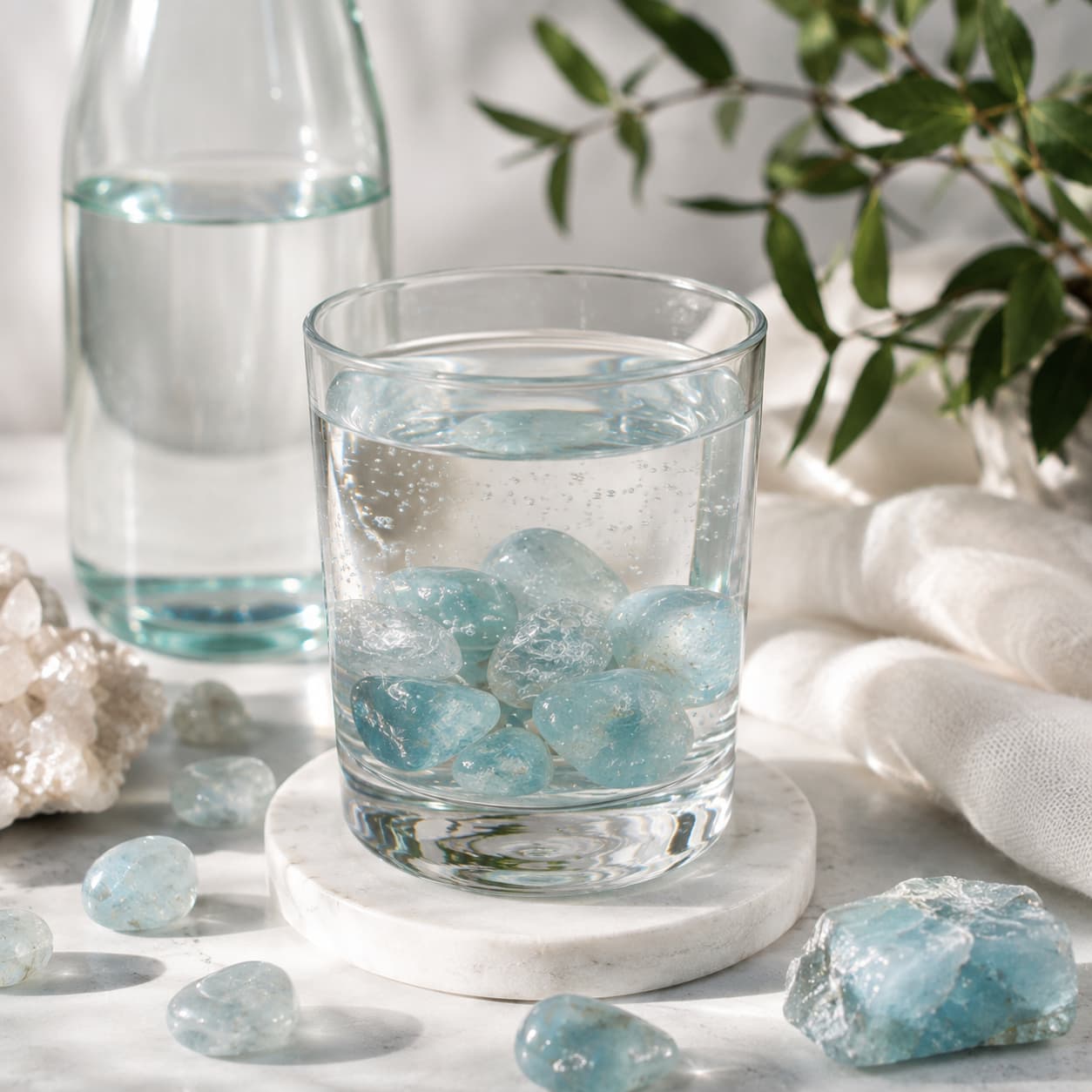
With gemstone water, a stone is placed in drinking water or used in a carafe with a separate insert. The stone does not dissolve and does not measurably change the water chemically. What does change is how you approach it: a casual sip becomes a mindful one. For most people, that's exactly the appeal – the ritual itself, the conscious gesture of pausing.
The attributions handed down in stone lore are cultural heritage, not medical claims. They are not scientifically proven and do not replace medical treatment. You can find out what the ritual can look like in everyday life in our guide to water stones.
Aventurine as a Water Stone – Properties and Tradition
In stone lore, it is considered a balancing stone, traditionally said to have a calming effect.
In stone lore, aventurine is considered the quintessential stone of luck – a stone said to attract positive coincidences.
For use in water, though, mineralogy comes first: with a hardness of 7, aventurine is resistant to mechanical abrasion and contains no water-soluble components. This means it fulfills the two conditions that make a stone suitable for water. Which stones do not meet these conditions can be found in our overview Water stones: which gemstones are safe.
Which Aventurine Forms Are Suitable as Water Stones?
Tumbled Stones
The usual form for water. Aventurine tumbled stones are vividly green and add color to the glass without coloring the water.
Palm Stones
Larger polished pieces work just as well, but require a correspondingly large carafe. Advantage: less surface area relative to volume, which means less cleaning effort.
What to Especially Watch Out for with Aventurine
Green stones in the lower price range are often dyed material or green glass with copper flecks, sold commercially as "goldstone." For drinking water, only natural aventurine quartz is suitable.
Preparing Aventurine Gemstone Water – Step by Step
- Check the stone. Only use undyed, uncoated natural stones without cracks or glued spots.
- Clean it. Rinse under lukewarm running water, using a soft brush if needed. No dish soap, no ultrasonic cleaning.
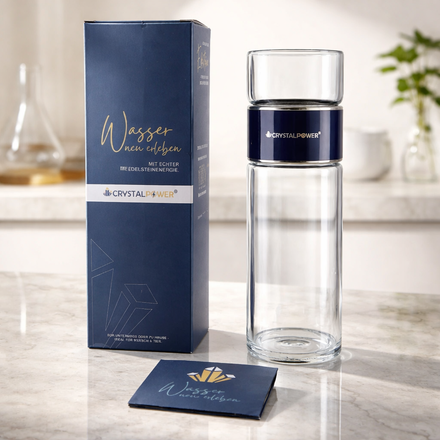
- Place it in the water. One to two stones per liter of water are enough. In a carafe with a separate insert, the stone never actually comes into contact with the drinking water – the safest option.
- Let it steep. One to two hours is enough. Overnight in the refrigerator is also common.
- Drink fresh. Use the water within a day and rinse the carafe daily – standing water is a hygiene issue regardless of the stone.
Safety and Quality – What Really Matters
With colorful water stones, a color bath in the trade is more the rule than the exception. Along with the color, substances can get into the stone that nobody wants in their drinking glass. Our aventurine water stones from the crystal flavours line are undyed, uncoated, and resin-free. We also had them tested by Eurofins according to LFGB: sensory testing for odor and taste, as well as for the release of lead and cadmium. Both tests were passed. You can find the full test report and background information in the article Dyed water stones: why color in the drinking glass is a problem.
There are three things you should check regardless of the retailer: Is the stone undyed? Is the origin stated? And is the surface undamaged – without cracks where germs can lodge?
Aventurine Compared to Other Water Stones
Aventurine is the green accent among water stones and, with a hardness of 7, is just as robust as rock crystal or amethyst. Anyone choosing it for its heart-related tradition will find rose quartz as the second stone in the same lineage of tradition.
You can find an overview of all the stones we offer for water in the collection Water stones for sale. If you'd rather use the stone dry, you'll find what you're looking for in the Aventurine collection.
Frequently Asked Questions
Is aventurine safe as a water stone?
Yes. Aventurine is a quartz with a hardness of 7, insoluble in water and chemically stable. The fuchsite inclusions are firmly bound within the quartz. The prerequisite is natural, undyed material.
How do I tell aventurine apart from green glass?
Genuine aventurine shimmers irregularly and has a slightly cloudy structure. Evenly distributed, glittering flecks suggest artificial glass. When in doubt, holding it up to the light helps – or you can visit our showroom.
Does aventurine lose its color in water?
Natural aventurine does not. If a green stone releases color into the water, it was dyed – and should be removed from the glass immediately.
How many stones do I need per liter?
One to two tumbled stones are enough. More stones don't make the ritual more effective.

Leave a comment
This site is protected by hCaptcha and the hCaptcha Privacy Policy and Terms of Service apply.