







Minerals from Switzerland: exceptional rock crystals, smoky quartz, and older finds
Alpine Minerals from Switzerland – an Overview

Alpine minerals are minerals that formed in the fissures and cracks of the Alps – shaped over millions of years by extreme geological forces, heat, and pressure. The Swiss Alps are considered one of the most significant collecting regions in the world. Rock crystals, smoky quartz, and rare accessory minerals from helvetic fissures are among the most sought-after collector's pieces on the mineral market. Anyone looking for alpine minerals from Switzerland will find compact expert knowledge here – from geological origin to buying safely.
At Crystal Paradise, we know from our own experience how extraordinary the quality of these pieces is. Swiss minerals impress us time and again – through their purity, their radiance, and their close connection to alpine nature.
Geological Origin: How Alpine Minerals Form
The Alps are a high mountain range that formed about 30 to 35 million years ago. When the African and Eurasian plates collided, layers of rock were pushed on top of one another. This created deep fissures – known as alpine fissures. Hot, mineral-rich water circulated in these cavities. As the temperature dropped – often below 400 °C – the dissolved minerals crystallized out.
The bulk of Swiss minerals formed at depths between 5 and 15 kilometers. The process sometimes took hundreds of thousands of years. The result: flawless crystals with a purity unmatched anywhere in the world.
Typical Host Rocks and Regions
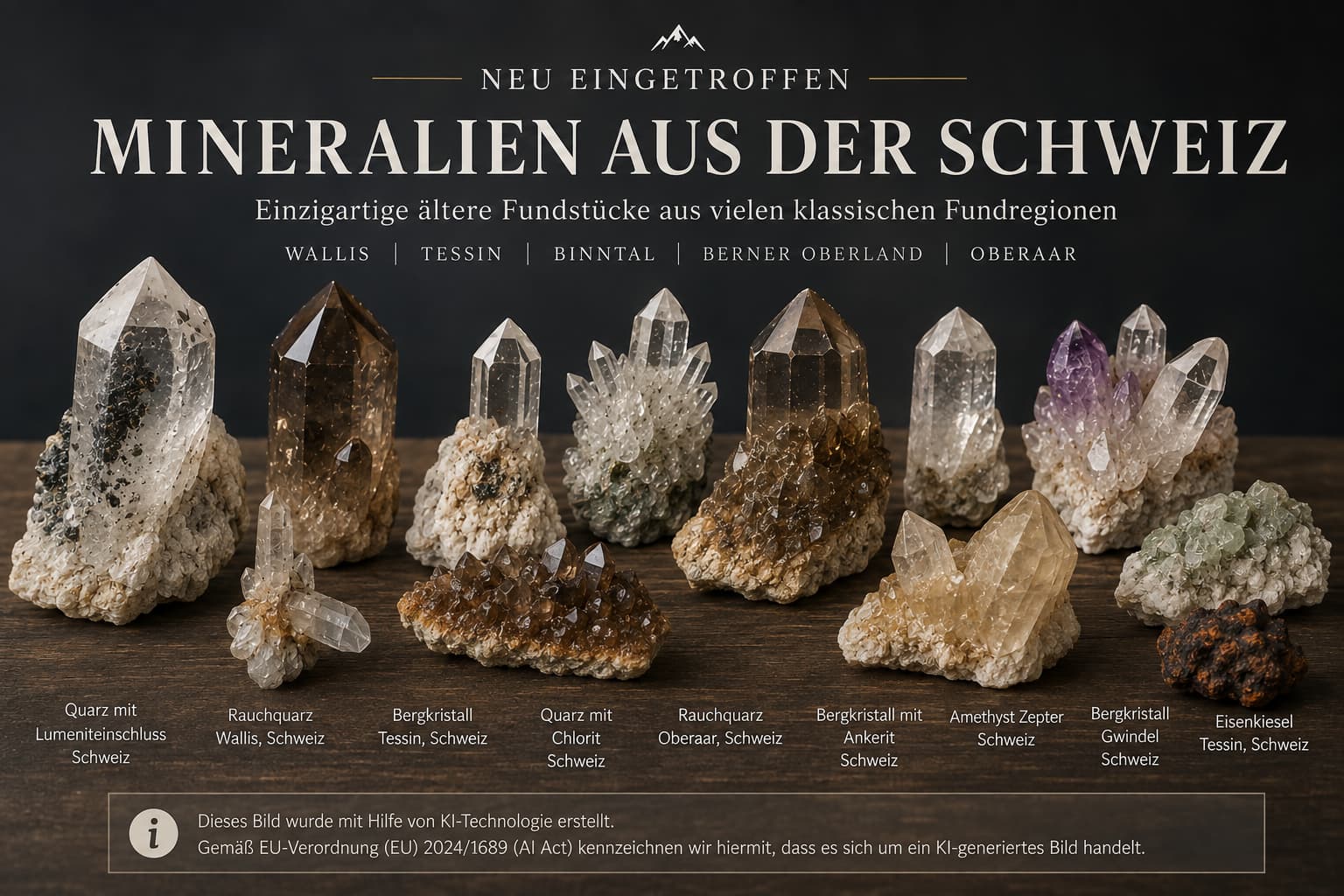
The most important alpine sites in Switzerland lie in the central massif of the Alps. Well-known regions include the Uri Reuss Valley, the Binn Valley in Valais, and the Gotthard Massif. The Binn Valley is considered a mineralogical jewel of Switzerland – it is known for rare manganese minerals such as triphylite and sarkinite. In the Gotthard Massif, on the other hand, classic quartz varieties and chlorite dominate.
- Uri Reuss Valley: Rock crystals and chlorite quartz
- Binn Valley, Valais: Rare manganese minerals, adularia, albite
- Gotthard Massif: Smoky quartz, morion, rock crystal specimens
- Graubünden: Hematite inclusions, epidote, titanite
- Grimsel Region: Large smoky quartz crystals over 50 cm in length
Alpine Minerals in Focus: Rock Crystal and Smoky Quartz
Two minerals dominate the Swiss finds: rock crystal and smoky quartz. Both are varieties of quartz with the chemical composition SiO₂. They differ mainly in their color – and the causes behind it.
Rock Crystal – Purity from Alpine Depths
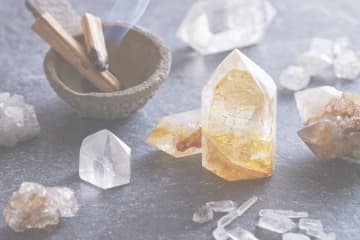
Rock crystal is completely colorless, clear quartz. It belongs to the trigonal crystal system and reaches a value of 7 on the Mohs hardness scale. Swiss specimens impress with their exceptional transparency and natural luster. Particularly prized are pieces with so-called phantoms – internal growth structures that reveal past phases of crystallization.
In lithotherapy, rock crystal is traditionally said to promote clarity and focus. According to tradition, it is said to help order one's thoughts and find one's inner center. These traditions are of a spiritual nature and have no scientific evidence.
Smoky Quartz – Alpine Energy in Brown Tones
Smoky quartz owes its characteristic brown to black coloring to natural radiation. Radioactive elements embedded in the rock, such as aluminum defects in the crystal lattice, produce the typical smoky color. The intensity ranges from light golden to almost black morion. Swiss smoky quartz from the Grimsel region is famous for its size – individual crystals of 30 to over 60 cm in length are not uncommon.
In lithotherapy, smoky quartz is traditionally regarded as a stabilizing companion. It is said to convey grounding and steadiness. For collectors, it simply impresses through its natural beauty and presence.
Older Finds and Their Special Significance
In addition to current finds, older Swiss minerals are also of great interest. "Older finds" are pieces that were recovered decades ago or even more than 100 years ago. They often come from historical collections or were passed down by generations of alpine "Strahler" – the traditional name for mineral prospectors of the Alps.
Strahler have been searching the Swiss high Alps for minerals since the 17th century. Their work is physically demanding and requires mountaineering skills. An experienced Strahler sometimes spends entire summers in the mountains – often at altitudes between 2,000 and 3,500 meters above sea level. Older finds carry this legacy within them. They are not only mineralogical objects, but also cultural heritage.
What Makes Older Pieces Special
- Documented origin and often traceable collection history
- Natural patina and original fissure minerals still present
- Rarity due to depleted or closed sites
- Higher collector value due to provenance and age
- Connection to the historical Strahler traditions of the Swiss Alps
Anyone interested in the topic of origin and authenticity can find further information at Crystal Paradise in the article Buying Minerals with Documented Locality – What to Look For. Because especially with older pieces, documentation is crucial.
Accessory Minerals: What Else Alpine Fissures Have to Offer

Swiss fissures are rarely monomineralic. Rock crystal and smoky quartz frequently occur together with fascinating accessory minerals. These enrich a piece both aesthetically and mineralogically.
Common Accessory Minerals from Swiss Fissures
Chlorite coats many Swiss rock crystals with a green veil or forms flaky inclusions inside. It gives the pieces a characteristic alpine character. Adularia – a variety of feldspar – occurs especially in the Binn Valley and forms white to slightly yellowish tabular crystals. Titanite and epidote complete the spectrum with their wedge-shaped to prismatic forms and their characteristic green and brown tones.
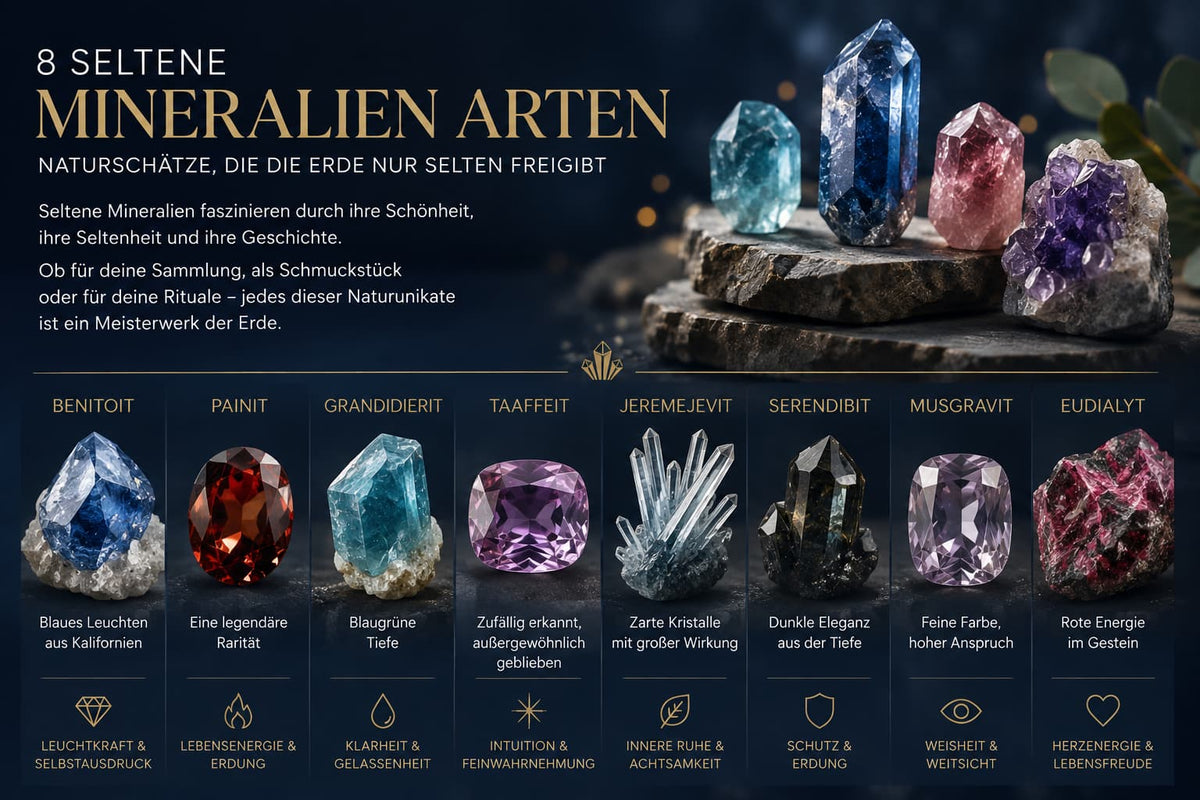
In the Binn Valley, one also finds rarities such as dufrénoysite, sarkinite, and hessite. These minerals are known even among experts and make the Binn Valley one of the most mineralogically rich valleys in the world. Learn more about extraordinary mineral types in our article 8 Rare Mineral Types with Special Charm.
Properly Caring For and Storing Alpine Minerals
High-quality Swiss minerals deserve careful handling. With the right care, they remain flawless for decades.
Basic Rules for Care
Rock crystal and smoky quartz are robust, with a hardness of 7. Still, direct contact with harder materials should be avoided. Storing on a soft surface – velvet cloths or foam padding – protects against scratches. Cleaning is done with lukewarm water and a soft cloth. Do not use aggressive cleaning agents. Handle chlorite-coated pieces especially carefully – the coating can flake off under mechanical stress.
For storage, a dry, light-protected place is recommended. Direct sunlight can bleach smoky quartz over long periods, since the radiation-induced coloring is reversible under UV light. Rock crystal is not light-sensitive and is well suited for decorative display.
Buying Alpine Minerals – What Matters
The market for Swiss minerals is diverse – and not always transparent. Anyone who wants to buy with quality in mind should pay attention to certain characteristics.
We generally recommend buying only from dealers who document the locality and insist on authenticity. In our shop at Crystal Paradise, we carry hand-selected Swiss minerals with clear provenance. Every piece is personally inspected by us – that's our quality promise. Browse our collection directly: Buy Minerals from Switzerland.
For a comprehensive comparison of the mineral market and an assessment of fair prices, read our article Prices for Minerals and Gemstones – My Expert View of the Market.
Anyone just starting their collecting journey will find good orientation in our category Discover the Fascinating World of Minerals for Beginners.
For external mineralogical references, we recommend the Mindat.org mineral database – the world's largest database for mineralogy – as well as the Natural History Museum Bern, which houses one of the most important Swiss mineral collections.
Frequently Asked Questions

What exactly are alpine minerals?
Alpine minerals are minerals that formed in the characteristic fissures of the Alps. These cavities formed through tectonic processes around 30 to 35 million years ago. Hot, mineral-rich water circulated in the fissures, from which crystals precipitated as temperatures dropped below 400 °C. Typical alpine minerals include rock crystal, smoky quartz, adularia, chlorite, titanite, and epidote. They are world-renowned for their exceptional quality and purity.
Where are minerals found in Switzerland?
The most important collecting areas for alpine minerals in Switzerland are the Binn Valley in Valais, the Grimsel region in the Bernese Oberland, the Uri Reuss Valley, and parts of Graubünden. The Binn Valley is especially known for rare manganese minerals. The Grimsel region yields spectacular smoky quartz, sometimes over 50 cm in length. The Gotthard Massif is also one of the classic sites for rock crystal and smoky quartz.
What are Strahler and what role do they play in Switzerland?
Strahler are traditional mineral prospectors who have been active in the Swiss Alps since the 17th century. They search high-alpine terrain – often at altitudes between 2,000 and 3,500 meters – for mineral-rich fissures. Their work requires mountaineering skills and years of experience. Many historical collector's pieces come from the hands of these mountain craftsmen. Their tradition is an important part of the alpine cultural heritage.

Written by Christian Neumayer

Leave a comment
This site is protected by hCaptcha and the hCaptcha Privacy Policy and Terms of Service apply.