







Buying minerals with a locality - what to look for?
Buying Minerals with Locality – What to Look For? The Ultimate Guide

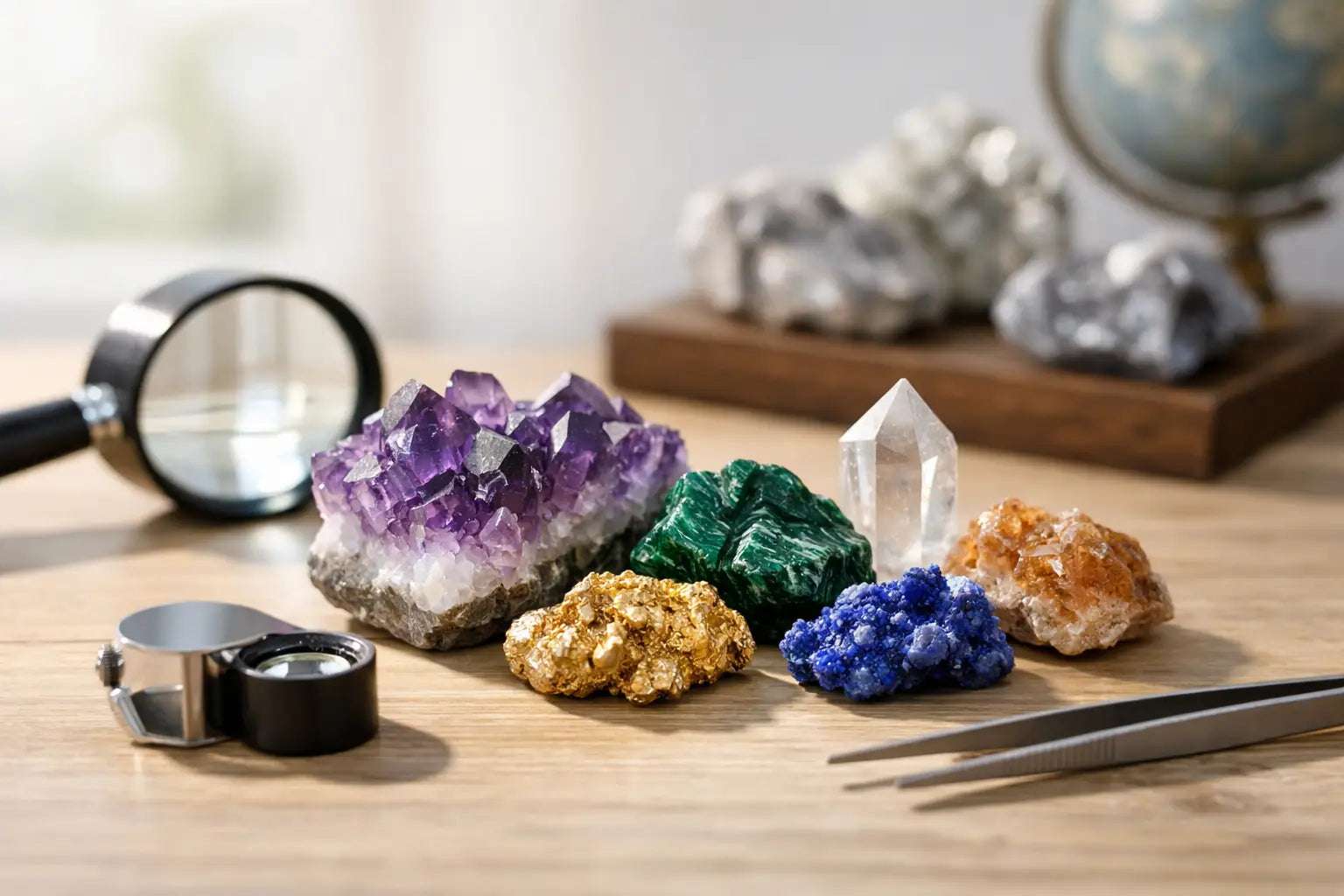
Anyone who wants to buy minerals with locality quickly asks: What should you look for to truly acquire a genuine, high-quality piece? The simple answer is: a documented locality is the most important authenticity feature of a mineral. It proves origin, geology, and rarity – and distinguishes a collector's piece from an anonymous mass product. In this article, you'll learn everything you need to know when buying minerals with proof of origin – from assessing quality to choosing the right dealer.
Why Locality Is So Crucial for Minerals
The locality of a mineral is far more than a geographic detail. It tells the geological story of the stone. An amethyst from the Brazilian state of Rio Grande do Sul differs mineralogically and aesthetically significantly from a piece from Bolivia or Zambia. The specific formation conditions – pressure, temperature, chemistry of the surrounding rock – shape color, crystal form, and transparency.
For collectors, provenance is a central criterion of value. A rock crystal from Herkimer, New York, with its characteristic double termination, achieves different prices than a plain rock crystal without locality information. The same applies to tourmalines from the Panjshir Valley in Afghanistan or pyrite cubes from Navajún in Spain. Locality significantly influences collector value – sometimes by a factor of 5 to 10.
Locality also matters to those with spiritual interests. In crystal healing lore, it is said that the energetic qualities of a stone are connected to its formation history. This is a traditional attribution without scientific evidence, but many people appreciate this aspect in their conscious approach to minerals.
Buying Minerals with Locality – What to Look For? The 7 Most Important Criteria
Based on years of experience in the mineral trade, we recommend checking the following points carefully before buying:
- Exact locality information: Country and region are often not enough. Reputable dealers name the mine, district, or geological formation. "Brazil" is too vague. "Minas Gerais, Serra do Cabral" is meaningful.
- Certificate of authenticity or dealer guarantee: Trustworthy sellers stand behind the authenticity of their pieces. Actively ask for written confirmation of the locality information.
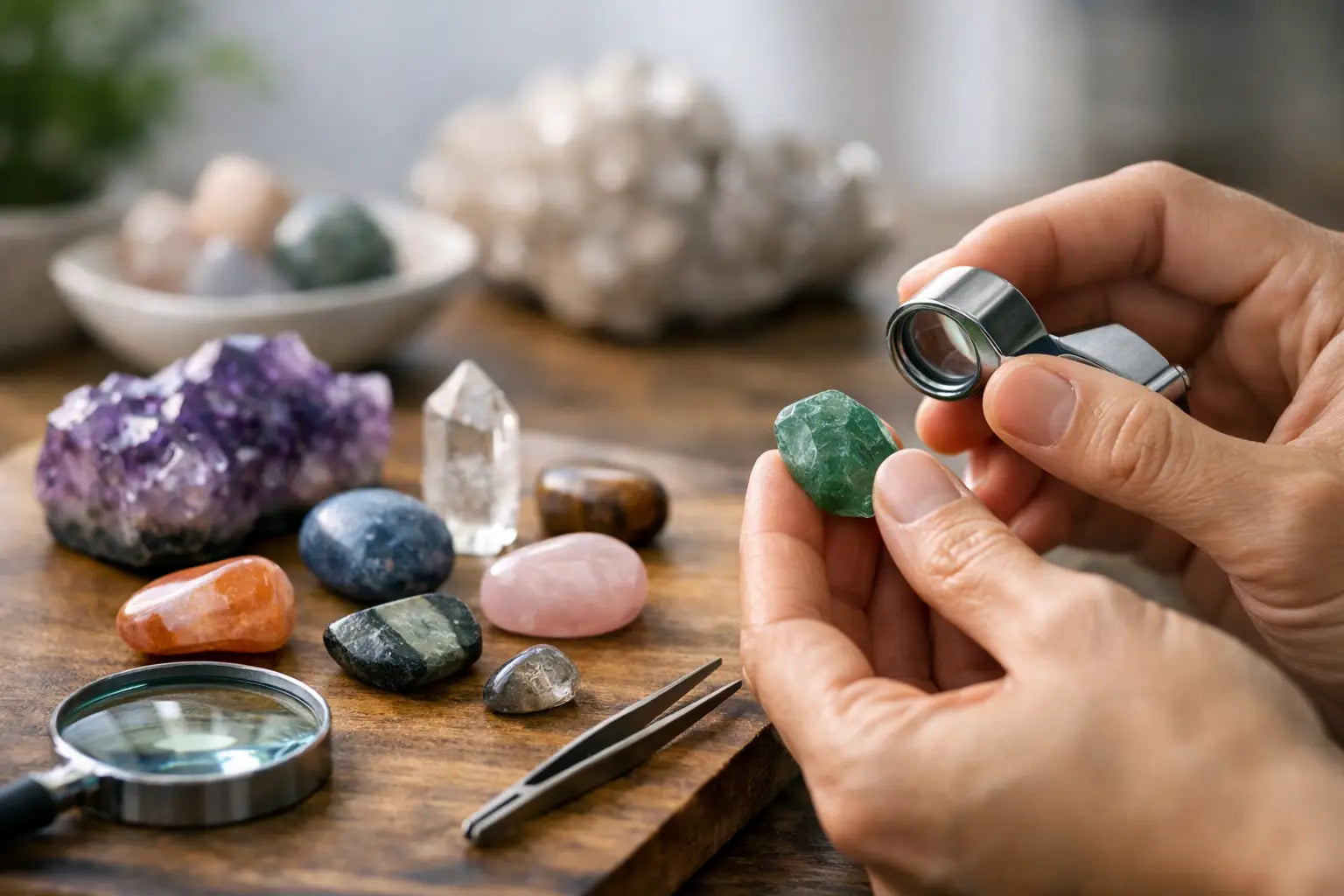
- Transparent product photos: High-quality images from multiple angles – ideally with a 360° view – show details such as inclusions, surface structure, and crystal formation. These can be compared with known pieces from the stated locality.
- Mineralogical description: Reputable dealers provide the mineral type, chemical formula, Mohs hardness, and crystal system. A rock crystal (SiO₂) has a Mohs hardness of 7. If this information is missing, caution is advised.
- Treatment status: Many stones are heated, dyed, or stabilized with synthetic resin. Reputable sellers disclose this openly. Untreated pieces with locality are more valuable than treated ones without provenance.
- Price plausibility: Minerals from hard-to-reach localities or of exceptional quality cost accordingly. A "tanzanite from Merelani, Tanzania" for 3 euros is very likely fake or mislabeled.
- Return policy and customer service: A dealer who stands behind their products offers hassle-free returns and genuine advice. This is an important trust signal.
The Most Important Source Regions and Their Typical Minerals
Different regions of the world are known for specific minerals. This knowledge helps you better classify and evaluate locality information.
Brazil – The World's Crystal Center
Brazil is one of the most significant mineral producers worldwide. The state of Minas Gerais has been supplying gemstones and minerals for over 300 years. Typical finds include amethysts, citrine crystals, tourmalines, and aquamarines. The pegmatite province in the northeast is particularly well known. Minerals from Brazil are available in our shop with exact locality information.
Afghanistan – Exceptional Qualities from the Hindu Kush
Despite its geopolitical situation, Afghanistan is one of the most important mineral regions in the world. The Panjshir Valley supplies extraordinary emeralds, while the Kunar Province produces spectacular tourmalines and kunzites. Minerals from Afghanistan are characterized by intense colors and exceptional crystal formation – true rarities for discerning collectors.
USA – Diversity from the West
The USA offers enormous mineralogical diversity. From turquoise from New Mexico to azurite-malachite from Arizona to Herkimer diamonds from New York (Mohs hardness 7, characteristic double termination). Minerals from the USA include both collector classics and true rarities.
Bolivia and Argentina
Bolivia is known for its unique bolivianite (bicolor ametrine from the Anahí Mine), Argentina for rose-shaped rhodochrosite from the famous Capillitas Mine – with characteristic concentric rings in up to 5 different shades of pink. Both countries produce distinctive minerals that are difficult for counterfeiters to replicate. Discover minerals from Bolivia and minerals from Argentina in our curated selection.
Recognizing Locality Fraud – How to Protect Yourself

Unfortunately, false locality information is not uncommon in the mineral trade. A critical eye is especially worthwhile with popular and expensive pieces.
- Compare with reference pieces: Natural history museums, scientific databases like Mindat.org, or the International Mineralogical Association (IMA) offer documented reference pieces and typicality descriptions for every locality.
- Watch for typical accompanying minerals: Every locality has characteristic parageneses. Rock crystal from the Swiss Alps typically grows on chlorite schist. If this matrix is missing on an alleged "Swiss rock crystal," skepticism is warranted.
- Check UV fluorescence: Many minerals show characteristic fluorescence under UV light. Calcite from certain Mexican localities glows intensely orange, while dyed imitations often show no reaction.
- Question unusually low prices: A genuine Paraíba tourmaline from Brazil costs several thousand euros per carat. Offers far below market price are a clear warning sign.
- Buy from dealers with a presence at mineral shows: Anyone who regularly exhibits at mineral shows engages in expert discussions and cannot permanently fabricate locality claims. This builds trust.
Buying Minerals with Locality – Online versus Showroom
Both purchasing methods have their merits. When buying online, you have access to a significantly larger selection. The quality of the product presentation is crucial. Detail photos from at least 4 perspectives, complete mineralogical data, and clear locality information are the minimum standard.
In a showroom – such as Crystal Paradise in Feldkirchen near Munich – you can hold minerals in your hand, feel the weight, and assess details with your own eyes. For beginners, this is an invaluable advantage. For experienced collectors, a well-run online shop provides access to international rarities that no local showroom could permanently stock.
In our shop, you'll find over 900 minerals with a 360° view – a standard that brings showroom-level transparency to online buying. In addition, our blog article on buying mineral collector's pieces online is worth reading, showing how to buy safely and knowledgeably online as well.
Special Mineral Variants with Documented Locality
Some minerals are particularly interesting when the locality explains the uniqueness of the piece. Three examples from our range:
Rock Crystal with Epidote
This combination of clear quartz (SiO₂, hardness 7) and the characteristic pistachio-green epidote usually forms in metamorphic rocks. The epidote grows as an inclusion or overlay on the rock crystal. Pieces from certain alpine localities are considered especially sought after. Discover rock crystal with epidote in our range.
Rock Crystal with Schorl Tourmaline
Black tourmaline crystals (schorl, hardness 7 to 7.5) in or on clear rock crystal are a fascinating interplay of opposites. This combination forms in pneumatolytic pegmatites. The locality determines whether the tourmaline needles are fine and parallel or coarse and intergrown. Take a look at our collection rock crystal with schorl tourmaline.
Practical Tips for Buying Minerals with Locality
- Note down locality, mineral type, and purchase date – this increases resale value.
- Compare several dealers before buying – price differences of 20 to 30% for the same mineral are normal.
- Actively ask the dealer about the supplier or mine – reputable sellers are happy to answer.
- Always store minerals with documented localities together with labeling.
- The same provenance principles apply to raw healing stones without polish – also read our article Buying raw healing stones – what matters.
Frequently Asked Questions

Why is locality so important for minerals?
The locality proves the geological formation history of a mineral. It influences color, crystal form, and rarity. For collectors, documented provenance is a central quality criterion. A mineral with precise locality information usually has a significantly higher collector value than an anonymous piece – often a factor of 3 to 10.
How can I tell if a locality claim is genuine?
Compare the piece with documented reference pieces on scientific platforms like Mindat.org. Watch for typical accompanying minerals (paragenesis) characteristic of the stated locality. A reputable dealer can support their locality claim with delivery documents or dealer certificates.
Are minerals with locality more expensive?
Usually yes, but not because of the information itself. A documented locality requires that the piece be kept separate and not mixed with other goods the entire way from mining to sale – this effort is reflected in the price. In addition, for classic localities that are exhausted or no longer accessible, collector value rises significantly with provenance. For purely decorative pieces, on the other hand, locality hardly matters – there, appearance is what counts.

Leave a comment
This site is protected by hCaptcha and the hCaptcha Privacy Policy and Terms of Service apply.