







Buying Raw Healing Crystals - What to Look For
Buying Raw Healing Stones – What Matters and What Really Counts

Anyone who wants to buy raw healing stones quickly faces a large selection and many questions. What matters can be clearly answered: authenticity, proof of origin, mineralogical quality, and careful selection of the supplier are decisive. Raw healing stones are unprocessed natural stones left in their original form directly after extraction. Unlike polished stones, they show natural fracture surfaces, crystal structures, and authentic color gradients. This is exactly what makes them so valuable to collectors, wellness enthusiasts, and spiritual seekers.
What Are Raw Healing Stones – Definition and Mineralogical Basics
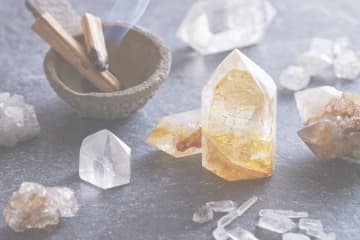
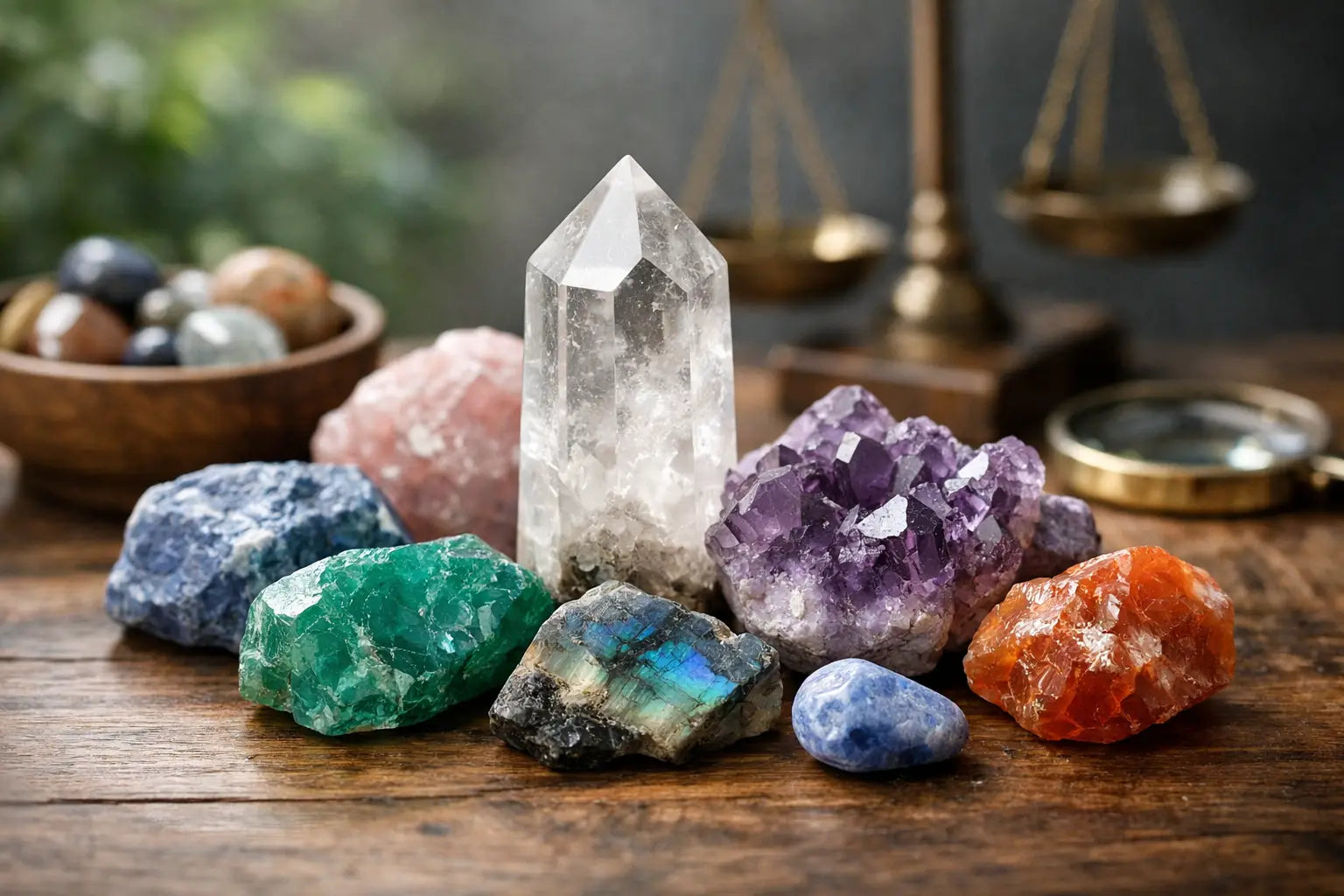
Raw healing stones are minerals or rocks that have not been polished, cut, or otherwise processed after extraction. They show their natural crystal structure in pure form. These include raw pieces such as raw amethyst, rose quartz in natural form, raw citrine crystal, or raw labradorite.
Mineralogically speaking, these are usually minerals with a standardized Mohs hardness between 3 and 9. Quartz, for example, reaches a hardness of 7, while calcite reaches a hardness of 3. This property directly influences how easy a stone is to care for and how it reacts to water or cleaning.
In our showroom in Feldkirchen near Munich, customers can experience raw healing stones up close every day – touch them, compare them, feel them. From our years of experience in the mineral trade, we know: nothing replaces direct contact with a real natural stone.
Raw vs. Polished – Which Stone Is Right for Whom?
Raw healing stones especially appeal to people who appreciate naturalness. Polished stones have an even surface and often appear more decorative. Raw pieces, on the other hand, preserve their original energy and mineralogical authenticity. In stone healing lore, raw stones are traditionally attributed a more intense effect – this is not scientifically proven, but many enthusiasts feel it that way.
Buying Raw Healing Stones – What Matters: The 6 Most Important Quality Criteria
Anyone who wants to buy raw healing stones and pays attention to the right things makes better purchasing decisions. We recommend consistently checking the following criteria:
- Authenticity and certification: Genuine natural stone can be confirmed through hardness testing, refraction, and mineralogical examination. Dyed or synthetic imitations are unfortunately widespread on the market.
- Proof of origin and locality: Quality dealers state whether an amethyst comes from Brazil, Uruguay, or India. Origin influences the color, quality, and energy profile of the stone. You can find more on this in our article Buying Minerals with Locality – What to Look For
- Natural coloring: Raw healing stones should not display artificially enhanced colors. Intensely colored pieces have often been treated with dye or heat – which is common for citrine made from amethyst, but should be disclosed.
- Surface and structure: Natural fracture surfaces, cracks, inclusions, and growth patterns are signs of authenticity – not flaws.
- Weight and density: Genuine minerals have characteristic density values. Calcite is about 2.7 g/cm³, hematite 5.3 g/cm³. Incorrect weight is a warning sign.
- Transparency of the supplier: Reputable shops state locality, mineral class, and any treatments – honestly and completely.
Recognizing Warning Signs When Buying
Unfortunately, fake or inferior stones are not uncommon on online marketplaces. These signs should make you cautious:
- Missing origin information or vague descriptions like "Asia" without an exact locality
- Unnaturally uniform color without nuances or inclusions
- Extremely low prices for supposedly rare minerals
- No right of return or missing buyer protection guarantee
- Product photos that show no natural irregularities
Popular Raw Healing Stones and Their Origin at a Glance

Every stone has a story – and it begins in the earth. Here are some of the most popular raw healing stones with mineralogical classification:
Raw Amethyst from Uruguay and Brazil
Amethyst belongs to the quartz family and reaches a Mohs hardness of 7. The intensely violet amethysts from Uruguay are considered premium goods. Brazilian specimens are larger and often lighter in color. In stone healing lore, amethyst is traditionally attributed with clarity and inner peace. Amethyst geodes can reach sizes of over 2 meters – magnificent pieces for collectors and interior design enthusiasts alike.
Rose Quartz from Brazil and Madagascar
Rose quartz gets its characteristic pink color from traces of titanium, iron, or manganese. Malagasy raw pieces often show a finer transparency. With a hardness of 7, it is easy to care for. According to tradition, rose quartz is considered the stone of love and heart opening.
Raw Rock Crystal from the Alps
Genuine alpine rock crystal is a collector's highlight. The crystals form in fissures and crevices of the mountains over thousands of years. Their purity and natural clarity make them unmistakable. Mohs hardness: 7. Rock crystal is traditionally associated with clarity and energy in stone healing lore. Anyone looking for rock crystal in a special form will also find rock crystal points of exceptional quality at Crystal Paradise.
Raw Labradorite from Finland and Canada
Labradorite is a feldspar mineral with a distinctive shimmer effect known as labradorescence. It arises from light scattering on internal layers. Hardness: 6 to 6.5. The stone originally comes from the Labrador Peninsula in Canada – hence its name. Finland today supplies a large part of the trade goods.
Proper Care: Keeping Raw Healing Stones Beautiful and Energetically Fresh
Raw healing stones need special care. Their unprocessed surfaces are more sensitive than those of polished stones. We recommend the following care tips:
- Cleaning with lukewarm water: Most quartzes and hard minerals (hardness 6+) can be briefly rinsed under lukewarm water. Never use hot water – thermal shocks can create cracks.
- Caution with water-soluble minerals: Calcite, selenite, and halite dissolve in water. Only clean these stones dry.
- Energetic cleansing: In spiritual circles, the full moon night method is considered classic. Stones are placed outdoors during the full moon – traditionally for at least 8 hours.
- Light protection for color-sensitive stones: Amethyst and rose quartz can fade in direct sunlight. Storage in partial shade is recommended.
- Dust-free care: A soft, dry cloth is sufficient for the regular care of most raw pieces.
Buying Raw Healing Stones – Online or in the Showroom?
Many buyers ask themselves this question. Both paths have their strengths. Online, Crystal Paradise offers a curated selection from around the world – with transparent origin information and detailed product photos. Our showroom in Feldkirchen near Munich allows you to feel the stones directly, experience their weight and structure, and receive personal advice.
From our years of experience, we know: many customers buy their first stone online – and then come to the showroom because they want more. Both experiences complement each other perfectly. Especially for beginners, we recommend first learning about stone types on the Mineralienatlas and then shopping specifically.
Anyone looking for a special gift can also find raw healing stones for very different recipients. Even for four-legged friends there are suitable products: Discover our healing stones for pets – a loving idea for animal companions.
And anyone who sleeps poorly at night can be inspired by our guide to healing stones for sleep.
Frequently Asked Questions

How do I recognize a genuine raw healing stone?
Genuine raw healing stones show natural irregularities: inclusions, fracture surfaces, color gradients. A hardness test with a knife (steel: hardness approx. 5.5) can help. Softer than steel? Then it's not quartz. Reputable dealers also provide locality and mineral class. At Crystal Paradise, all stones are hand-selected and labeled with origin information.
Which raw healing stones are suitable for beginners?
For beginners, particularly robust stones with a hardness of 6 or higher are suitable. Rose quartz, amethyst, and rock crystal are easy to care for, widely available, and well documented in stone healing lore. They are available in raw form starting at just a few euros – as a single piece or cluster. Anyone who prefers rock crystal will also find rock crystal spheres in various sizes at Crystal Paradise.
May I put raw healing stones in water?
Not all raw healing stones are water-safe. Quartz stones (hardness 7) like amethyst or rock crystal tolerate brief contact with water. Calcite, selenite, pyrite, or malachite, on the other hand, should not be placed in water – they can dissolve, oxidize, or release toxic substances. When in doubt: clean dry instead.
How do I store raw healing stones properly?
Ideal storage means: cool, dry, protected from light, and free from vibration. Soft stones (hardness below 5) should not be stored together with harder minerals, as they can damage each other. Use soft cloths, wooden boxes, or special mineral stands.
What do raw healing stones cost at Crystal Paradise?
Prices vary greatly depending on stone type, size, rarity, and origin. Small raw pieces start at just 3 to 5 euros. Rare minerals or magnificent pieces can cost several hundred euros. In our shop, you'll find the right selection for every budget – hand-selected and with transparent information.


Leave a comment
This site is protected by hCaptcha and the hCaptcha Privacy Policy and Terms of Service apply.