








Choosing the Right Minerals for Collectors
How to Choose and Buy Minerals for Collectors – The Ultimate Guide

Anyone who wants to choose and buy minerals for collectors correctly needs one thing above all: reliable knowledge. A high-quality collector's piece is characterized by verifiable provenance, mineralogical authenticity, and aesthetic quality. Whether beginner or experienced collector – knowing the right criteria leads to better decisions. In this guide, we explain step by step what really matters.
At Crystal Paradise, we have accompanied collectors on this journey for years. From our own experience, we know: the most common mistakes don't happen due to lack of knowledge, but due to lack of guidance. That's exactly what we're giving you here.
What really makes a mineral collector's piece valuable?
Not every stone is automatically a collector's piece. There can be worlds of difference between a decorative stone and a true collector's mineral – mineralogically, visually, and financially.
The four core criteria for collector's quality
- Provenance and locality: A documented locality significantly increases value. Minerals from classic mining regions such as the Congo Basin, the Andes of Bolivia, or the pegmatites of Pakistan are considered especially sought after.
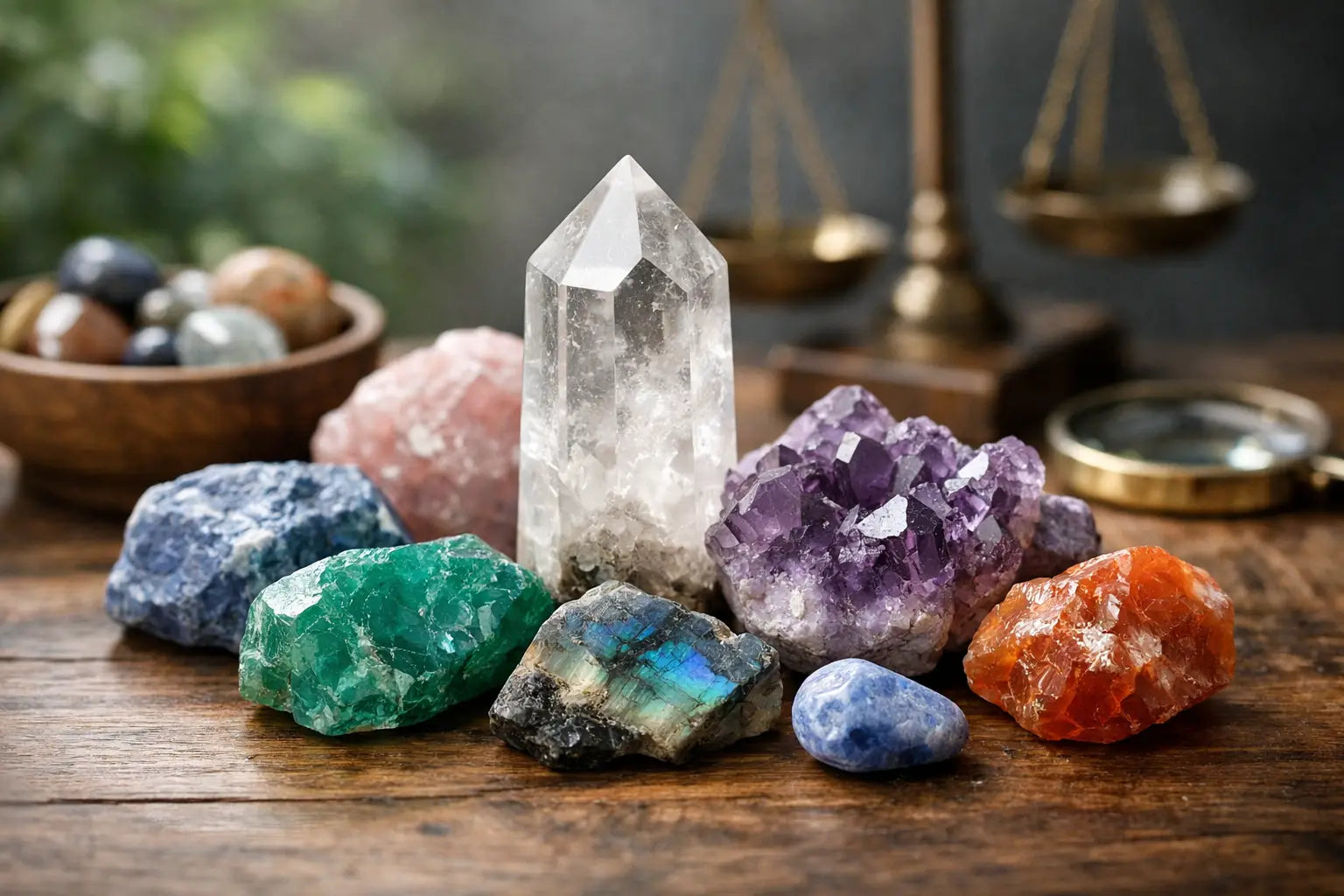
- Crystal formation: Fully formed crystal faces without mechanical damage are the most important aesthetic criterion.
- Rarity: Some minerals occur at only a few localities worldwide. Frequency directly influences market price.
- Condition and preservation: Missing tips, cracks, or post-treatments significantly reduce collector value.
For advanced collectors, we also recommend paying attention to XL minerals and monumental fine minerals – pieces that reach museum quality through their size and formation.
How to Choose and Buy Minerals for Collectors – Getting Started Successfully
Anyone new to the world of mineralogy faces an almost overwhelming selection. Quartz, tourmaline, fluorite, sulfides – the mineral classes alone comprise, according to the International Mineralogical Association (IMA), over 5,700 recognized mineral species. A sensible narrowing of focus helps a lot when starting out.
Step 1: Define a collecting focus
Many successful collectors specialize in a mineral group, a region, or a particular property such as fluorescence. Possible starting points include:
- Quartz varieties (amethyst, citrine, smoky quartz, rock crystal)
- Sulfides and sulfosalts (pyrite, galena, stibnite/antimonite)
- Carbonates (calcite, rhodochrosite, azurite)
- Oxides and hydroxides (rutile, hematite, manganite)
- Minerals from a specific region of origin, e.g. minerals from Bolivia
A clear focus prevents a collection from becoming a colorful jumble. At the same time, specialization allows you to build real expertise – a decisive advantage when buying.
Step 2: Understand the hardness scale and mineral class
The Mohs hardness scale is one of the most fundamental tools in mineralogy. The scale ranges from 1 (talc) to 10 (diamond). It's important for collectors for two reasons: it helps with identification and provides information about a stone's care requirements.
Fluorite, for example, has a hardness of 4 on the Mohs scale. It is comparatively delicate and should not be stored next to hard quartz (hardness 7) to avoid scratches. Agates, on the other hand, reach a hardness of up to 7 and are significantly more robust to handle.
Step 3: Recognizing treatment – nature vs. enhancement
Many stones on the market are treated. Heating, dyeing, coating, and irradiation are common methods used to intensify colors or mask flaws. As a collector, you should know these differences:
- Citrine: Natural citrine is rare and pale yellow. Commercial citrine is usually heated amethyst – often burned at temperatures between 300 and 500 degrees Celsius.
- Aqua Aura: Rock crystal with vapor-deposited gold. Visually appealing – but no longer a natural mineral specimen mineralogically.
- Stabilized turquoise: Often reinforced with resin to reduce porosity.
- Irradiated topaz: Natural blue topaz is very rare – blue coloring is almost always treated.
In our shop, we place great importance on transparency. We clearly label treated stones and provide origin information as detailed as possible. For us, this isn't marketing – it's a principle.
Recognizing quality when buying online – What you need to watch out for
Buying minerals for collectors online is convenient, but carries risks. Images can be deceiving, descriptions imprecise. The following points help evaluate a reputable seller:
Transparency and product description
Good dealers state the country of origin, region, and – if known – the exact mine. They provide dimensions and weight. Photos show the piece from multiple angles. Damage is communicated honestly.
If this information is missing, caution is warranted. Empty phrases without verifiable basis are not a sign of quality.
Price range and market knowledge
A top-tier rhodochrosite from the Capillitas mine in Argentina can easily cost three to four-figure euro amounts. A good-quality amethyst from Brazil ranges between 15 and 200 euros depending on size. Anyone who understands prices can also recognize genuine bargains – and overpricing.
For a well-founded market assessment, we recommend our article Prices for minerals and gemstones – my expert view of the market.
Service, returns, and advice
Reputable dealers offer a return option, fast delivery times, and accessible advice. At Crystal Paradise, free returns, personal consultation, and a showroom in Feldkirchen near Munich are standard. Anyone who wishes can therefore also view pieces in person – an invaluable advantage over purely online retailers.
Storage and care of collector minerals

A high-quality mineral deserves proper storage. Improper storage can lead to irreversible damage within just a few months.
Basic rules for storage
- Never stack minerals directly on top of each other – always separate them with soft material (foam, cotton).
- Delicate pieces such as pyrite should be stored below 50% relative humidity, as pyrite oxidizes with moisture (so-called pyrite decay).
- Direct sunlight for more than 2 to 3 hours daily can permanently fade amethyst, rose quartz, and other colored minerals.
- Halite specimens (rock salt) must be completely protected from moisture – they dissolve in humid air.
- Labels belong on the display base or protective box, not directly on the stone.
For the professional development of a collection, it's also worth taking a look at our accessories collection for mineral collectors – from display stands to protective boxes to labeling systems.
The spiritual meaning of collector minerals – viewed with care
Many collectors are interested not only in mineralogical properties but also in the traditional symbolic meaning of stones. This is a legitimate and enriching approach.
Amethyst is traditionally associated in crystal lore with clarity and inner peace. Rose quartz is traditionally regarded as the stone of heart energy. Black tourmaline is said, according to esoteric tradition, to have protective qualities.
These attributions are part of a long cultural history – from ancient civilizations through medieval healing traditions to the present day. They are not medical claims and do not replace medical treatment. We take these traditions seriously without scientifically overstating them.
Anyone interested in the connection between minerals and meditation will find further information in our article Choosing the right healing stones for meditation.
External resources for mineral collectors
In addition to a trustworthy dealer, external expert sources help build collector knowledge. Two particularly recommendable resources are:
- Mindat.org – the world's largest mineralogical database with over 5,700 mineral species, localities, crystal photos, and scientific descriptions. Indispensable for every serious collector.
- The Mineralogical Record – the leading English-language trade magazine for mineral collectors, with detailed reports on localities, auctions, and collector personalities worldwide.
Frequently Asked Questions

As a beginner, how do I recognize whether a mineral is genuine?
Initial points of orientation are weight, temperature, and texture. Real quartz feels cold and warms up slowly. Glass is lighter and warms up faster. A simple hardness test with a steel file (hardness approx. 6.5 on the Mohs scale) also helps. For deeper identification, mineralogical identification guides or personal consultation with a specialized dealer are recommended.
Which minerals are particularly well suited for starting a collection?
For beginners, we recommend robust, visually impressive, and at the same time affordable minerals. Proven choices include: rock crystal specimens from Brazil, amethyst geodes, pyrite cubes from the Spanish province of Navajún, fluorite from China, or calcite from Mexico. These pieces offer high aesthetic value at a manageable entry price – often starting from as little as 10 to 50 euros. Also browse our collection Discover the fascinating world of minerals for beginners.
How much should I spend on a good collector's piece?
This depends heavily on the mineral and the quality level – a blanket figure would be irresponsible. It's more useful to consider the ratio: a piece that captivates you visually and whose provenance is documented is more worth its money than three random pieces at the same price. For getting started, double-digit amounts are entirely sufficient; rare minerals, large specimens, and classic localities quickly move into the three-figure range and beyond. Our practical advice: buy less often, but more consciously.

Leave a comment
This site is protected by hCaptcha and the hCaptcha Privacy Policy and Terms of Service apply.