












Cleanse & charge Citrine
Cleansing Citrine – Why Caring for Your Sunstone Matters So Much

Cleansing citrine means, according to traditional stone lore: releasing accumulated energies and returning the crystal to its original state. Citrine, too, which crystal healing attributes an invigorating energy to, benefits from regular cleansing – especially if you wear it daily. In this article, you'll learn how to gently cleanse citrine, charge it safely, and preserve its natural radiance.
Citrine is a golden yellow to honey-colored variety of the quartz mineral. It belongs to the silicate family and reaches a value of 7 on the Mohs hardness scale. Its color comes from traces of iron in the crystal lattice – a purely natural process that makes genuine untreated citrines especially valuable. The most significant deposits are located in Brazil, Russia, the Democratic Republic of the Congo, and Zambia.
Why You Should Cleanse Citrine Regularly
In crystal healing, citrine is traditionally described as "self-cleansing." Still, every stone benefits from regular care. Especially with intensive daily use – as a jewelry stone, meditation companion, or room décor – energetic impressions are said to accumulate according to traditional practice.
Based on our many years of experience in the healing stone trade, we recommend cleansing in the following situations:
- After purchase – every new stone carries the energies of its journey with it
- After emotionally stressful moments or conversations
- After long storage without use
- Every 4 weeks as routine care – even for stones used purely as room décor
- Before giving a citrine as a gift
Additionally, a citrine that could use an energetic cleansing sometimes appears visually duller. This is not a sign of quality but an indication of clinging dust or moisture. This, too, can be remedied with a gentle cleansing.
Cleansing Citrine – The Best Methods at a Glance
Not every cleansing method is suitable for every stone. With citrine, there are a few things to keep in mind, as it is sensitive to heat and intense sunlight. At a temperature of around 200 °C, citrine's natural color already begins to fade permanently. Direct sunlight over several hours can lead to color changes over time even at room temperature.
Cleansing with Water
Citrine tolerates brief contact with clear, lukewarm water without issue. Hold the stone under running water for a maximum of 2–3 minutes and then dry it gently with a soft cloth. Avoid salt water – salt can make the surface matte over time. No acids, no cleaning agents. For citrine pendants with a metal setting, check beforehand whether the metal is water-resistant.
Cleansing with Incense
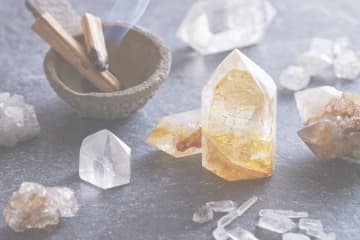
Smoke cleansing with Palo Santo, white sage, or frankincense is one of the gentlest methods. Hold the citrine in the smoke for about 30–60 seconds. This method is especially popular since it requires neither water nor mechanical contact. In crystal healing, incense is traditionally considered a powerful cleansing agent for energetically burdened stones.
Cleansing with Sound
Singing bowls, tingsha cymbals, or tuning forks create vibrations that, according to traditional practice, are said to release stuck energies. Hold the citrine near or in the singing bowl and let the tone resonate for 2–3 minutes. This method also works for entire stone collections at once.
Cleansing on a Clear Quartz or Amethyst Bed
Clear quartz geodes and amethyst specimens are traditionally used in crystal healing as charging plates. Place your citrine overnight – about 8 hours – on a clear quartz geode. According to traditional belief, this combination is said to have both a cleansing and energizing effect. You can find more on this in our article on Cleansing & Charging Clear Quartz.
Cleansing and Charging Citrine – Methods from Crystal Lore at a Glance
After cleansing comes charging. In crystal healing, this refers to reviving and strengthening the energetic qualities of a stone. The following methods are especially suitable for citrine:
Moonlight – The Gentle Charging Source
Place your citrine on a windowsill or outside for one night during the full moon. Moonlight is considered in crystal healing to be an especially gentle and harmonizing energy source. Since citrine is sensitive to direct sunlight, the moon is the preferred light source. 1 night is completely sufficient.
Earth – Returning to Nature
Bury your citrine in natural garden soil for 24 hours. This method is traditionally described as an especially deep cleansing and simultaneous charging. Wrap the stone beforehand in a natural cloth so you can easily find it again.
Mental Intention and Breathing Technique
Hold the citrine in both hands. Close your eyes. Breathe deeply in and out three times. Picture bright, golden light passing through the stone. This method is simple, location-independent, and widely used in spiritual practice.
Detailed information on all charging techniques can be found in our guide: Charging & Cleansing Healing Stones – Guide.
What You Should Absolutely Avoid with Citrine

Some common cleansing methods can damage citrine. Here are the most important warnings:
- No direct sunlight for more than 30 minutes – color loss is possible
- No salt water – salt attacks the surface
- No ultrasonic cleaners – the vibrations can enlarge internal cracks
- No harsh cleaning agents or chemicals
- No steam cleaners – heat above 200 °C leads to color changes
- No abrasive cloths – cotton or microfiber is ideal
Citrine Varieties and Their Origin: What You Should Know
The origin of a citrine significantly influences its color, transparency, and quality. Brazil is the world's largest supplier. Brazilian citrines often show an intense golden yellow to orange and frequently occur as geodes or points. Our citrines from Brazil are especially popular among collectors.
Russian citrines, on the other hand, are known for their exceptional clarity. Zambian pieces impress with their vibrant, rich color tones. Citrines from the Congo often delight with their unique crystal form. In our showroom in Feldkirchen near Munich, you can directly compare many of these origin varieties – an experience no photo can replace.
Note: A large portion of stones sold as "citrine" in stores are actually heated amethyst. Genuine, natural citrine is rarer and more valuable. According to the Gemological Institute of America (GIA), natural citrine forms through natural heat and radiation exposure within the earth – a process that takes millions of years. You can learn more in our article Recognizing Genuine Citrine.
Caring for and Storing Citrine – Long-Term Tips
Proper storage significantly extends your enjoyment of your citrine. Here's how to protect your stone optimally in the long run.
Store citrine separately from harder stones like diamond or corundum. Although citrine, at 7 on the Mohs scale, is quite hard itself, scratches can occur through improper contact. A soft cloth or a velvet pouch reliably protects the surface. Avoid storage in direct sunlight – a dark cabinet or a closed jewelry box is ideal.
Clean citrine jewelry once a month with a slightly damp cloth. This way, it retains its natural shine permanently. You can find more cleansing instructions for other stones in our articles on Cleansing & Charging Amethyst and Cleansing & Charging Rose Quartz.
Frequently Asked Questions

Do I really need to cleanse citrine if it's considered self-cleansing?
Yes. Even though citrine is traditionally considered a self-cleansing stone in crystal healing, it benefits from regular care. We especially recommend a deliberate cleansing after purchase, after intensive use, or after emotionally stressful situations. In addition, physically cleansing with water and a soft cloth removes dust and fingerprints that diminish the stone's natural radiance.
How often should I cleanse and charge citrine?
As a rule of thumb, we recommend: every 4 weeks as routine, directly after purchase, and after emotionally charged phases. If you wear the citrine daily – for example as a pendant or bracelet – a shorter interval of 2 weeks may be advisable. Charging is ideally done at the next full moon, so roughly every 28–30 days.
Can I cleanse citrine in water?
Yes, briefly and with lukewarm clear water. Hold the stone under running water for a maximum of 2–3 minutes. However, salt water, chemicals, and cleaning agents should be avoided. Citrine with a metal setting should generally not be fully submerged in water, as this can corrode the metal over time.
Does citrine fade from sunlight?
Yes. Intense direct sunlight over several hours can permanently bleach citrine's golden yellow color. Brief sun exposure of up to 20–30 minutes is considered harmless, but it is not the preferred method for charging citrine. Moonlight is a far gentler alternative.
Which cleansing method is easiest for beginners?
Smoke cleansing with Palo Santo or white sage is ideal for beginners. It requires no special tools, is gentle on the stone, and takes only 30–60 seconds. Alternatively, a quick rinse under running water followed by gentle

Written by Christian Neumayer



Leave a comment
This site is protected by hCaptcha and the hCaptcha Privacy Policy and Terms of Service apply.