







Amethyst: Effects, Meaning & Application
Amethyst Effects, Meaning & Uses – The Ultimate Guide

Amethyst is one of the most well-known and beloved gemstones in the world. Its characteristic purple color has fascinated people for thousands of years. According to tradition, Amethyst is said to have a calming, clarifying, and protective meaning. In this guide, you'll learn everything important: from mineralogy to history to practical tips for everyday use.
What is Amethyst? Mineralogical Basics
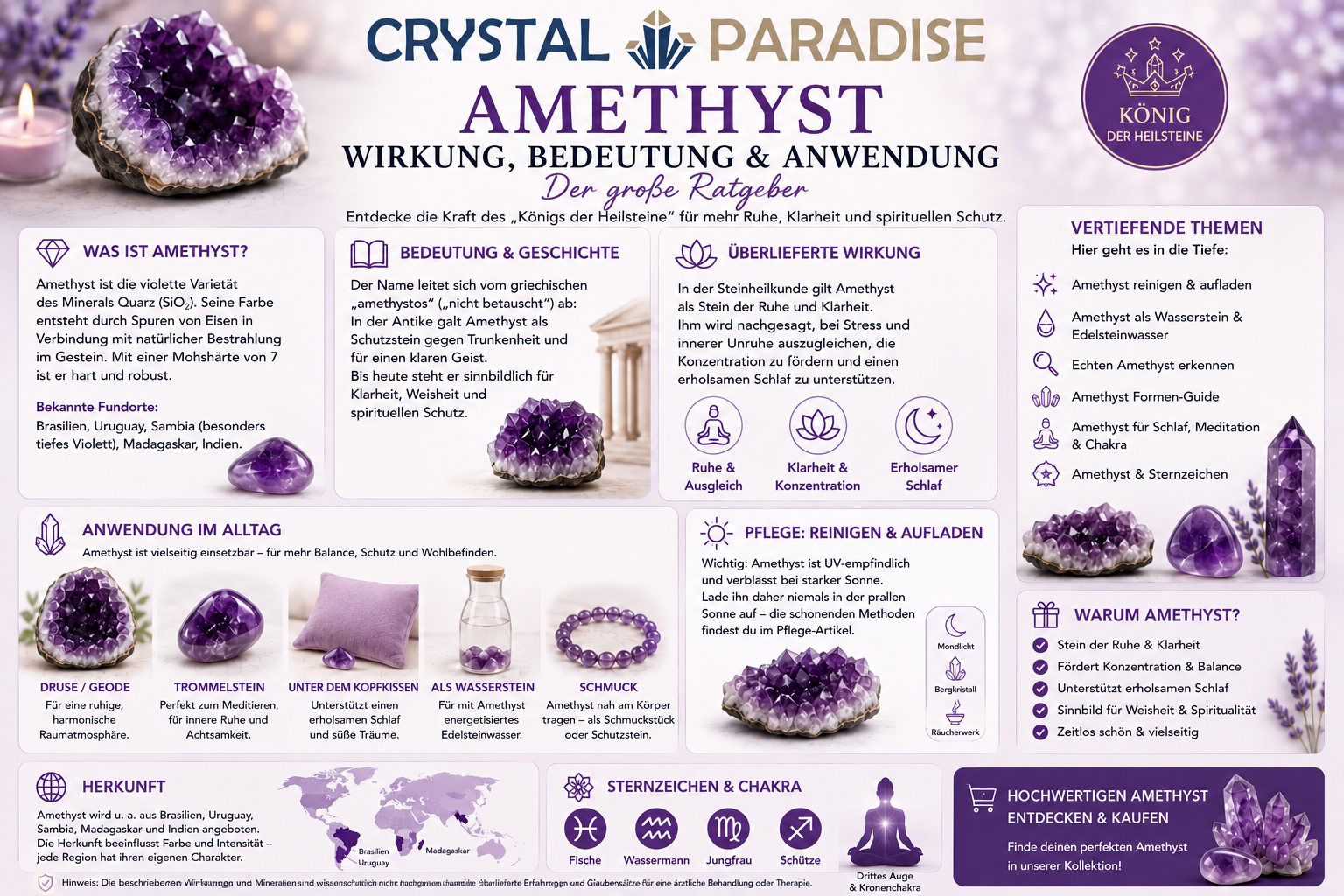
Amethyst is the purple variety of the mineral quartz. Its chemical formula is SiO₂. The typical purple coloration is caused by traces of iron combined with natural irradiation within the rock.
With a Mohs hardness of 7, Amethyst is relatively hard and durable. This makes it well suited for everyday use – whether as jewelry, a tumbled stone, or decoration.
Well-Known Deposits Worldwide
Amethyst is mined on several continents. The most important countries of origin are:
- Brazil – the world's largest producer, light to medium purple tones
- Uruguay – known for especially deep, rich purple
- Zambia – intense purple with a reddish tint
- Madagascar – often soft purple hues
- India – frequently available in tumbled stone quality
The origin significantly affects color, transparency, and quality. Uruguayan geodes, for example, are considered especially valuable. Discover our hand-selected Amethyst Geodes from various regions of origin.
History and Meaning of Amethyst
The name Amethyst comes from Ancient Greek. "Amethystos" translates to "not intoxicated." In antiquity, people wore Amethyst as a protective stone against intoxication. It was believed to keep the mind from becoming clouded.
As early as ancient Egypt, Amethyst was prized as a decorative stone. In the Middle Ages, Amethysts adorned the rings of bishops and kings. It's not for nothing that it carries the nickname "King of Healing Stones."
To this day, Amethyst symbolizes wisdom, clarity, and spiritual protection. It is one of the seven classic gemstones and ranks among the most popular healing stones of all.
Amethyst Effects: What Tradition Says
In stone healing lore, Amethyst holds a special place. Various effects are attributed to it. These are based on centuries-old traditions and personal experiences.
Note: The effects described are not scientifically proven. They stem from traditional experiences and spiritual traditions. They do not replace medical treatment.
Inner Peace and Stress Relief
In stone lore, Amethyst is traditionally considered a stone of calm and has been valued for centuries as a companion during turbulent times. Many people use it as a personal companion during stressful periods. In stone lore, it is traditionally considered calming and grounding.
Clarity and Concentration
The stone is said to promote mental clarity. It is believed to help maintain a clear head. It is especially popular when making important decisions.
Sleep and Rest
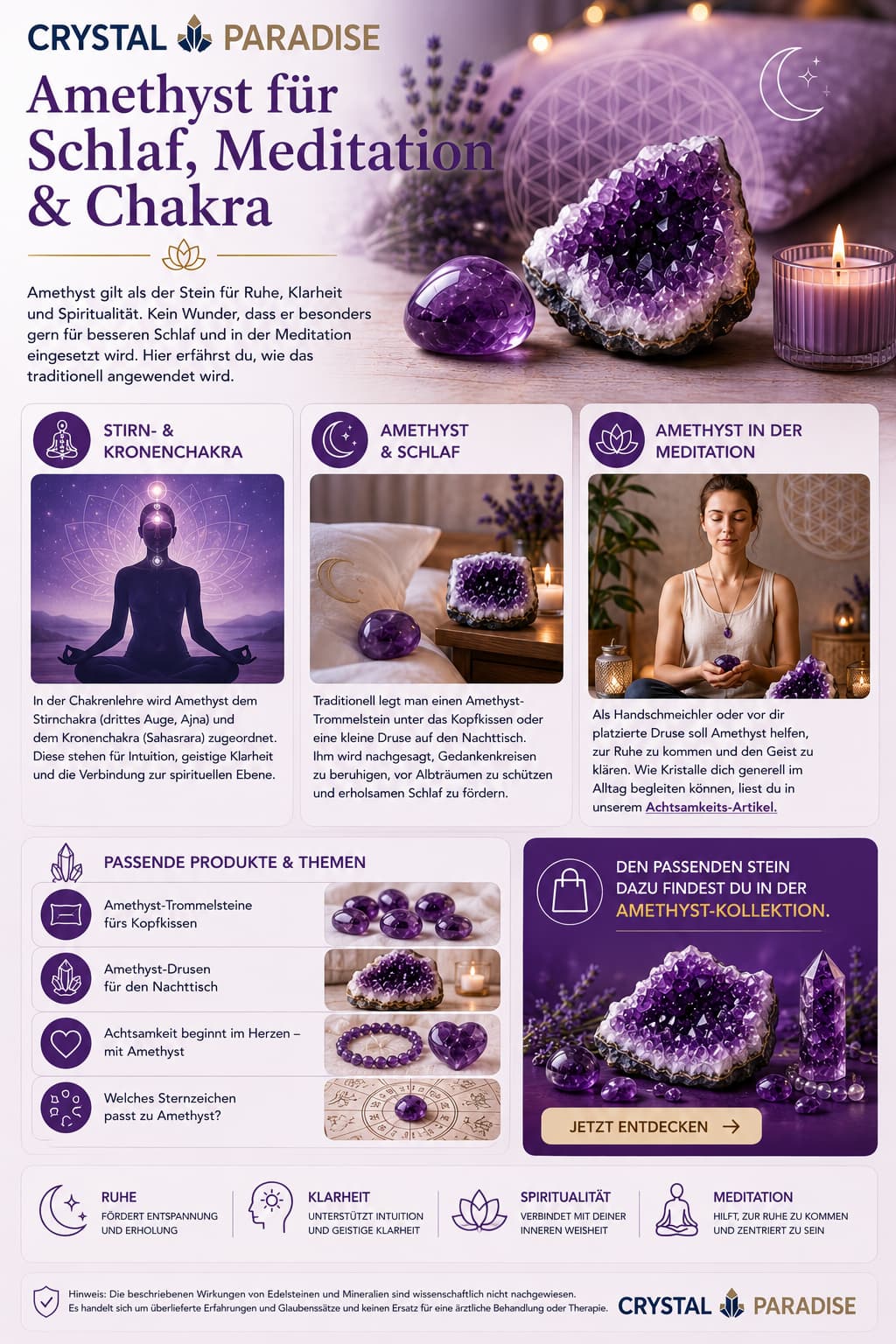
Amethyst is considered one of the best-known sleep stones. Many people place it near the bed or under their pillow for this reason.
Spiritual Protection and Chakra Work
In spiritual traditions, Amethyst is associated with the third eye chakra (Ajna) and the crown chakra. It is said to expand consciousness and strengthen intuition. It is a popular companion during meditation and mindfulness practices.
If you're also interested in the effects of other quartz varieties, you'll find fascinating similarities and differences when comparing Amethyst with clear quartz or rose quartz.
Amethyst Forms and Their Everyday Use

Amethyst is available in many different forms. Each form has its own strengths and uses. The choice of form depends on personal intended use.
Popular Forms at a Glance
- Geode & Druse: Ideal as room decoration. An Amethyst Geode creates a striking visual highlight and a calm atmosphere.
- Hand Specimen: Flat, polished Amethyst hand specimens are perfect for a desk or shelf. The Amethyst hand specimens in our shop are hand-selected.
- Tumbled Stone: Small, smooth, and handy. Amethyst tumbled stones are great for meditation or as a daily companion in your pocket.
- Sphere: Symbolizes perfection and unity. Amethyst spheres are popular collector's items and meditation objects.
- Point: Frequently used for energy work and meditation. Our Amethyst points are available in various sizes.
- Carvings: Elaborate carvings made from Amethyst – especially beautiful as a gift. Discover our Amethyst carvings.
Amethyst as a Water Stone
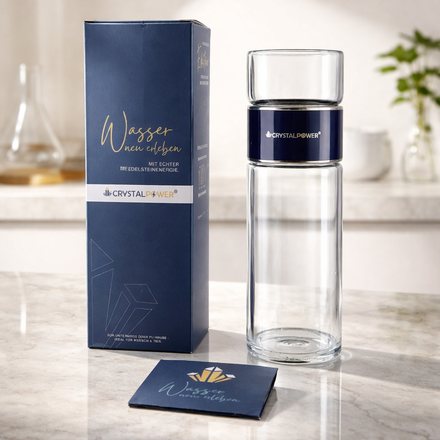
Amethyst is often used as a water stone. It is placed – directly or indirectly – into drinking water. This is known as gemstone water. Amethyst is especially popular for this application.
Important: For the direct method, always use untreated natural stone. Inform yourself beforehand about safe methods of use.
Cleaning and Charging Amethyst
For Amethyst to retain its energy, it should be cleaned and charged regularly. There are a few important points to keep in mind.
Gentle Cleaning Methods
The simplest method is rinsing under lukewarm water. Afterward, you can let the stone rest briefly in the evening sun or in moonlight.
Alternatively, the following methods are suitable:
- Smudging with sage or Palo Santo
- Charging on a clear quartz cluster
- Energizing with singing bowls
- Placing on soil or burying in soil
Important: Avoid Sunlight
Amethyst is UV-sensitive. Direct sunlight will permanently fade its purple color. Therefore, never leave it in bright sunlight for extended periods. Morning light or indirect daylight is not a problem.
Identifying Genuine Amethyst
Unfortunately, dyed glass or treated quartz is also found on the market. However, genuine Amethyst can be identified by a few characteristics.
Look out for the following points:
- Temperature: A genuine stone feels cool at first. Glass warms up more quickly.
- Inclusions: Natural inclusions and slight irregularities are a good sign of authenticity.
- Color Distribution: Genuine Amethyst often shows uneven, zoned color distribution. Perfectly even color may indicate treatment.
- Hardness: With a Mohs hardness of 7, genuine Amethyst scratches glass easily.
- Transparency: Quality Amethyst shows a clear, translucent structure in light.
At Crystal Paradise, all stones are hand-selected and checked for authenticity. We place great value on transparency regarding origin and quality.
Amethyst as a Gift and Personal Companion
Amethyst makes an excellent gift. It is versatile, beautiful, and carries deep symbolic meaning. Whether for a birthday, anniversary, or simply as a thoughtful gesture – an Amethyst is always a good choice.
Anyone looking for a personal birthstone will find a lovely selection full of meaning and personality in our birthstones collection.
Amethyst, by the way, is the classic birthstone for February. It also pairs well with the zodiac signs Capricorn, Aquarius, and Pisces.
Frequently Asked Questions

What effect is attributed to Amethyst in stone healing lore?
In stone lore, Amethyst is considered a stone of calm and clarity and is traditionally said to have a balancing effect. It is also said to promote restful sleep and spiritual protection. These effects are based on traditional experiences and are not scientifically proven. They do not replace medical treatment.
How do I properly clean and charge my Amethyst?
Amethyst can be rinsed under lukewarm water. Moonlight, smudging, or a clear quartz cluster are suitable for charging. Important: Amethyst is UV-sensitive and must not be left in direct sunlight. Otherwise, the color would fade permanently.
How can I identify genuine Amethyst?
Genuine Amethyst feels cool at first and shows an uneven, zoned color distribution. Natural inclusions are another sign of authenticity. It scratches glass with its Mohs hardness of 7. Perfectly even color or a very low price may indicate dyed glass or a treated stone.
Can I use Amethyst as a water stone?
Yes, Amethyst is often used as a water stone. Only use natural, untreated stones for this purpose. Inform yourself beforehand about direct and indirect methods of use. If in doubt, the indirect method – keeping the stone outside the water – is always the safest choice.
Which form is best suited for beginners?
Tumbled stones and smaller hand specimens are ideal for beginners. They are handy, affordable, and versatile. A small Amethyst geode on your desk is also a lovely starting point. Those who want to go further can also try geodes or points.

Leave a comment
This site is protected by hCaptcha and the hCaptcha Privacy Policy and Terms of Service apply.