







Tanzanite from Tanzania – A fascinating gemstone with special energy
In short: Tanzanite is the blue-violet variety of the mineral zoisite and occurs worldwide at a single location – the Merelani Hills in Tanzania. Almost every stone in trade is heat-treated, which is industry standard. In stone healing lore it is traditionally regarded as a stone of clarity; there is no scientific evidence for this.
| Property | Tanzanite |
|---|---|
| Mineral | Zoisite (sorosilicate) |
| Chemical formula | Ca2Al3(SiO4)3(OH) |
| Mohs hardness | 6.5 – 7 |
| Color | Blue-violet; depending on viewing angle also blue, violet, or burgundy |
| Optical effect | Trichroism – three colors from three viewing directions |
| Locality | Only one worldwide: Merelani Hills, Northern Tanzania, about 40 km from Arusha |
| Discovered | 1967, near Kilimanjaro |
| Treatment | Usually heated to 400–500 °C to deepen the blue-violet color – a recognized industry standard |
| Traditional attribution | Clarity and transformation – traditional attribution without scientific evidence |
| Care | With a hardness of 6.5–7, more delicate than ruby or sapphire – do not clean in an ultrasonic bath |
Tanzanite Gemstone – Definition, Origin, and Special Features

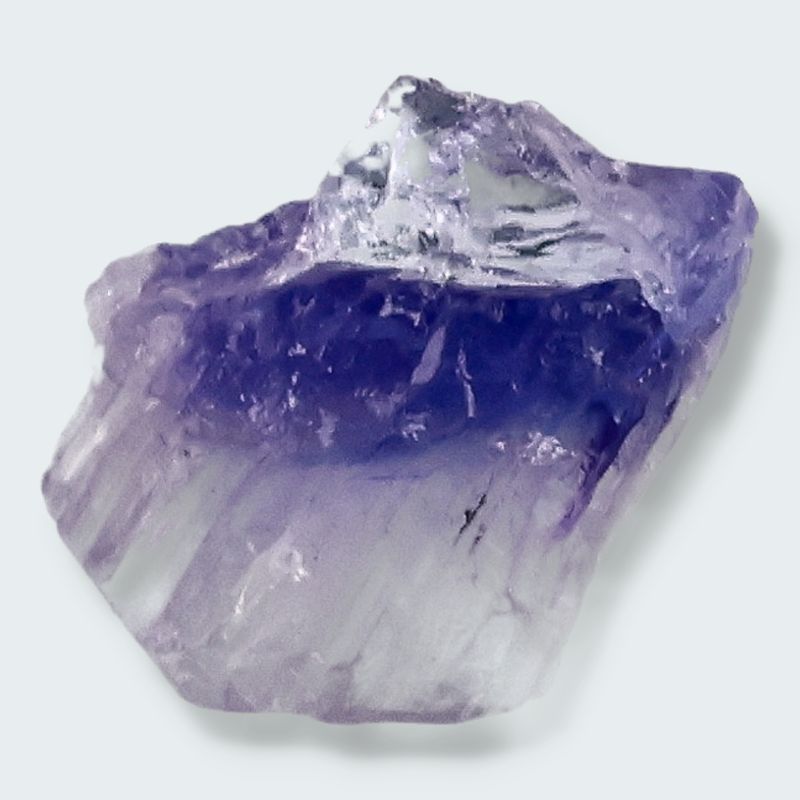
Tanzanite is an exceptional tanzanite gemstone from the zoisite mineral group. It is one of the rarest gemstones in the world. Its unmistakable blue-violet color makes it instantly recognizable. It was discovered in 1967 near Kilimanjaro in Tanzania. Tanzanite occurs worldwide in only a single mining area: the Merelani Hills, about 40 kilometers from the city of Arusha. This extreme rarity gives it a special appeal – for collectors, jewelry lovers, and spiritually interested people alike.
Mineralogical Classification of the Tanzanite Gemstone
Chemically, tanzanite is a calcium aluminum silicate with the chemical formula Ca₂Al₃(SiO₄)₃(OH). It belongs to the zoisite group and is a sorosilicate. Its Mohs hardness is 6.5 to 7. This is moderate compared to diamond or ruby – and important for care.
The stone shows a fascinating optical phenomenon: trichroism. Depending on the viewing angle, it shimmers blue, violet, or burgundy. This play of colors arises from the crystalline structure and light refraction. As a rule, the rough stones are heated to intensify the characteristic blue-violet color. This heat treatment takes place at about 400 to 500 degrees Celsius and is a recognized industry standard.
Locality: The Merelani Hills
The Merelani basin is located in northern Tanzania, near the Kenyan border. The mining area is divided into four zones. It covers an area of only about 20 square kilometers. Geologists estimate that the known deposits could be exhausted within a few decades. This makes every tanzanite a true treasure of nature.
Comparison with Similar Gemstones
Tanzanite is often compared to sapphire or amethyst. However, its color spectrum is more unique. Amethyst is a violet quartz with a hardness of 7. Sapphire, on the other hand, reaches a hardness of 9. Tanzanite lies in between – and impresses with its luminous blue-violet, which has no equal. You can learn more about amethyst in our detailed article: Amethyst – violet gemstone made of quartz.
Tanzanite in Stone Healing Lore – Traditions and Spiritual Meaning
In the world of healing stones and crystals, tanzanite holds a special place. In many spiritual traditions it is regarded as a stone of transformation and inner depth. It should be noted: All of the following properties are spiritual traditions – not scientifically proven facts.
- Inner calm: Tanzanite is traditionally described in stone healing lore as a stone of inner balance.
- Intuition: In stone healing lore it is regarded as a stone that strengthens intuition and opens the mind.
- Communication: According to tradition, it is said to support honest, empathetic communication.
- Spiritual growth: It is often associated with the third eye and throat chakra.
- Transformation: Traditionally, tanzanite is regarded as a companion during phases of change in life.
Especially in the Western crystal community, tanzanite has become increasingly popular over the past 20 years. It fits the modern search for mindfulness and meaningful jewelry. You can also find suitable gemstones for emotional connection in our collection: For Lovers – Gemstones for Love, Relationships, and Emotional Connection.
Tanzanite and Zodiac Signs
In astrological stone healing lore, tanzanite is often assigned to Sagittarius, Sagittarius, and Capricorn. It is regarded as a birthstone for the month of December – alongside turquoise and zircon. Anyone wanting to discover their personal birthstone will find a large selection of hand-picked stones in our Birthstone Collection.
Quality Characteristics: How to Recognize High-Quality Tanzanite

Not every tanzanite is the same. As with other gemstones, quality is assessed according to the so-called 4 Cs: Color, Clarity, Cut, and Carat.
- Color: The rich blue-violet is considered the most sought-after color grade. The deeper and purer the blue, the more valuable the stone.
- Clarity: High-quality stones are largely free of inclusions. Visible inclusions reduce the value.
- Cut: A precise cut optimally emphasizes the trichroism. Oval and cushion cuts are especially popular.
- Weight: Tanzanite over 1 carat is already rare. Stones over 5 carats are considered extraordinary.
In our showroom in Feldkirchen near Munich, you can personally examine tanzanites. From our own experience, we know: There is no substitute for experiencing these stones firsthand. The vivid play of color only reveals itself in real light – no product photo can fully capture it. You can also find our curated tanzanite collection online at Stone Type – Tanzanite.
Care Instructions for Your Tanzanite Gemstone
Tanzanite is a delicate stone. It requires special care in everyday use. Here are the most important care tips:
- Cleaning: Clean only with lukewarm water and a soft cloth. Do not use ultrasonic cleaners.
- Storage: Store separately from harder stones, as tanzanite can easily be scratched.
- Avoid heat: Sudden temperature changes can damage the stone. Sauna visits or hot springs should be avoided.
- Chemicals: Avoid contact with perfume, cleaning agents, and household chemicals.
- Sunlight: Prolonged direct sunlight can affect the color over time.
These precautions apply similarly to other delicate gemstones. If you're interested in comparable care principles, you'll find helpful information in our article on Fluorite – Real Gemstone with Versatile Properties.
Tanzanite at Crystal Paradise – Our Selection from Feldkirchen
At Crystal Paradise in Feldkirchen near Munich, we carry hand-picked tanzanites in various forms and quality grades. We place great importance on transparency: Every stone is offered with information on its origin and – where known – its locality. Years of experience in the mineral trade have taught us: True quality convinces at first glance.
Our range includes rough stones for collectors, faceted stones for jewelry settings, and carefully selected specimens for spiritual use. Visit us in our showroom or browse conveniently online. Our team is happy to advise you – in person, by email, or by phone.
Tanzanite pairs beautifully with other blue and violet stones. You can also find interesting combination and collecting ideas in our ametrine collection: Buy Ametrine – The Fascinating World of the Two-Colored Gemstone.
For external information on mineralogical classification, we recommend the database Mindat.org – Tanzanite, the world's most comprehensive mineral database. Scientific background information on the geology of the Merelani area is provided by the Gemological Institute of America (GIA).
Frequently Asked Questions

What makes tanzanite so special compared to other gemstones?
Tanzanite is one of the rarest gemstones in the world. It occurs exclusively in a single deposit area: the Merelani Hills in Tanzania. Its characteristic trichroism – the play of color between blue, violet, and burgundy – is unique. No other gemstone shows this specific color spectrum in this form.
Is tanzanite a real healing stone?
Tanzanite is described in stone healing lore and spiritual tradition as a stone of transformation and inner calm. These properties are spiritual traditions without scientific evidence. As a mineralogical gemstone, however, it is undoubtedly genuine – a natural calcium aluminum silicate with a hardness of 6.5 to 7 on the Mohs scale.
How can I recognize genuine tanzanite?
Genuine tanzanite shows clear trichroism: turn the stone in the light and the color visibly changes. Synthetic or fake stones often lack this phenomenon. If in doubt, a gemological certificate or personal consultation in our showroom in Feldkirchen near Munich can help.
How should I clean and store my tanzanite?
Clean tanzanite only with lukewarm water and a soft, lint-free cloth. Avoid ultrasonic cleaners, steam cleaners, and chemical cleaning agents. Store the stone separately from harder minerals to prevent scratches. Strong temperature fluctuations should be avoided at all costs.
Which zodiac signs is tanzanite especially suited for?
In astrological stone healing lore, tanzanite is traditionally assigned to Sagittarius and Capricorn. It is also considered one of the birthstones for the month of December. You can find more information on zodiac gemstones in our Crystal Zodiac Collection.
Note: The properties mentioned are spiritual traditions without scientific evidence. Tanzanite does not replace medical diagnosis or treatment.

Written by Christian Neumayer


Leave a comment
This site is protected by hCaptcha and the hCaptcha Privacy Policy and Terms of Service apply.