







Are healing stones real natural stones or processed?
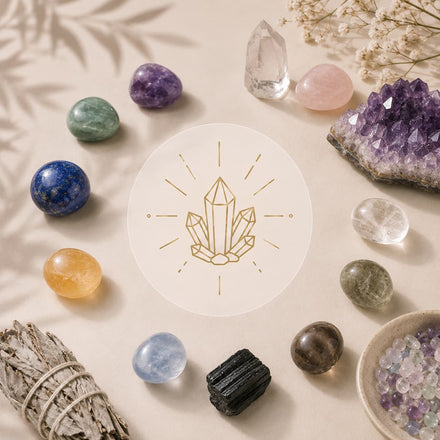
An amethyst with its violet depth, a milky rose quartz, or a grounding black tourmaline - their radiance doesn't begin only in a piece of jewelry or on the nightstand. But are healing stones real natural stones? In most cases: yes. The term healing stone primarily describes the traditional, spiritual, or personal meaning of a mineral. Whether a stone is actually natural, treated, or fully artificially made, on the other hand, is determined by its mineralogical origin.
Anyone who chooses crystals consciously wants not only to see their beauty but also to sense their origin. That's exactly why it's worth taking a closer look. Because natural stone doesn't always mean untreated - and careful processing doesn't automatically take away a crystal's authenticity.
Are healing stones real natural stones? The clear answer
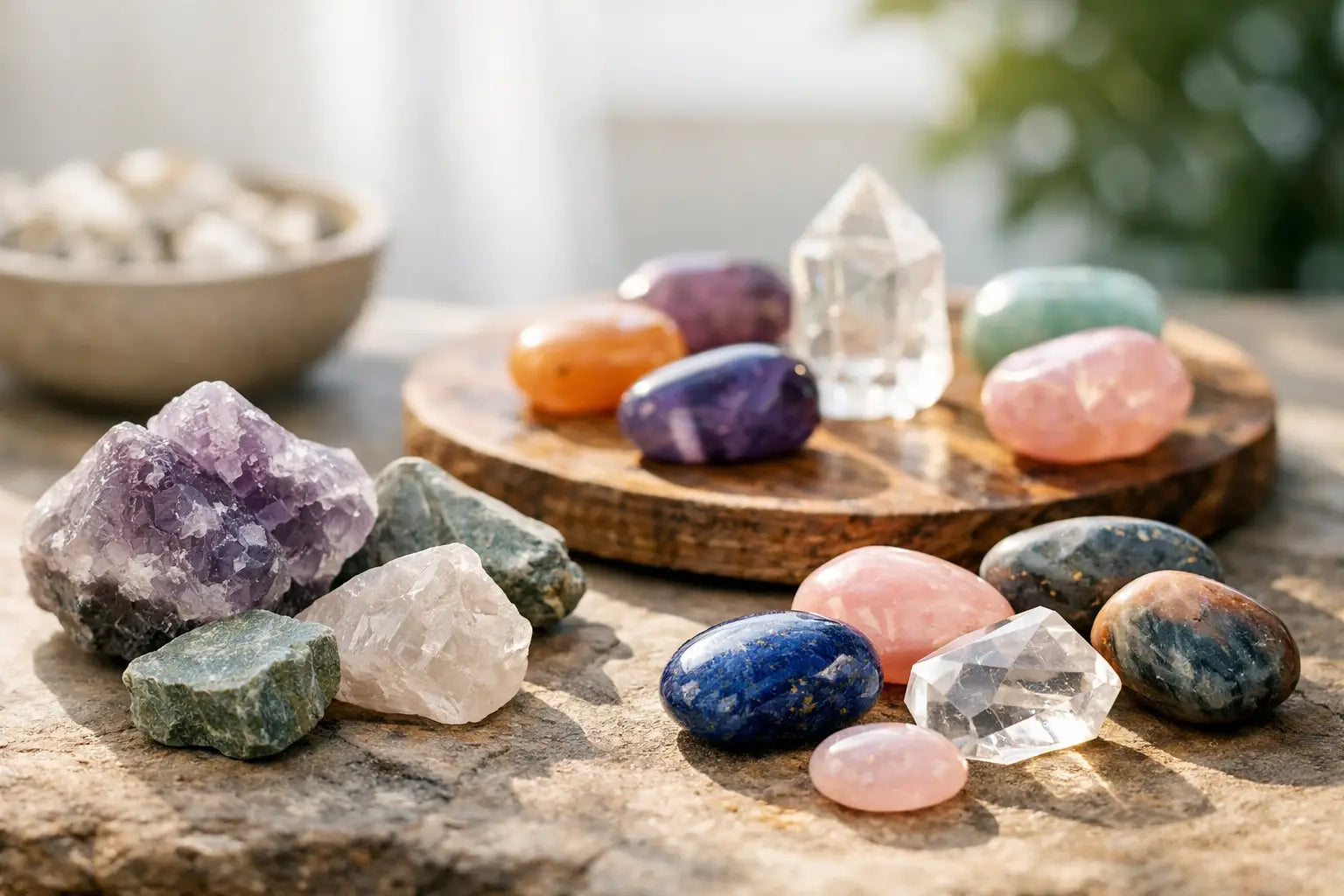
Healing stones can be real natural stones, minerals, or rocks that formed over long geological periods within the earth. Quartz, amethyst, clear quartz, labradorite, agate, citrine, or aventurine are among the well-known examples. They are mined, sorted, and, depending on their intended use, left raw, cut, polished, or made into jewelry.
The word "healing stone" is not a scientific mineral name. It doesn't indicate whether a material comes from nature, but rather how people use and interpret it. Many people choose stones as mindful companions for calm, courage, focus, or inner balance. These effects are to be understood individually and spiritually and do not replace medical diagnosis or treatment.
A real natural stone therefore remains a natural stone, whether it stands as a raw specimen in the living room, lies as a palm stone in a pocket, or has been cut into a pendant. What matters is that the starting material grew naturally and that any changes are transparently disclosed.
Naturally grown, processed, or lab-made
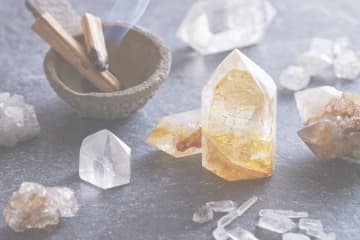
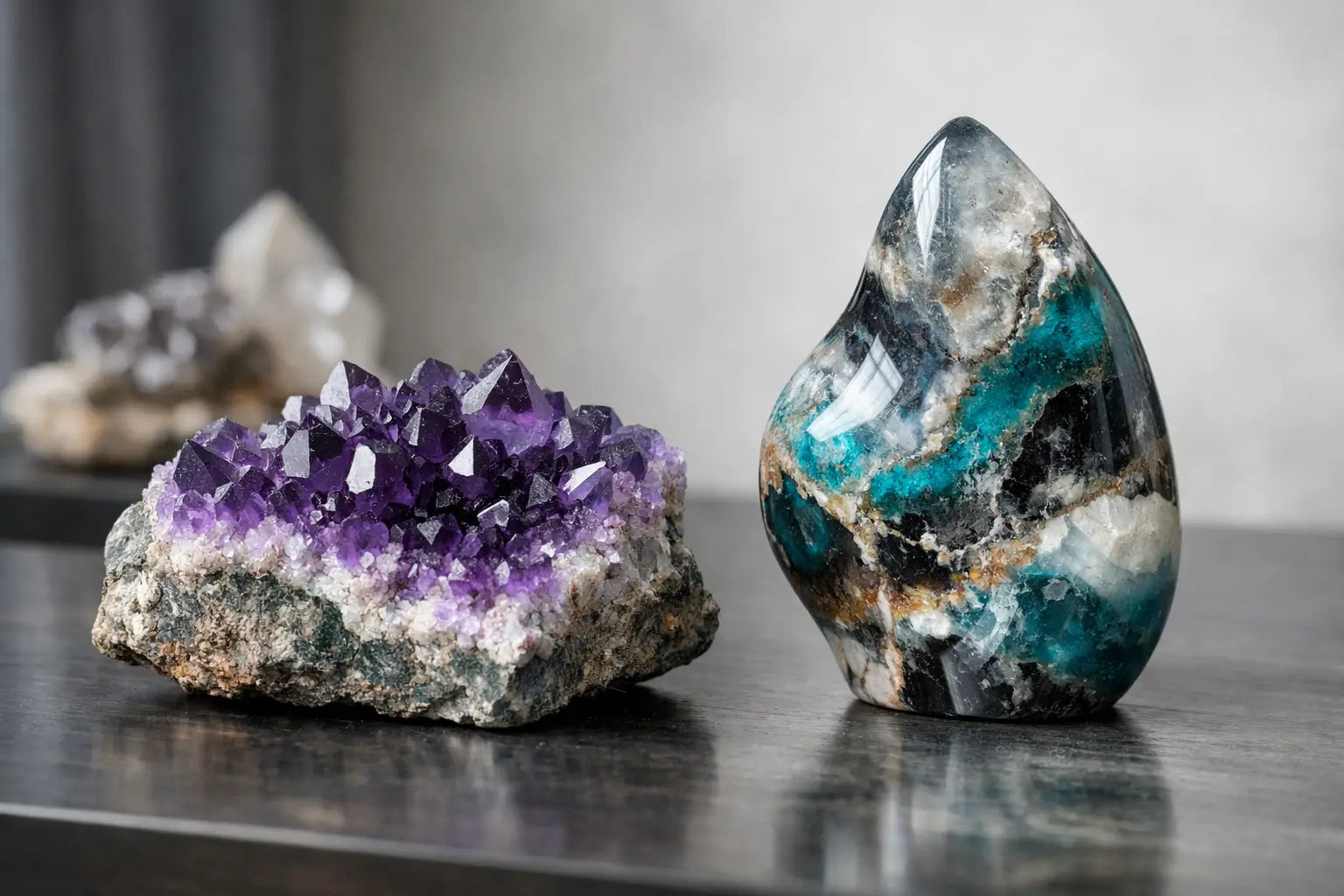
To help you better classify offerings, a simple distinction helps. Untreated pieces appear, for example, as crystal specimens, geodes, tumbled stone rough, or minerals with their original surface. They bear traces of their locality: small irregularities, inclusions, growth lines, and color gradients. It is precisely these characteristics that make each piece a personal masterpiece of nature.
Processed natural stones likewise consist of real natural material. With a rose quartz sphere, a faceted clear quartz, or a smoothly polished labradorite, the stone is cut and shaped. This is often done to bring out its color, shimmer, or structure. Processing changes the form, not necessarily the natural origin.
There are also treated stones. Some minerals are heated, dyed, stabilized, waxed, or coated. This can be done for visual reasons, for instance to intensify colors or make delicate material more durable. Such processes are not inherently bad. However, they should be openly communicated so that you can consciously decide whether you prefer an untreated crystal from its find site or a color-enhanced piece of jewelry.
A separate category is synthetic crystals and imitations. Synthetic quartz or lab-created ruby can be chemically very similar to the natural original, but has not grown in the earth over millions of years. Glass, resin, or pressed material can in turn look like crystals but are mineralogically not natural stones.
Why the terms are sometimes confusing
The trade does not always use terms consistently. "Natural stone" can refer to the material even though it has been cut. "Real" sometimes just means that it's not plastic. And "untreated" is occasionally used even though a stone has at least been polished or cut.
A fair assessment therefore requires more than a nice product photo. Ask yourself: What mineral does the piece consist of? Is its find site known? Was the color left natural? Was the stone merely cut, or additionally altered? Reputable sellers provide understandable information about special treatments, lab-made material, or dyed variants.
How you can recognize real healing stones
No single feature always provides absolute certainty. Very regular shapes, glowing neon colors, or a strikingly low price can be indications, but not yet proof. Nature, too, can produce astonishingly intense colors and clear crystals. What matters is always the overall picture.
Real natural stones often show small variations. With agate, bands can run at different widths; with moonstone, the shimmer changes depending on the viewing angle; and with clear quartz, fine inclusions or natural cracks are often found. Two identical pieces are rare among grown minerals. This is precisely what gives handpicked freeforms, spheres, and raw stones their special charm.
Also pay attention to the feel. Minerals often feel cool at room temperature at first and slowly take on the warmth of the hand. This criterion, however, is only a first impression, since glass, too, can feel cool. Scratch tests, burn tests, or aggressive household remedies are not a good idea: you can damage the surface, and without expert knowledge they don't provide reliable information.
Transparency builds the most trust. A precise mineral designation, information on origin or find site, meaningful photos, and accessible advice say far more than lofty promises. That's why at Crystal Paradise, natural individuality and a curated selection are at the center - so that you don't choose just any stone, but one whose character matches you.
Processing is not the opposite of authenticity
Some people want only raw crystals because they especially appreciate the original state. Others love a perfectly polished sphere, a rose quartz heart, or a bracelet that can be worn every day. Both have their place.
When cut, a natural stone often reveals sides that remain hidden in its raw form. The iridescent flashes of light in a labradorite, the delicate clouds in fluorite, or the bands of an agate unfold especially impressively through good cutting. At the same time, a raw amethyst geode with its crystalline inner world can bring a very different, original presence into a room.
So it depends on what you're looking for. For a collection, the find site, rarity, and natural growth may be paramount. For a gift, a personal talisman, or stylish home accents, a processed form can be exactly the right choice. Authenticity does not mean that a stone has never been touched by human hands. Authenticity means honestly knowing its origin and its changes.
Caution with striking colors and fantasy names
Especially with intensely blue, pink, or evenly colored stones, a second look is worthwhile. Some agates are dyed to make their bands appear more contrasty. Other materials receive a coating that creates iridescent effects. Trade names, too, can be creative and don't always immediately reveal which mineral is behind them.
This doesn't have to diminish your joy, as long as the description is transparent. A dyed agate can be a beautiful decorative piece. A coated crystal can be fascinating in the light. However, if you are consciously looking for an original natural stone for your collection or ritual practice, untreated or clearly declared variants are the more fitting choice.
The value also lies in your conscious choice
A real healing stone need be neither flawless nor huge. It is precisely natural inclusions, fine cracks, and gentle color shifts that tell of pressure, time, and mineral growth deep within the earth. They remind us that beauty doesn't arise from uniformity.
Take a moment while choosing: Which color speaks to you? Do you want to experience a raw structure or hold a soft, cut form in your hand? And does a particular mineral, a find site, or a personal symbolism matter to you? A stone whose origin you understand and whose radiance genuinely touches you often becomes the most valuable companion in your everyday life.

Leave a comment
This site is protected by hCaptcha and the hCaptcha Privacy Policy and Terms of Service apply.