







Mineral Specimen or Freeform - which fits better?
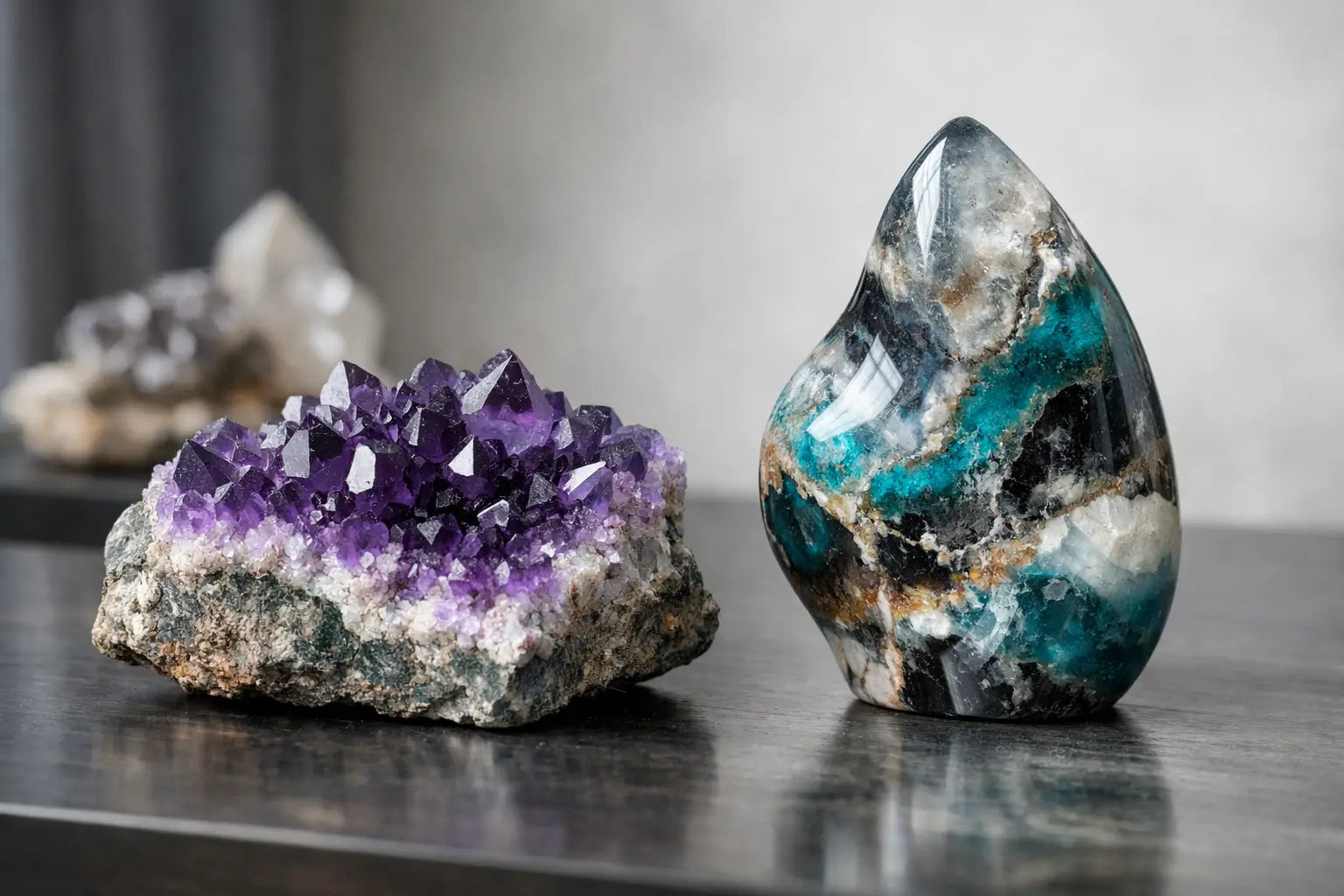
A sparkling amethyst geode with its wild crystal tips or a gently polished rose quartz that rests comfortably in the hand: the question of mineral specimen or freeform isn't about right or wrong. It's about which one-of-a-kind piece of nature truly complements your spaces, your collection, and your personal feeling. Both forms carry the unmistakable story of their mineral within them - and yet they speak to us in completely different ways.
Mineral Specimen or Freeform: The Most Important Difference
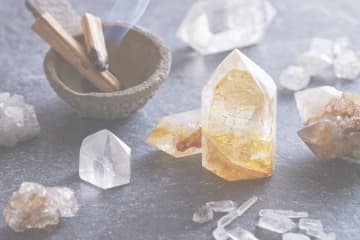
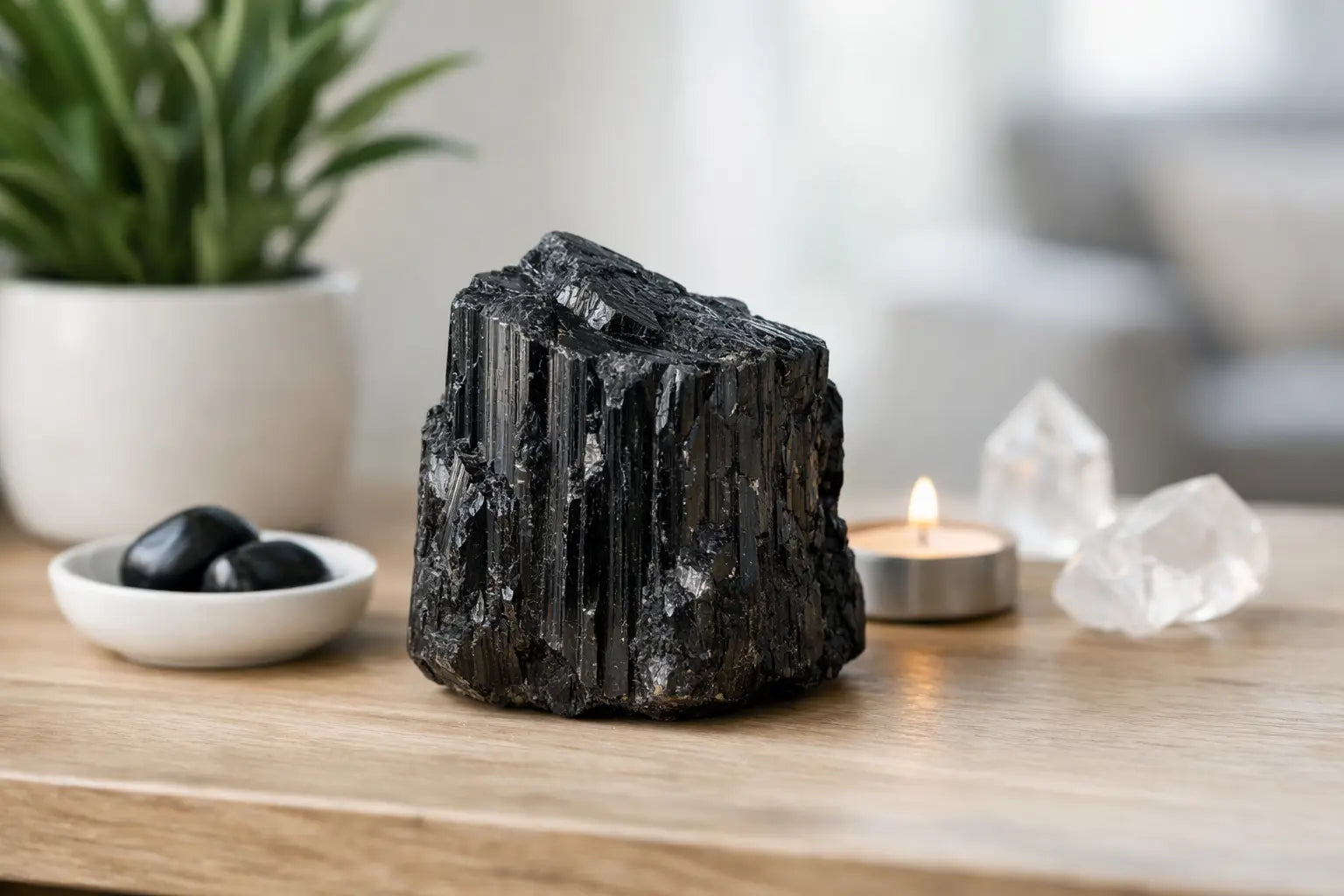
A mineral specimen shows the mineral just as it grew. Crystal faces, natural edges, sparkling tips, cavities, and varying color gradients remain visible. Each specimen is thus a small geological witness to time. It appears original, powerful, and often astonishingly detailed - exactly what makes it so special for collectors and lovers of unaltered natural forms.
A freeform also begins as natural raw material, but is deliberately cut and polished into a freely flowing, usually rounded shape. It follows no rigid geometry. Its lines are soft, organic, and designed to beautifully highlight a stone's color, pattern, and depth. The result is a palm stone with presence: natural in origin, refined in appearance.
The difference, therefore, doesn't lie in authenticity. In both variants, the mineral remains the focus. The decision mainly concerns its presentation: Do you want to admire the wild growth, or enjoy the harmonious, polished silhouette?
Why Mineral Specimens Have So Much Character
A specimen is rarely understated. It draws attention because its surface lives. In a clear quartz specimen, light breaks across many small tips. An amethyst specimen reveals its color gradient from light lavender to deep violet. With pyrite, malachite, or apophyllite, shapes can appear that seem almost too perfect to have been created by nature.
This very unpredictability is their magic. No crystal tip grows exactly like another, no matrix resembles the next. Anyone choosing a mineral specimen is choosing a true one-of-a-kind piece with visible provenance. Small irregularities, natural inclusions, or asymmetrical edges are not flaws here. They belong to the truth of the stone.
Energetically, many people perceive specimens as especially present. The openly visible crystal faces are often associated with radiance, clarity, and an active presence in a room. Such effects are not scientifically proven, but as a mindful ritual, a symbol for a personal intention, or a powerful eye-catcher, mineral specimens can create a place that feels entirely your own.
The Right Spot for a Specimen
Mineral specimens don't need elaborate staging, but they benefit from space. On a sideboard, in a bookshelf, on a desk, or as the centerpiece of a small ritual space, they unfold their effect particularly beautifully. A calm surface lets their structure speak better than crowded decor.
Make sure it stands securely. Many specimens have a natural underside, but some stand slightly at an angle or have delicate tips. Direct, intense sunlight is also not always ideal depending on the mineral: amethyst, rose quartz, or fluorite can lose color intensity with prolonged strong sun exposure.
Freeforms: Soft Shapes for a Harmonious Everyday Life
Freeforms have a different effect. They don't show the crystal tips, but the inner pattern of the mineral. In ocean jasper, this can look like a small landscape; in labradorite, like a sudden flash of color play; in rose quartz, like a gentle veil. Through polishing, patterns become visible that often remain hidden in the raw stone.
Their soft shape makes freeforms versatile. They fit into modern living spaces just as well as on a nightstand, in a meditation corner, or next to a vase of fresh flowers. They look elegant without being loud. Anyone seeking natural decoration with a calm, stylish presence will often find a very fitting companion in a freeform.
Many people also choose freeforms intuitively. The smooth surface invites you to pause for a moment, hold the stone in your hand, and focus on color, weight, and texture. Especially with stones to which spiritual traditions attribute themes like love, grounding, protection, or inner balance, this creates a personal moment in everyday life.
When a Freeform Is the Better Choice
A freeform fits particularly well if you prefer a harmonious overall look or choose a mineral for its color and pattern. With strongly patterned varieties like agate, jasper, labradorite, or mookaite, the cut shape can highlight fascinating details. It's also often an easily accessible gift: its organic shape looks elegant and integrates effortlessly into different decor styles.
Unlike a specimen, however, with a freeform you have to accept that the original crystal structure is no longer fully visible. Anyone who is passionate about growth forms, origins, and untouched natural surfaces may miss this facet. In return, you get a shape that aesthetically concentrates the material and makes it feel pleasantly calm.
How to Make Your Decision
First ask yourself what spontaneously touches you. Does your gaze linger on sparkling crystal tips, on a geode full of depth, or on a striking natural edge? Then a mineral specimen speaks strongly to you. If, on the other hand, you're fascinated by color clouds, bands, shimmer, and the round feel of a polished stone, a freeform is probably closer to your taste.
The intended location also helps with the choice. A larger specimen can define a room and quickly becomes a conversation piece. A freeform usually blends in more quietly and combines well with other home accessories. For an open shelf with plenty of light, an expressive specimen is a great choice. For a nightstand, a workspace, or a subtle corner, a gentle freeform can have just the right presence.
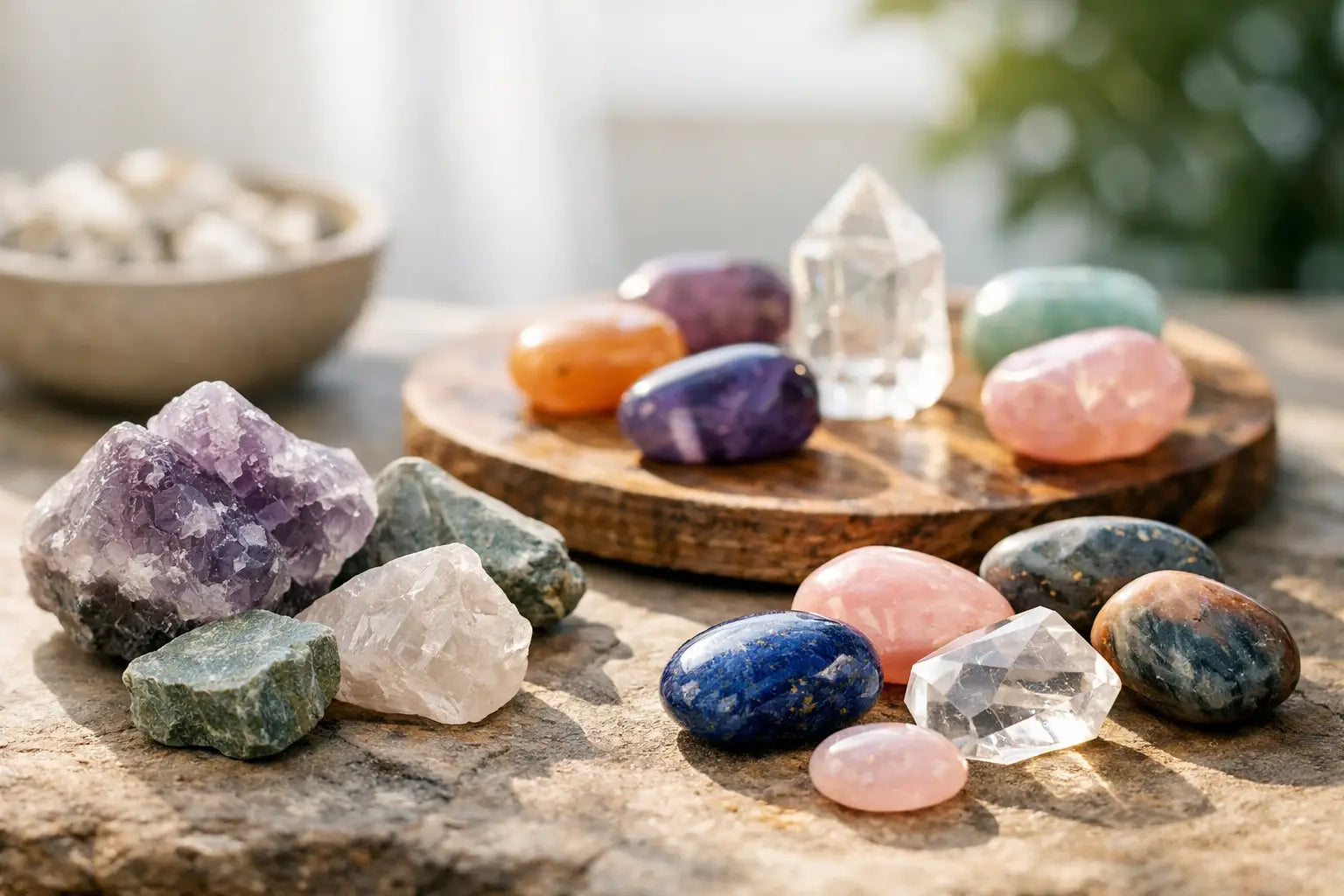
For collectors, mineralogical significance often matters most. Specimens are especially exciting here because crystal habit, matrix, and natural associations remain visible. Anyone wanting to build a curated stone landscape at home, however, can deliberately mix specimens and freeforms. The contrast between the raw crystal world and the smooth shape feels lively and harmonious at the same time.
Pay Attention to Size, Weight, and Details
Photos convey color and shape, but size and weight also determine how a piece feels to you. A small freeform can be a delicate personal companion on the table, while a heavier variant needs a fixed place as a decorative object. With specimens, besides size, depth is especially relevant: expansive crystal faces need enough clearance so they don't bump into books, walls, or other decor.
Also look closely at the particularities of each individual piece. With a mineral specimen, light edges, small natural breaks, or matrix remnants can be part of it. With a freeform, color distribution, polish, and the position of a special pattern are decisive. Natural stones are not mass-produced. That's exactly why it's worth choosing not just by stone type, but by the specimen where your feeling immediately says: this is mine.
Care for Specimens and Freeforms
Both forms appreciate gentle handling. Dust can usually be removed with a soft, dry brush or cloth. With fine crystal tips, a brush is much better than rubbing. Freeforms can often be carefully polished with a soft cloth, but should not come into contact with aggressive cleaners.
Water is not suitable for every mineral. Selenite, pyrite, malachite, azurite, or halite are sensitive and should be cleaned dry. The same applies to energetic cleansing rituals: orient yourself to the specific type of stone rather than a one-size-fits-all method. Moonlight, incense, sound, or a mindful pause in a quiet place are lovely alternatives without moisture for many enthusiasts.
At Crystal Paradise, each piece is selected as a one-of-a-kind natural item, so you don't receive just any stone, but a special companion with its own radiance. Whether you choose a specimen or a freeform: take the moment to truly let the colors, shapes, and details work on you.
Perhaps in the end it's not the perfect category that decides, but that quiet moment of recognition when you look at a stone. A one-of-a-kind piece of nature may remind you every day to make room for beauty, mindfulness, and your very own energy.

Leave a comment
This site is protected by hCaptcha and the hCaptcha Privacy Policy and Terms of Service apply.