







Natural or Polished - Which Suits You?
Natural or Polished – What Suits You? Buy Thoughtfully

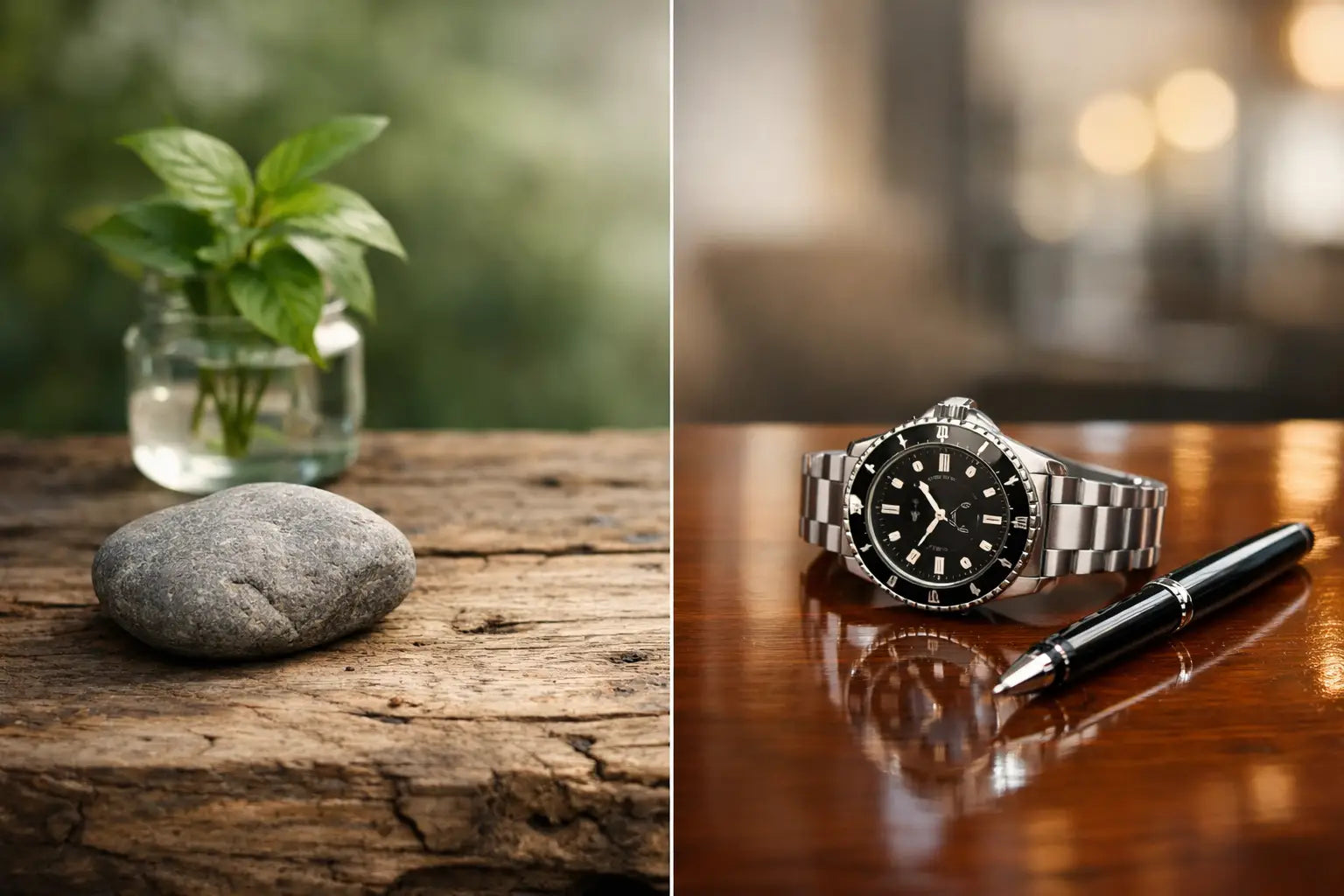
You're wondering: Natural or polished – what suits you, and what should you buy? The answer is simpler than you think. Natural stones show their original character – raw, unaltered, just as nature has shaped them over millions of years. Polished stones, on the other hand, are smoothed through mechanical processing and highlight the inner color world of a mineral. Both forms have their own appeal and their own justification. Which one is right for you depends on your personal feeling, your intended use, and your connection to nature. We at Crystal Paradise have been guiding you through this decision for years – with passion, expertise, and a hand-picked selection.
What does "natural" mean for crystals and minerals?
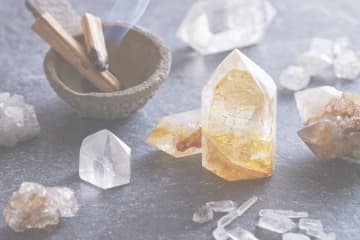
A natural stone is only minimally processed after mining. It is cleaned, sometimes lightly trimmed – but never ground or polished. Its surface shows the natural texture as it formed over millions of years under pressure and heat.
Natural stones are also called rough stones or raw specimens. They fascinate through their irregularity. No stone is like another. Mineral collectors and people seeking a deep connection to nature especially appreciate this uniqueness.
Mineralogically speaking, most crystals form through magmatic or hydrothermal processes. The Deutsche Mineralogische Gesellschaft explains more about this, having provided foundational knowledge on minerals and their formation for over 100 years.
Typical characteristics of raw stones
- Irregular, natural surface with visible crystal faces
- Original structure fully preserved
- Often more affordable than elaborately processed forms
- High collector value due to rarity and natural origin
- Authentic appearance – ideal for nature lovers and mineralogists
One example: A raw amethyst column from Brazil can grow up to 30 centimeters tall and shows its characteristic violet tips in their natural form. In lithotherapy, amethyst is traditionally associated with clarity and inner peace – spiritual traditions mentioned in ancient sources as early as the 4th century B.C.
You can find more exciting stone comparisons in our article Amethyst or Clear Quartz – Which Suits You Better?.
What does "polished" mean – and what's the difference?
Polished stones undergo a multi-stage grinding process. First, rough unevenness is removed. Then finer grinding steps follow, until the surface achieves a smooth, glossy texture. This process can take up to 72 hours for high-quality pieces.
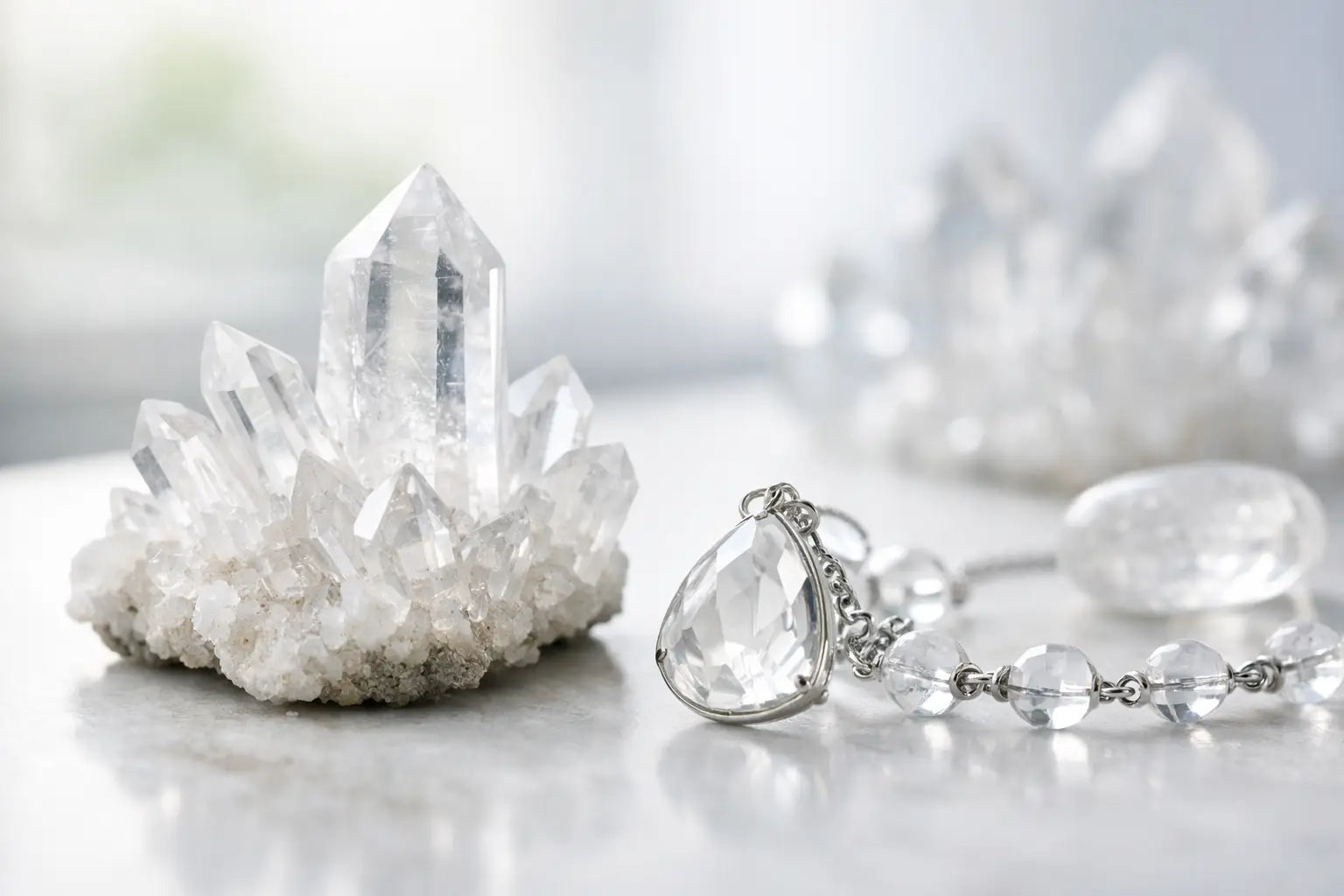
The result: the stone's inner color world fully emerges. Color bands, inclusions, and patterns become visible that remained hidden in the raw state. Polished stones are especially suitable as decoration, jewelry, or as a palm stone for everyday use.
The science behind mineral colors and optical properties is described by the Mindat.org Mineral Atlas – one of the world's largest mineralogical databases with information on over 5,700 mineral species. There, you can look up which colors and structures become visible through polishing for each type of stone.
Advantages of polished stones at a glance
- Smooth, pleasant feel – ideal for everyday wearing or holding
- Colors and patterns appear more intense and clear
- Ideal for jewelry pieces, spheres, freeforms, and tumbled stones
- Easier to clean and more low-maintenance in daily use
- Modern, stylish appearance – fitting for any living style
A polished malachite, for example, shows its characteristic banding pattern of rich green tones only after polishing brings it to full luster. Malachite has a Mohs hardness of 3.5 to 4 – it is relatively soft and should therefore be stored separately to avoid scratches. Our polished malachite is carefully selected and checked for authenticity.
Buying natural or polished – how to make the right choice
From our own experience, we at Crystal Paradise know: the choice between natural and polished is deeply personal. There is no objectively "right" decision. But there are helpful criteria that can make the choice easier for you.
Who are natural stones better suited for?
We recommend rough stones especially if you:
- Want to feel the natural energy and original character of a mineral
- Are looking for a collector's piece with high authenticity value
- Want to place the stone as decoration on a shelf or an altar
- Value mineralogical originality and untreated origin
- Prefer a one-of-a-kind piece with visible growth form and natural crystal faces
Who are polished stones better suited for?
Polished stones are ideal if you:
- Want to carry the stone with you daily – as a talisman or palm stone
- Are looking for an elegant decorative element for your home
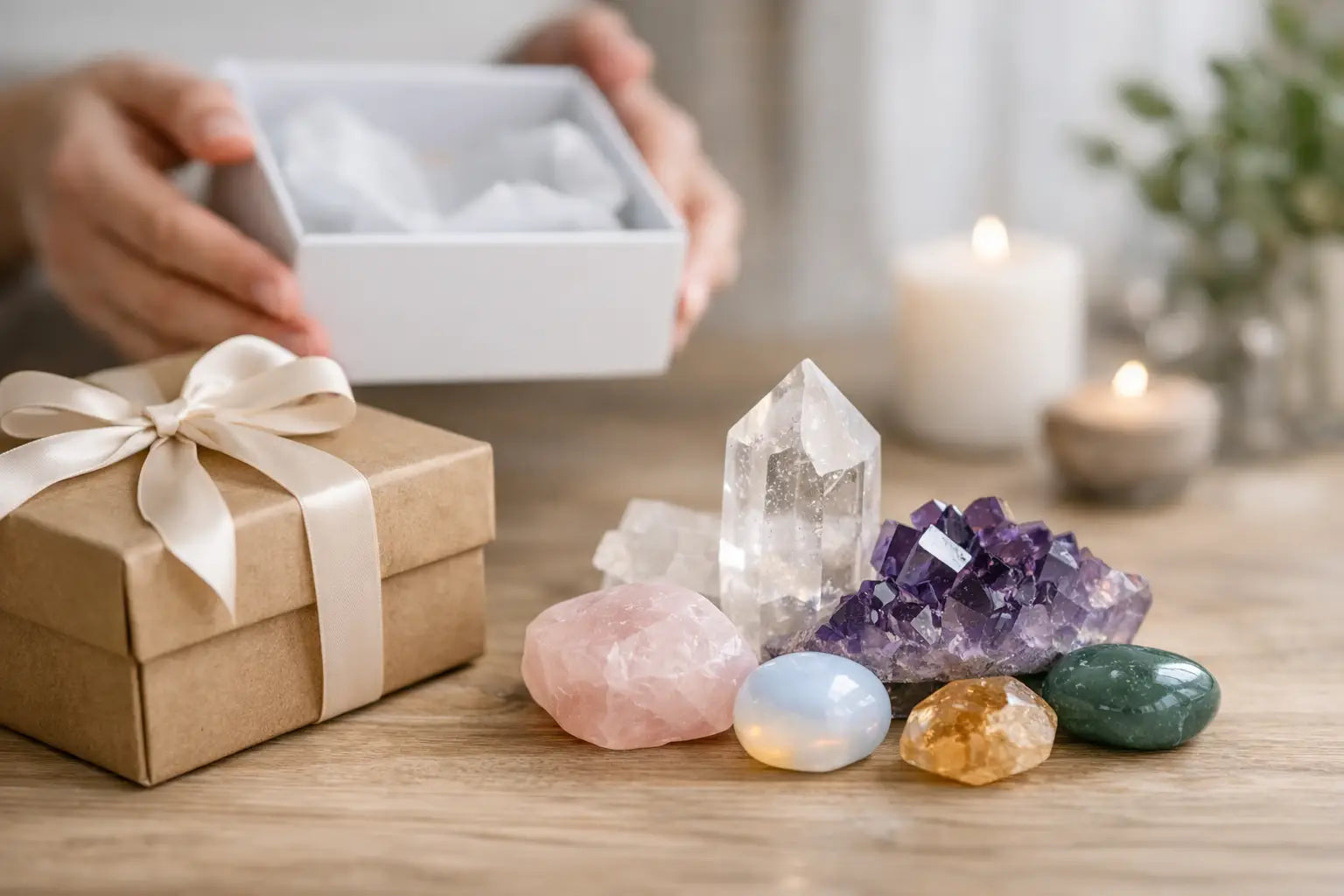
- Are buying a stone as a gift – the smooth surface looks valuable and refined
- Want to experience the mineral's color world as impressively as possible
- Value low-maintenance, durable pieces
If you're still unsure which stone suits you at all, our interactive stone advisor in the shop can help. It guides you step by step to the right choice.
Care and cleaning – natural vs. polished

Care differs depending on the form of processing. Raw stones often have a porous or rough surface. They can accumulate dust and should be cleaned regularly with a soft brush. Contact with water should be strictly avoided for water-soluble minerals like halite or selenite.
Polished stones are easier to care for. They can be wiped with a damp cloth. However, be careful: stones with a Mohs hardness below 5 – such as fluorite (hardness 4), calcite (hardness 3), or malachite (hardness 3.5–4) – should not come into contact with hard surfaces to avoid scratches.
General care tips for both stone forms:
- Direct sunlight exposure over several hours can fade colors – especially for amethyst and rose quartz
- Never store different stone forms together in a drawer without separation
- Energetic cleansing in lithotherapy is traditionally done with moonlight or gentle smudging
- For water stones: only water-safe minerals are suitable for use in carafes
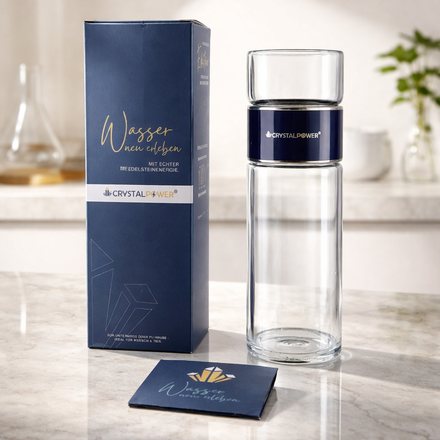
If you want to use stones as water stones, the question of natural or polished is especially relevant. Polished stones are easier to clean in water. Our selection of healing & water stones offers you a carefully curated selection – always with an eye on safety and quality.
Spiritual tradition: What does lithotherapy say about it?
In lithotherapy, natural stones are traditionally attributed with a particularly original energy. According to tradition, they are considered "unaltered sources of power" that are said to pass on earth energy more directly. Polished stones, on the other hand, are described in some spiritual traditions as "more accessible" – their smooth form is said, according to tradition, to make the energy flow more easily.
Which approach resonates with you more is entirely individual. Both forms have been used worldwide for thousands of years for ritual, meditative, and decorative purposes. Already in ancient Egypt, more than 3,000 years ago, polished lapis lazuli amulets were worn and rough stones were placed as offerings in temples.
You can find more inspiration in our article Which Stone for Mindfulness Suits You?.
Buy natural or polished stones at Crystal Paradise
In our showroom in Feldkirchen near Munich as well as in our online shop, we offer you both worlds. Every stone is hand-picked by us personally. We recommend approaching your purchase consciously and with inner calm. Take your time. Let yourself be drawn to the stone that intuitively attracts you.
Our years of experience in the mineral trade show us again and again: most people make their choice from the gut – and don't regret it. Whether raw or polished – if the stone touches you, it's the right one.
You can also browse specifically: You'll find our extensive range in the CrystalPower® collection with healing stones, protection stones, and energy stones in various forms – natural and polished, for every taste and every occasion.
Frequently Asked Questions

What is the difference between a natural and a polished stone?
A natural stone is not mechanically processed after mining. It shows its original form with natural crystal faces and rough structures. A polished stone, on the other hand, undergoes a multi-stage grinding process that can take up to 72 hours. This smooths the surface and reveals the mineral's inner color world.
Does a stone lose its energy or quality through polishing?
From a mineralogical perspective, polishing does not change a stone's chemical composition. In lithotherapy, natural stones are traditionally attributed with a more direct connection to earth energy. Polished stones are considered, according to tradition, to be "more accessible." Which form you prefer is a personal decision without an objectively correct answer.
Which stone form is better suited as a gift?
Polished stones are especially popular as gifts. Their smooth, high-quality appearance and impressive look make them a lovely present. Tumbled stones, spheres, and freeforms are ideal gift options. For mineral collectors, however, a rare, natural rough stone with a known locality can be the more valuable gift.
May I store natural and polished stones together?
Basically yes – with one caveat. Natural rough stones have sharp edges and rough fracture surfaces that can scratch polished surfaces. This is especially annoying with spheres and freeforms, whose whole appeal lies in their polish. So don't place the pieces loosely together in the same bowl, but separate them with a soft cloth or their own compartment. Conversely, a polished stone doesn't harm a rough stone – the risk always lies only with the smooth surface.

Leave a comment
This site is protected by hCaptcha and the hCaptcha Privacy Policy and Terms of Service apply.