







Buying crystal ball decor - what to look out for
Buying a Crystal Ball Decoration – What Matters and What You Should Know

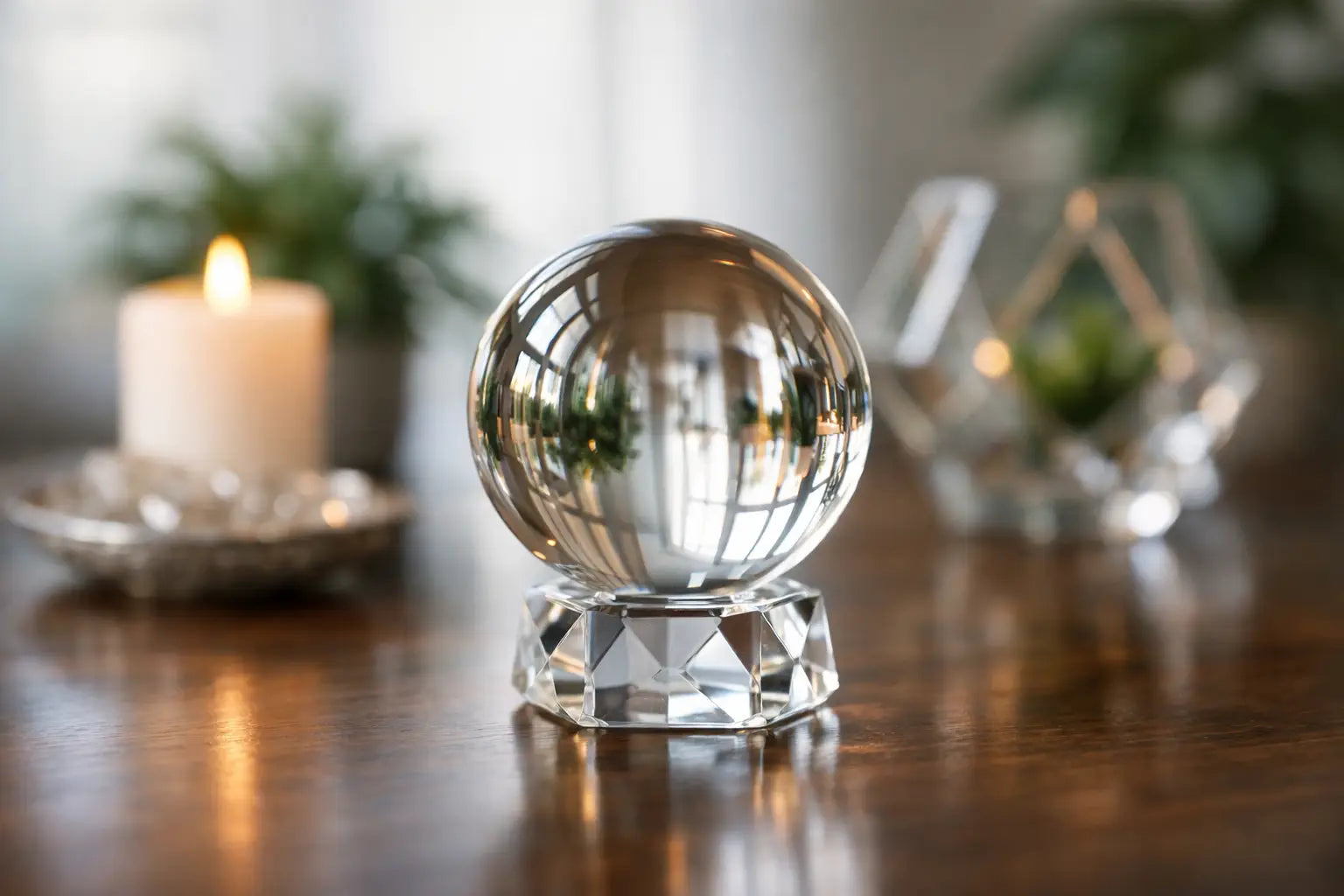
Anyone looking to buy a crystal ball as decoration quickly faces an important question: What really matters? The short answer: authenticity, origin, quality of the cutting work, and the right stone size for the intended location. A genuine crystal ball is a hand-cut, one-of-a-kind piece made from natural stone – not a glass object, not resin. It is created through elaborate manual processing of a natural mineral and thus carries a unique character within it. In this article, you'll learn what to look for when buying – based on our years of experience in the mineral trade.
What makes a genuine crystal ball?
A genuine crystal ball is made from a natural mineral. The best-known variety is rock crystal – a transparent form of the quartz mineral silicon dioxide (SiO₂) with a Mohs hardness of 7. This hardness makes it robust and durable. It forms through hydrothermal processes deep within the Earth's crust, often over thousands of years.
Crystal balls are worked out of raw mineral blocks. Depending on the size, this process takes anywhere from several hours to a few days. The result is a perfectly round shape with a characteristic natural inner life – inclusions, veils, or rainbow reflections are not flaws, but signs of authenticity.
Natural stone vs. glass or resin
Balls made of glass or colored resin keep appearing on the market. They imitate the look of genuine crystals. A simple test: real quartz feels cool to the touch at room temperature. Glass warms up faster. In addition, real stones show no artificial fluorescence under UV light. We generally recommend buying only from verified mineral dealers – authenticity should always be guaranteed.
Buying a crystal ball decoration: The most important quality criteria
When buying a crystal ball for decoration, there are several factors that determine quality and value. At our shop at Crystal Paradise in Feldkirchen near Munich, we manually inspect every piece before shipping.
1. Roundness and cutting quality
A high-quality ball deviates by no more than 1–2% from the ideal spherical radius in any direction. Cheap mass-produced items often show visible flat spots or irregular surfaces. A good cut means: even polish, no scratches, no dull areas.
2. Transparency and clarity
Rock crystal balls can be completely clear or contain natural inclusions. Both variants have their appeal. Milky veils are caused by microscopically fine water inclusions. Rainbow reflections are caused by internal fracture surfaces, so-called healed fractures. These are not flaws – they prove the natural origin of the stone.
3. Size and weight
Crystal balls are available in many sizes. A ball with a 5 cm diameter made of rock crystal weighs about 150–200 grams. A ball with a 10 cm diameter can already weigh over 1 kilogram. For desks or windowsills, sizes between 4 and 8 cm are recommended. For living room arrangements, 10 cm or more is fine.
4. Origin of the stone
The region of origin significantly influences the appearance and quality. Rock crystal from the Alps – i.e. alpine rock crystal – is considered particularly high-quality. It is often found at altitudes above 2,000 meters. Other important deposits are located in Brazil, Madagascar, and Switzerland. A reputable dealer states the origin transparently. You can learn more about this in our article Buying Minerals with Origin – What to Look For
Which types of stone are suitable for crystal balls as decoration?
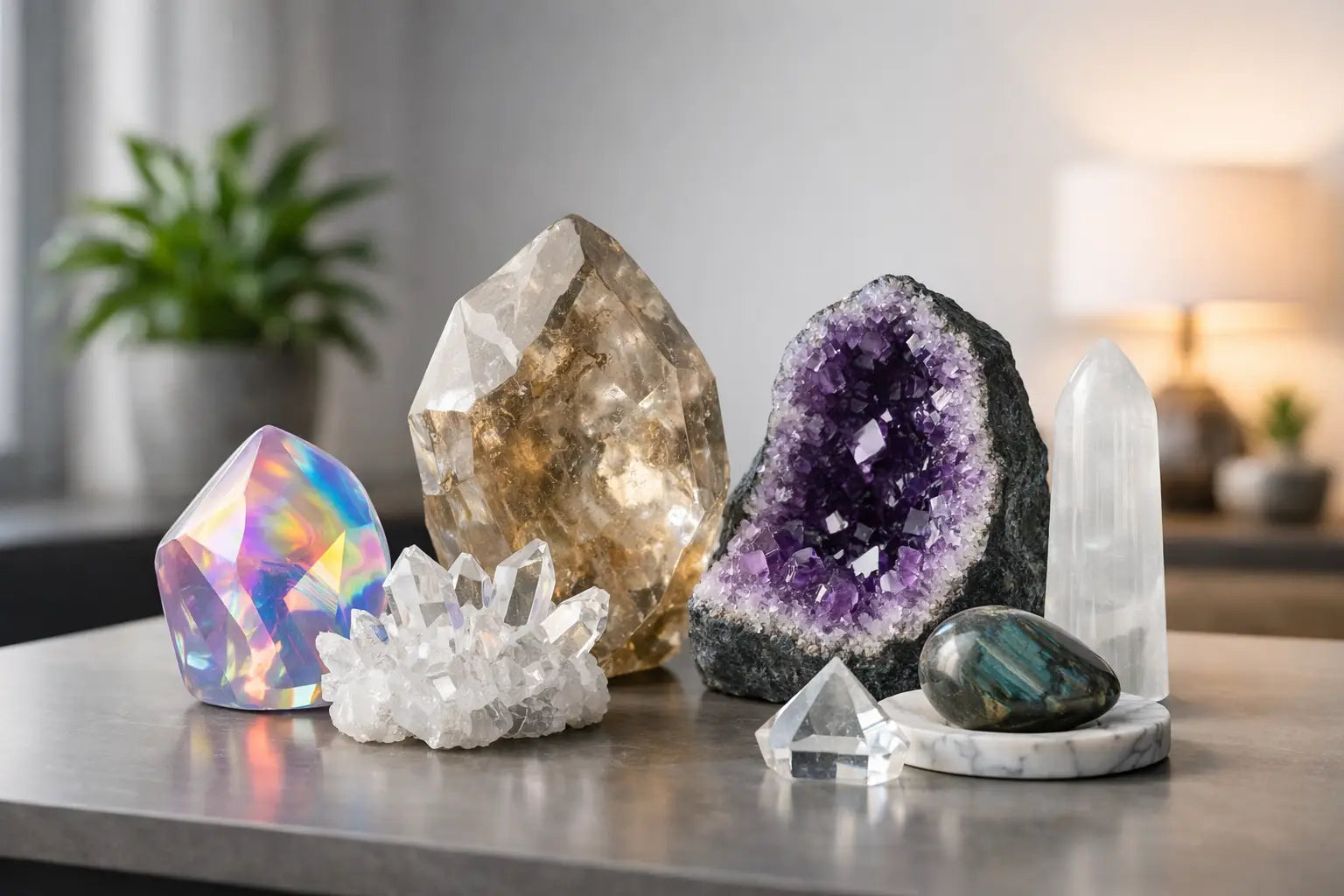
Besides rock crystal, there are many other minerals used to craft balls. Each type of stone brings its own look and symbolism.
- Rock crystal: Clear, transparent, timelessly elegant. Mohs hardness 7. Excellent as decoration on windowsills, as it refracts light and casts rainbows.
- Rose quartz: Pink to pale pink, velvety-looking surface. Feels cozy and warm. Popular in bedrooms and living areas.
- Amethyst: Violet to dark violet. Formed by traces of iron in the quartz. A striking eye-catcher in any room.
- Obsidian: Deep black, volcanic glass. Mohs hardness 5–5.5. Makes a bold statement piece as decoration.
- Labradorite: Gray with shimmering blue and gold reflections (labradorescence). Ideal for modern living concepts.
- Turquoise and malachite: Vividly colored balls with lively banding. Very decorative, but more sensitive in terms of care.
You can find a large selection of different balls made from genuine natural stones in our collection Decorative Balls at Crystal Paradise.
Using crystal balls energetically and spiritually

Crystal balls are not just aesthetic objects. In stone healing lore and in spiritual traditions, they have been attributed special significance for centuries. Rock crystal is traditionally said to support clarity and focus. In traditional stone lore, rose quartz is considered a symbol of heart energy and compassion. According to tradition, amethyst is said to promote inner calm.
The round shape of the ball also carries symbolic value: in many cultures, it stands for completeness, harmony, and the eternal cycle of nature. Crystal balls have therefore been used in meditative practices for at least 2,000 years.
Anyone wanting to learn more about current trends in crystal decor will find valuable inspiration in our article Crystal Decor Trends for Rooms with Energy.
Practical tips: Properly placing and caring for crystal balls
Optimal placement in the room
Crystal balls display their aesthetic effect best on a suitable stand. Rings made of wood, metal, or brass are ideal. Transparent balls belong on windowsills – there they refract light. Dark balls made of obsidian or shungite look especially elegant on dark wooden surfaces.
For group arrangements: odd numbers (3 or 5 balls) look more harmonious than even numbers. Combine different sizes for depth and visual interest.
Cleaning and care
- Dusting: Dust regularly with a soft, dry microfiber cloth. Do not use rough materials.
- Washing: Most quartz balls (rock crystal, amethyst, rose quartz) are water-resistant. A quick rinse with lukewarm water is safe. Water temperature should not exceed 40 °C.
- Sensitive stones: Turquoise, malachite, and selenite are water-sensitive. Clean dry only.
- Direct sunlight: Some stones, such as amethyst, can fade after several years of constant direct sun exposure. Choose a bright location, but avoid direct midday sun.
- Energetic cleansing: Many people cleanse their stones ritually – for example, outdoors during a full moon or with sound (singing bowl). This is a spiritual practice without scientific basis, but widely practiced and valued.
Crystal balls as a gift
A crystal ball is an extraordinary gift. It is suitable for birthdays, housewarmings, or as a personal companion. Choose the type of stone based on the recipient's personality or zodiac sign. A rock crystal ball is always a safe and timeless choice.
For beginners, balls with a diameter of 5–6 cm are recommended – compact, stylish, and suitable for any living space. In our showroom in Feldkirchen near Munich, you can also hold and experience the balls in person.
Our page Buy Rock Crystal Ball offers a good overview of the rock crystal balls in our range.
What to watch out for especially when buying online
Buying crystal balls online has many advantages – and some risks. Here are the most important points summarized:
- Certificate of authenticity or clear declaration: The dealer should clearly state whether it is natural stone.
- Multiple product photos: Ideally from different angles or even as a 360° view. Inclusions and veils should be visible.
- Origin information: The more specific, the more trustworthy. "Brazil" is better than no information at all – "Minas Gerais, Brazil" is even better.
- Right of return: Reputable dealers offer at least a 14-day right of return under EU law. Free returns are a sign of trustworthiness.
- Reviews from other buyers: Genuine customer feedback provides insight into quality and service.
- No unrealistically low prices: A genuine rock crystal ball with an 8 cm diameter costs at least 30–80 euros in good quality. Significantly cheaper offers often indicate glass or resin.
You can find more information on the topic of crystal decor in general in our detailed guide Buying Crystal Decor: Elegance for Your Home.
Further mineralogical information on quartz and its varieties can also be found at the Mindat.org mineral database as well as the Senckenberg Natural History Museum.
Frequently Asked Questions

How can I tell if a crystal ball is genuine?
Genuine crystal balls made of natural stone feel noticeably cooler at room temperature than glass. They show natural inclusions, veils, or fracture reflections. Glass imitations are often flawlessly clear, which makes them look unnaturally perfect. Weight is also a reliable indicator: quartz is heavier than most glass products of the same size. It's best to buy from dealers who explicitly guarantee authenticity.
What size is best for a crystal ball as decoration?
That depends on where it will be placed. On a desk or shelf, balls between 4 and 7 cm look fitting – large enough to be noticed, small enough not to dominate. For a sideboard or side table, 8 to 12 cm is a good choice. From about 15 cm onward, the ball becomes an eye-catcher that needs free space around it, and the weight increases noticeably: a quartz ball with a 15 cm diameter already weighs a good 4.5 kilograms. So make sure to use a stable stand and a sturdy surface.

Leave a comment
This site is protected by hCaptcha and the hCaptcha Privacy Policy and Terms of Service apply.