









Chalcedony: Properties, Origin and Identifying Features
Chalcedony: Properties, Origin, and Identifying Features
When we pick up a piece of chalcedony here at Crystal Paradise, the first thing that stands out is its quietness. No sparkle like clear quartz, no penetrating glow like amethyst – instead, a calm, waxy-glossy surface that radiates something enduring. This stone is for collectors who look more closely. And the closer you look, the more you discover. This article shows you what defines it mineralogically, where it comes from, and how to reliably recognize quality.
What Is Chalcedony? Basics for Beginners
Chalcedony belongs to the quartz group and carries the chemical formula SiO₂ – pure silicon dioxide, like many of its relatives. The decisive difference lies in its internal structure. While clear quartz or amethyst grow in visible, macroscopic crystals, this mineral consists of tiny, parallel-arranged quartz fibers. This microcrystalline structure can't be seen with the naked eye – but it's the reason for the characteristic matte to waxy luster.
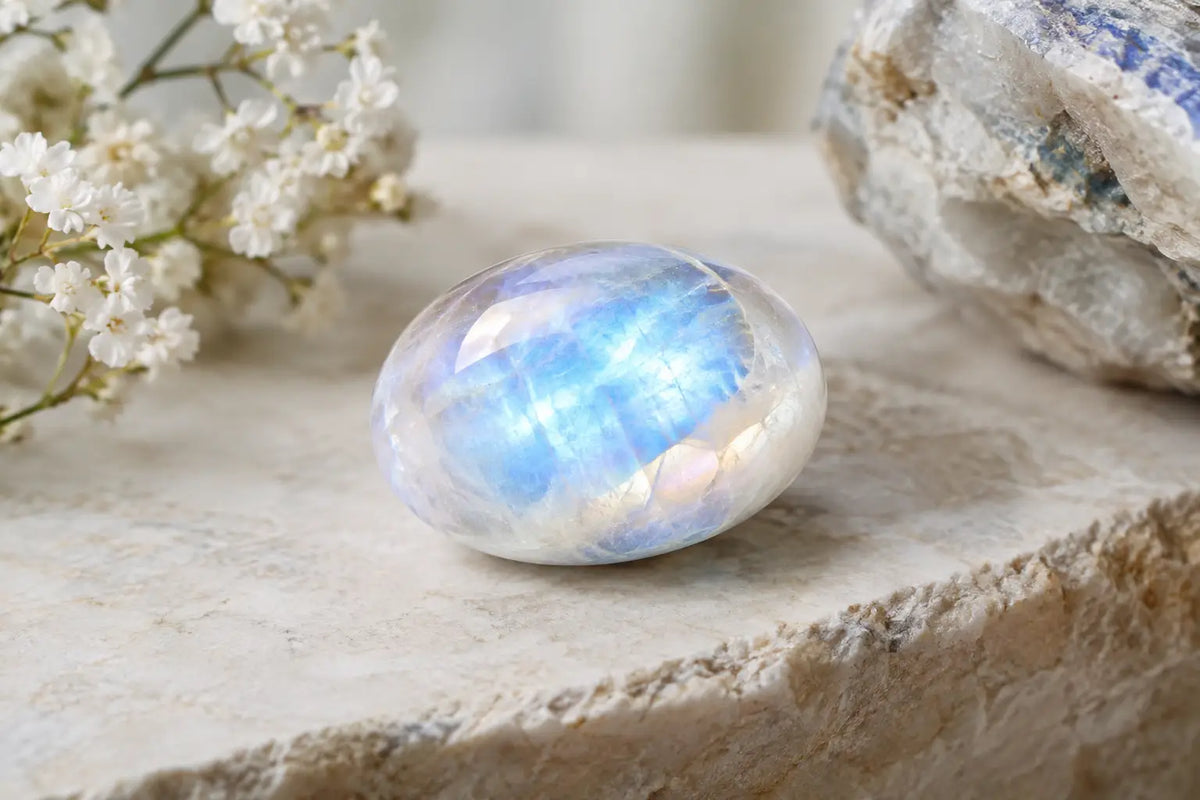
Experts speak of a quartz aggregate, not a single crystal. That sounds technical, but it has a practical consequence: it's typically not transparent. The stone feels denser, more matte, and heavier than classic crystals. That's exactly what distinguishes it from other quartzes at first touch. The color palette ranges from delicate white through light blue to gray tones. Trace elements and the specific formation conditions determine which color a given specimen carries.
Under a loupe, it becomes clear: no crystal facets, no directional reflections – only a uniform, fine-grained surface. That's the first and most important identifying feature of the chalcedony stone.
The Variety of Varieties
Behind the term chalcedony lie several mineralogically distinct varieties. What connects them is always the same microcrystalline quartz structure. What distinguishes them are the trace elements incorporated during formation.
Carnelian is the orange to reddish variety. Iron oxides give it a warm, intense color. Chrysoprase is the green sibling – its color comes from nickel built into the crystal structure. Blue chalcedony, often simply called blue chalcedony, ranks among the finest members of the group: calm color, uniform translucency, without banding. Agate is also a variety of this quartz aggregate, recognizable by its characteristic concentric banding, which forms through layered deposition from silica-bearing solutions.
For collectors, this knowledge is immediately useful. Anyone who knows the varieties can quickly tell whether a stone is correctly labeled – and whether a strikingly intense color occurred naturally or was produced through treatment. Unnaturally glowing orange or blue tones are an early warning sign. At Crystal Paradise, every piece is individually checked and sorted by origin, color, and structure – so you can trace the differences between varieties directly on the object.
Origin: Formation and Localities
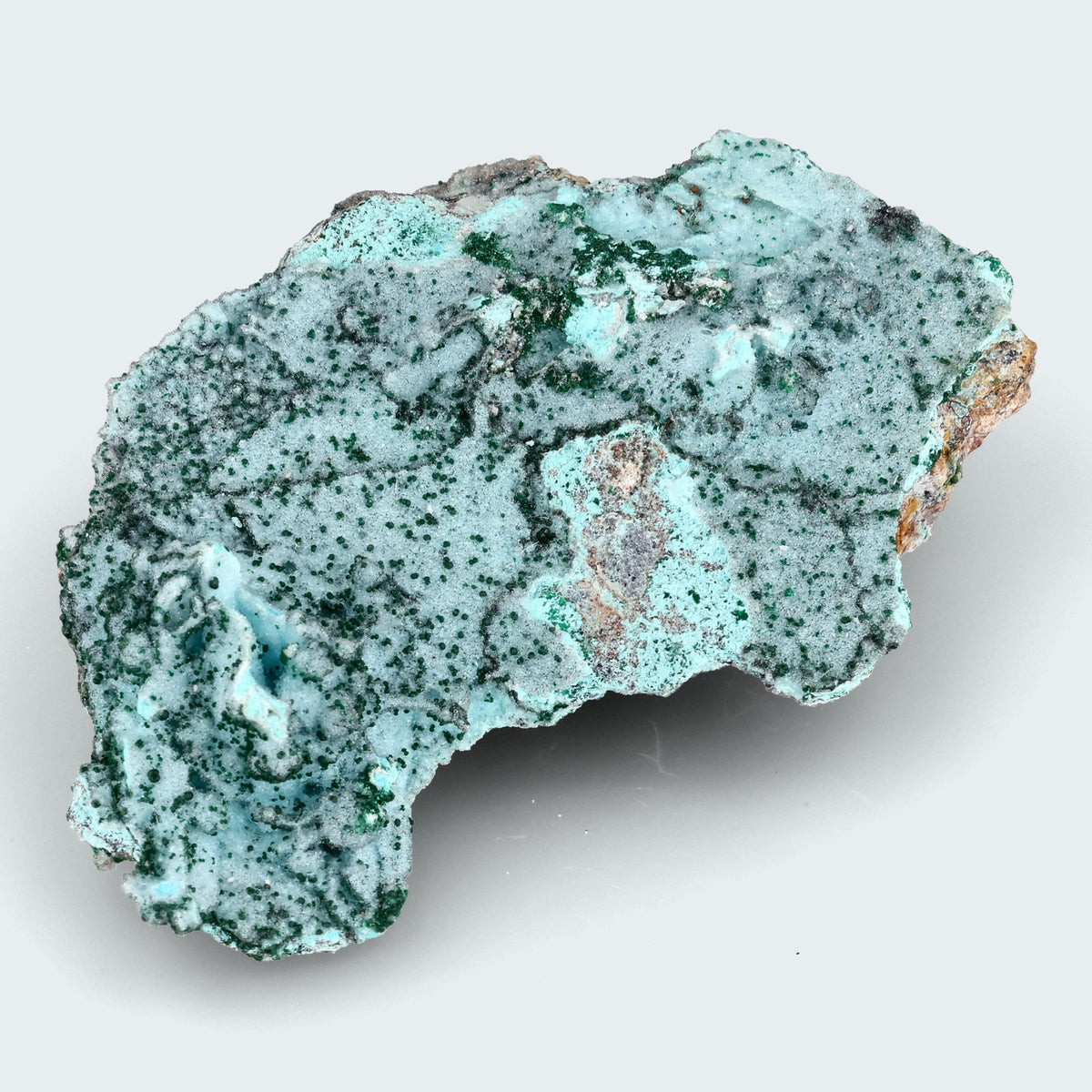
This mineral forms under specific geological conditions. The most common formation path is hydrothermal: silica-rich solutions penetrate cavities in volcanic rocks or sediments and slowly deposit silicon dioxide there. This process takes time – and the right chemical environment. The result is crusts, botryoidal masses, or concretions that line or fill cavities.
This formation path explains why the mineral so often occurs together with other hydrothermal minerals. It's not a loner, but part of a mineralogical system.
Important deposits include Brazil and Uruguay, where the stones often occur alongside agate and amethyst. Botswana and Namibia yield specimens with especially fine coloring. Many well-known specimens with accompanying minerals come from India. Germany has historically significant locations, for instance in the Rhineland and Saxony, although collector's pieces today rarely come from these regions.
Each region shapes its pieces through local geochemistry and temperature conditions. India, for example, is known for specimens with extraordinary accompanying minerals – a result of the hydrothermal activity in the basalt rocks of the Deccan Traps there.
We source our chalcedony directly from mines, collectors, and selected dealers in the countries of origin – no wholesaler in between. Every piece is individually inspected by us and photographed from all sides. What you see is exactly what you get.
Practical Collecting Tips: What to Look For
Collecting these stones means developing an eye for detail. At Crystal Paradise, we inspect every piece individually: surface, color, structure, and accompanying minerals are examined before a specimen joins our range. This approach can be applied directly to your own collecting practice.
Color: Natural colors appear even and calm. Overly intense, almost glaring tones indicate dyeing. Caution is especially warranted with orange-red carnelian or green chrysoprase – both varieties are frequently treated thermally or chemically.
Surface: A healthy specimen has a smooth, waxy surface without deep scratches or weathering cracks. Cracks that reach deep into the interior can compromise stability.
Structure under a loupe: Genuine specimens show no crystal facets. The surface remains uniformly fine-grained – without the pinpoint reflections that quartz crystals produce.
Forms available: For beginners, tumbled stones are ideal. The rounded shape makes surface flaws less visible, and the stones are easy to handle and care for. Specimens display the natural mineral formation more impressively and suit collectors who want to see geological processes made visible. Raw stones offer maximum authenticity – often with unworked surfaces that show how the stone truly came out of the rock.
For storage: keep it cool, dry, and protected from direct sunlight. UV radiation can fade sensitive colors, especially in blue chalcedony, over time. Pieces should stand stably or be stored individually wrapped to avoid scratches from harder minerals.
Those who want to go deeper will find in the chalcedony collection a selection of tumbled stones and raw specimens that make these quality criteria directly comparable.
Combinations with Accompanying Minerals: Paragenesis in Nature
This quartz aggregate rarely grows alone in nature. In hydrothermal systems – especially in the basalt cavities of the Indian Deccan Traps – fascinating mineral communities form, in which it serves as a host for other crystals.
The classic trio from this region: chalcedony, heulandite, and apophyllite. Heulandite is a zeolite mineral that sits atop the base in characteristic, coffin-shaped crystals. Apophyllite forms glass-clear, often slightly greenish-shimmering prisms that project into the cavities. All three formed together from the same hydrothermal solutions – the paragenesis proves that the chemical conditions were right for all three minerals at the same time.
For collectors, such combination specimens hold special value. The stone becomes a document of a geological moment. It shows that at this place, under these conditions, exactly these minerals formed together. That's not decoration – that's earth history on a specimen.
Currently available as raw specimens, we carry the Chalcedony with Heulandite and Apophyllite (126g) and the Chalcedony with Heulandite and Apophyllite (234g) – each specimen a one-of-a-kind piece, photographed from all sides, so you know exactly what you're getting.
Frequently Asked Questions
How do I distinguish genuine chalcedony from dyed quartz?
Genuine specimens have a fine-grained, waxy-glossy surface without visible crystal facets. The colors appear natural and even – not artificially intense. Dyed stones often stand out through overly vivid, unnaturally glowing tones. Under a loupe, the characteristic non-crystalline surface without directional reflections becomes apparent. If in doubt, an expert assessment on-site can help.
What colors does chalcedony naturally come in?
It occurs naturally in white, delicate blue, gray, orange to red (as carnelian), green (as chrysoprase), and with concentric banding (as agate). The colors arise from trace elements: iron oxides for reddish-brown to orange, nickel for green. Unnaturally glowing colors – especially deep orange or intense blue – are often treated.
What does it mean when the mineral is intergrown with other minerals?
It shows that the minerals formed together under the same geological conditions – this is called paragenesis. Such combinations are mineralogically more informative than single minerals because they document the conditions of their formation. Specimens with heulandite and apophyllite, for example, document hydrothermal processes in basaltic cavities. For collectors, these pieces are more limited in availability and more interesting in content.
Should I collect raw stones, specimens, or tumbled stones?
That depends on your goals. Specimens impressively display natural mineral formation – ideal for mineralogically interested collectors. Tumbled stones are low-maintenance, easy to handle, and well-suited for beginners. Raw stones offer maximum authenticity and show the stone as it came out of the rock. Many collectors combine all three forms.
How do I store chalcedony correctly?
Cool and dry, protected from direct sunlight. UV radiation can fade sensitive colors – especially in blue specimens – over time. Specimens should stand stably to prevent breakage losses. Separate storage or soft padding prevents scratches from harder minerals in the collection.

Leave a comment
This site is protected by hCaptcha and the hCaptcha Privacy Policy and Terms of Service apply.