









Crystals for Better Sleep: The 6 Best Healing Stones
Crystals for Better Sleep: Why Healing Stones Are So Popular in the Bedroom

More and more people are discovering crystals for sleep as natural companions for the night. But what's behind this trend? When it comes to crystals & sleep, it's about the conscious use of certain healing stones in the sleep area – to create a calm atmosphere and establish a mindful evening ritual. Crystals do not replace medical treatment, but rather complement a mindful everyday life with a natural, aesthetic element. In traditional stone lore, many minerals have been attributed a calming, clarifying, or harmonizing effect on body and mind for centuries. We at Crystal Paradise have been guiding our customers for years in choosing the right stones – and know from experience: the right stone at the right time can noticeably enrich the sleep ritual.
The 6 Best Crystals for Sleep and Nighttime Rest
Which stones are especially well suited for the bedroom? In traditional stone lore, certain minerals have established themselves as classic companions for peaceful nights. We present the 6 most popular healing stones for better sleep – with mineralogical background and traditional attributions.
1. Amethyst – The Classic Stone of Calm
Amethyst belongs to the quartz family and reaches a hardness of 7 on the Mohs scale. Its characteristic purple color is caused by traces of iron and natural irradiation. The most significant deposits are located in Brazil, Uruguay, and Namibia.
In traditional stone lore, amethyst is regarded as a calming stone. It is said to clear the mind and reduce inner restlessness. Many people place an amethyst geode or a polished stone on the nightstand – as a quiet symbol of calm and a conscious break in the evening.
2. Rose Quartz – Gentle Energy for the Night
Rose quartz is also a quartz mineral with a hardness of 7. Its delicate pink color results from fine inclusions of dumortierite or microstructures within the crystal lattice. Main sources are Madagascar, Brazil, and South Africa.
According to tradition, rose quartz is said to radiate a gentle, heart-opening energy. It is often associated with comfort and emotional warmth. As a sphere or polished stone in the bedroom, it is said in stone lore to create a harmonizing atmosphere.
3. Moonstone – The Stone of the Inner World
Moonstone belongs to the feldspar group and displays the typical phenomenon of adularescence – a shimmering play of light beneath the surface. Its hardness ranges from 6 to 6.5. Particularly high-quality specimens come from Sri Lanka and India.
In traditional stone lore, moonstone is said to strengthen the connection to intuition and inner rhythms. It is considered a stone of transition – fitting for the shift between the waking day and the depth of night.
4. Labradorite – Protection in the Dark
Labradorite is a feldspar mineral with a hardness of 6 to 6.5. It displays the so-called labradorescence phenomenon: a metallic play of color in blue, green, and gold. Main sources are Canada, Finland, and Madagascar.
According to tradition, labradorite is considered a protective stone that is said to shield against disturbing outside energies. In stone lore, it is often recommended for people who feel overwhelmed during the day and have trouble winding down in the evening. A labradorite on the nightstand is also a beautiful decorative element.
5. Lepidolite – The Natural Calm-Giver
Lepidolite is a mica mineral with a hardness of 2.5 to 3. It contains natural lithium – a fact that makes it particularly interesting mineralogically. The main deposits are found in Brazil, Zimbabwe, and the USA.
In traditional stone lore, lepidolite is associated with deep relaxation and letting go of worries. It is said to calm overactive thought patterns. Especially for people who ruminate a lot at night, lepidolite is a frequently recommended companion.
6. Sodalite – Clarity for a Calm Mind
Sodalite is a blue-violet mineral with a hardness of 5.5 to 6. Its intense blue color is caused by chlorine, sodium, and sulfur within the crystal structure. Significant deposits are found in Canada, Brazil, and Namibia.
In traditional stone lore, sodalite is considered a stone of inner order. It is said to structure thoughts and calm the mind. As a sleep companion, tradition holds that it can help interrupt rumination and shift into a calmer state.
Crystals for Sleep: How to Use Healing Stones Correctly
The way you place and care for your sleep crystals affects your personal experience with them. Here are the most tried-and-true methods from our years of consulting practice:
- On the nightstand: Place a polished stone or a small geode right next to your bed. This way it's present without being disruptive.
- Under the pillow: Small, smooth stones like rose quartz or amethyst are suitable for placing underneath – but only specimens without sharp edges.
- In the bedroom as decoration: An amethyst hand specimen or a labradorite freeform on the shelf is a calm, beautiful eye-catcher and a stylish home accessory.
- In the evening meditation ritual: Hold the stone in your hand for 2 to 5 minutes before falling asleep. Breathe consciously and set a clear intention for the night.
- As a stone grid: Place 4 stones at the corners of your bed for a harmonious energy field in the sleep space.
If you'd like to learn more about meditation practices with crystals, also read our article The Best Crystals for Meditation at Home.
Cleansing and Charging: Caring for Your Sleep Crystals

Healing stones should be cared for regularly. Crystals used at night, in particular, are traditionally believed to absorb a lot. We recommend cleansing and charging your sleep crystals at least every 4 weeks.
Cleansing Methods at a Glance
- Clear water: Many stones (except water-sensitive minerals like lepidolite) can be briefly rinsed under cool running water.
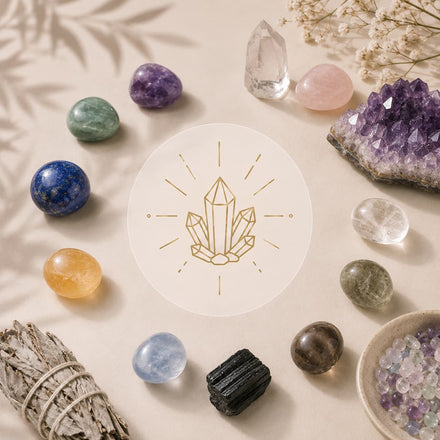
- Smudging: With sage or palo santo, you can cleanse stones in smoke – a gentle method suitable for all mineral types.
- Moonlight: Place the stones on the windowsill overnight during a full moon. According to tradition, the stone is considered cleared after just one night.
- Salt bowl: Place the stones (if salt-resistant) in sea salt for 24 hours.
You'll find everything worth knowing on this topic in our detailed collection Cleansing Healing Stones – How to Discharge and Clear Crystals Correctly.
Recharging Stones
After cleansing, charging is recommended. Place the crystals in the morning sun – 2 to 3 hours is enough for most stones. Caution: amethyst and rose quartz can fade if exposed to direct sunlight for many hours. Indirect light or moonlight is better suited.
You'll find in-depth information on charging in our collection Charging & Cleansing Healing Stones – A Guide.
Which Crystals for Sleep Suit You? A Decision Guide
Not every stone suits every person equally well. Trust your own intuition when choosing. Still, a brief orientation can help:
- Do you sleep restlessly and wake up often? → Amethyst or lepidolite
- Do you lie awake ruminating? → Sodalite or labradorite
- Are you longing for more comfort? → Rose quartz
- Do you want to encourage deeper dreams? → Moonstone
- Do you want stylish bedroom decor with meaning? → Amethyst geode or labradorite freeform
You'll find all the stones mentioned in our collection Buy Healing Stones for Sleep – handpicked and available directly from Crystal Paradise.
According to an analysis by the German Institute for Sleep Research, around 25 percent of all adults in Germany regularly suffer from difficulty falling asleep. Many are looking for natural ways to enrich their evening routine – crystals and healing stones are, for many, a conscious and mindful addition.
The mineralogical database Mindat.org also offers extensive information on the origin, composition, and hardness of the stones presented here – ideal for anyone who wants to dive deeper into the world of minerals.
Frequently Asked Questions

Which crystal is best for better sleep?
In traditional stone lore, amethyst, rose quartz, and lepidolite are considered the most commonly recommended stones for restful sleep. Amethyst is traditionally associated with mental clarity and calm, rose quartz with comfort, lepidolite with letting go of worries. Which stone suits you best is ultimately a personal decision – intuition plays a big role.
Where in the bedroom should I place my crystal?
On the nightstand, under the pillow, or as a decorative object on the shelf – all three options are popular. It's important that the stone is clean and cared for regularly. On the nightstand, it's most visible and tangible. For under the pillow, only smooth, edge-free stones are suitable.
How often should I cleanse my sleep crystals?
We recommend cleansing healing stones in the sleep area at least once a month. More often if used intensively or after stressful periods. Methods like smudging, moonlight, or running water are quick and effective. For water-sensitive stones like lepidolite, smudging is the best option.
Can children use healing stones in the bedroom?
Small stones are not suitable for children under 3 years old due to the risk of choking. For older children, there's nothing wrong with placing a stone on the nightstand or shelf – the important thing is that it doesn't end up in the bed and can't splinter. Sturdy quartzes like amethyst or rose quartz are better suited for this than soft minerals like selenite. Many children simply enjoy the stones as beautiful things to look at – that's a good reason on its own.

Written by Christian Neumayer


Leave a comment
This site is protected by hCaptcha and the hCaptcha Privacy Policy and Terms of Service apply.