











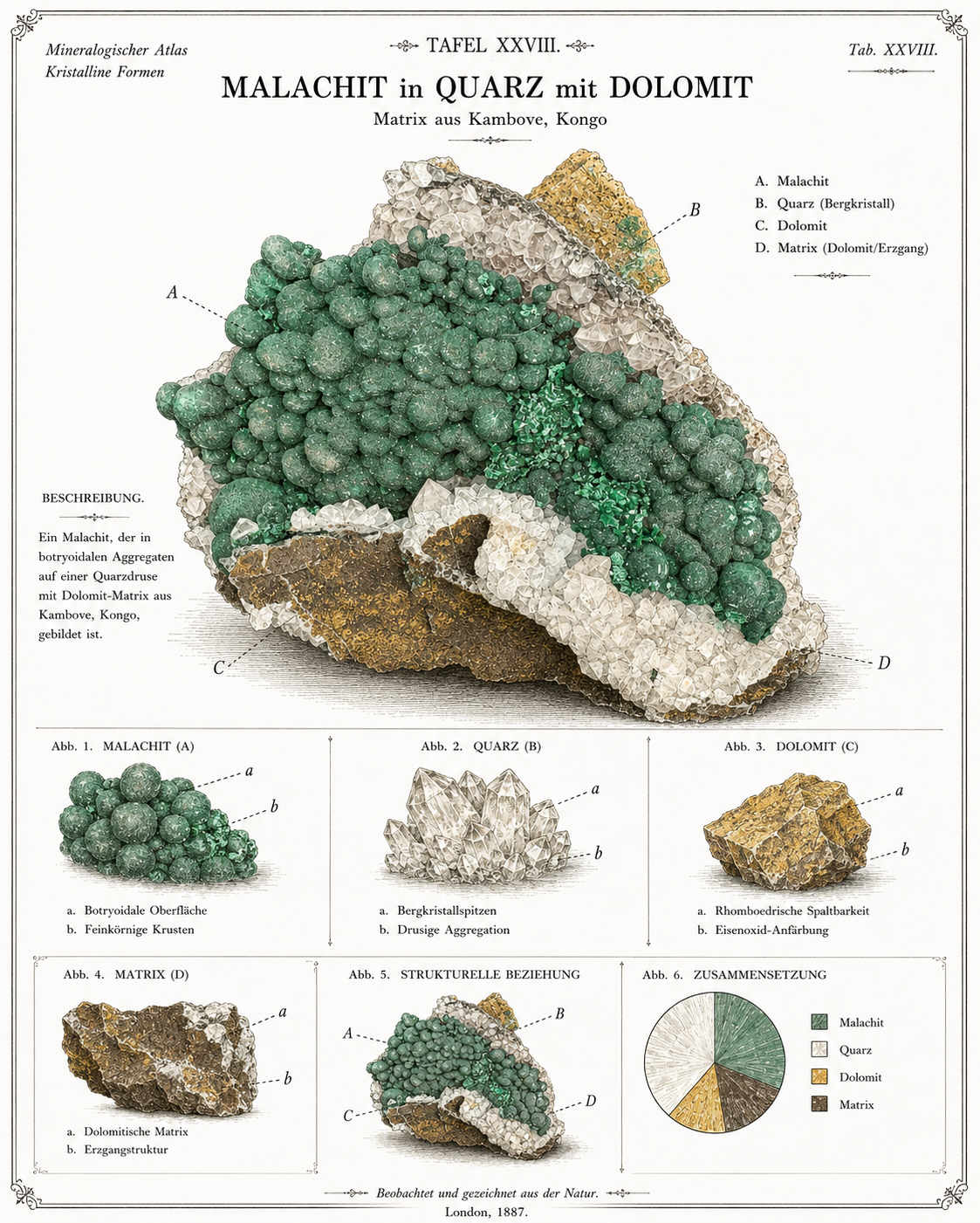
Why malachite in Congo quartz with a dolomite matrix captivates collectors
Malachite Congo Quartz with Dolomite Matrix: A Mineral of Superlatives

Malachite Congo Quartz refers to a rare mineral formation where intensely green malachite, transparent quartz crystals, and a cream-colored dolomite matrix form a single specimen. This combination results from complex hydrothermal processes over millions of years deep within the Earth – and that is precisely what makes each piece a unique natural wonder. Particularly the specimens from Kambove in the Democratic Republic of Congo are considered absolute reference pieces by collectors worldwide.
In our shop at Crystal Paradise, such combination specimens are among the pieces that we hand-pick with special care. Anyone who has stood in front of such a formation in the showroom in Feldkirchen near Munich immediately understands why these minerals fascinate so many people. The color depth of the malachite, the sparkle of the quartz crystals, and the warm texture of the dolomite together create a picture that no photograph can fully capture.
Origin: Why Kambove in Congo is so Special
The Democratic Republic of Congo is one of the most mineral-rich regions on Earth. The so-called Copperbelt area in the south of the country – also known simply as the Copperbelt – stretches for about 400 kilometers and hosts some of the world's most significant copper and cobalt deposits. Kambove is right in the middle.
Malachite is a copper carbonate hydroxide and preferentially forms in the oxidation zone of copper ore deposits. Where copper-bearing water seeps through rock fissures for millennia, the characteristic green crusts, stalactites, and botryoidal forms develop. Quartz crystals and dolomite often grow together with malachite in this process – the result is a natural triad of three completely different minerals.
For further information about the mineralogically exceptional offerings from this region, we recommend our collection Minerals from the DR Congo, where you can discover many more rarities directly.
Mineralogical Classification: Malachite, Quartz, and Dolomite in Detail
Malachite – the Green Copper Mineral
Malachite belongs to the carbonate mineral class. Its chemical formula is Cu₂(CO₃)(OH)₂. Its Mohs hardness is 3.5 to 4 – making malachite a rather soft mineral that is sensitive to acids and mechanical stress. The intense green color results from its high copper content. Characteristic is the botryoidal (spherical) or stalactitic growth habit with concentric band patterns in cross-section.
Malachite has been used as a gemstone and decorative stone for over 3,000 years. In ancient Egypt, it was considered a protective stone. During the Renaissance, it was ground into pigment powder and used as a green color for paintings.
Quartz – the Clear Companion
Quartz (SiO₂) is one of the most common minerals in the Earth's crust. In crystal specimens, it typically appears as a transparent, prismatic crystal. Its Mohs hardness is 7 – significantly higher than malachite. These differences in hardness also make the co-formation scientifically interesting: two such disparate minerals in a single specimen attest to a long, multi-stage formation process.
You can learn more about related quartz varieties from the region in our article about Spirit Quartz from Boekenhouthoek, South Africa.
Dolomite – the Supporting Matrix
Dolomite is a calcium-magnesium carbonate (CaMg(CO₃)₂) with a Mohs hardness of 3.5 to 4. In malachite specimens from Congo, it often appears as a creamy-white, rhombohedral crystal lattice that lends an earthy, organic depth to the entire piece. The dolomite matrix is the "foundation" upon which malachite and quartz grow – a silent testament to geological patience.
What Fascinates Collectors About Malachite Congo Quartz
From years of experience in mineral trading, we know that collector's items combining multiple minerals in a natural formation are particularly sought after. The reason is obvious.
- Uniqueness: No two pieces are identical. Form, color distribution, and crystal size vary from specimen to specimen.
- Color Contrast: The intense green of malachite, the clear white or gray of quartz, and the warm earth tones of dolomite create a natural play of colors without any post-processing.
- Mineralogical Complexity: Three minerals in one specimen mean three different crystal systems – a showcase of Earth's history.
- Provenance: Kambove stands for verifiable origin and is a term among mineralogists for the highest quality.
- Decorative Value: These specimens are not only interesting for collectors but also a real eye-catcher as a home accessory.
Those interested in other malachite forms will find a large selection at Crystal Paradise: from spherical malachite forms to fibrous malachite varieties.
Spiritual Significance and Traditional Properties

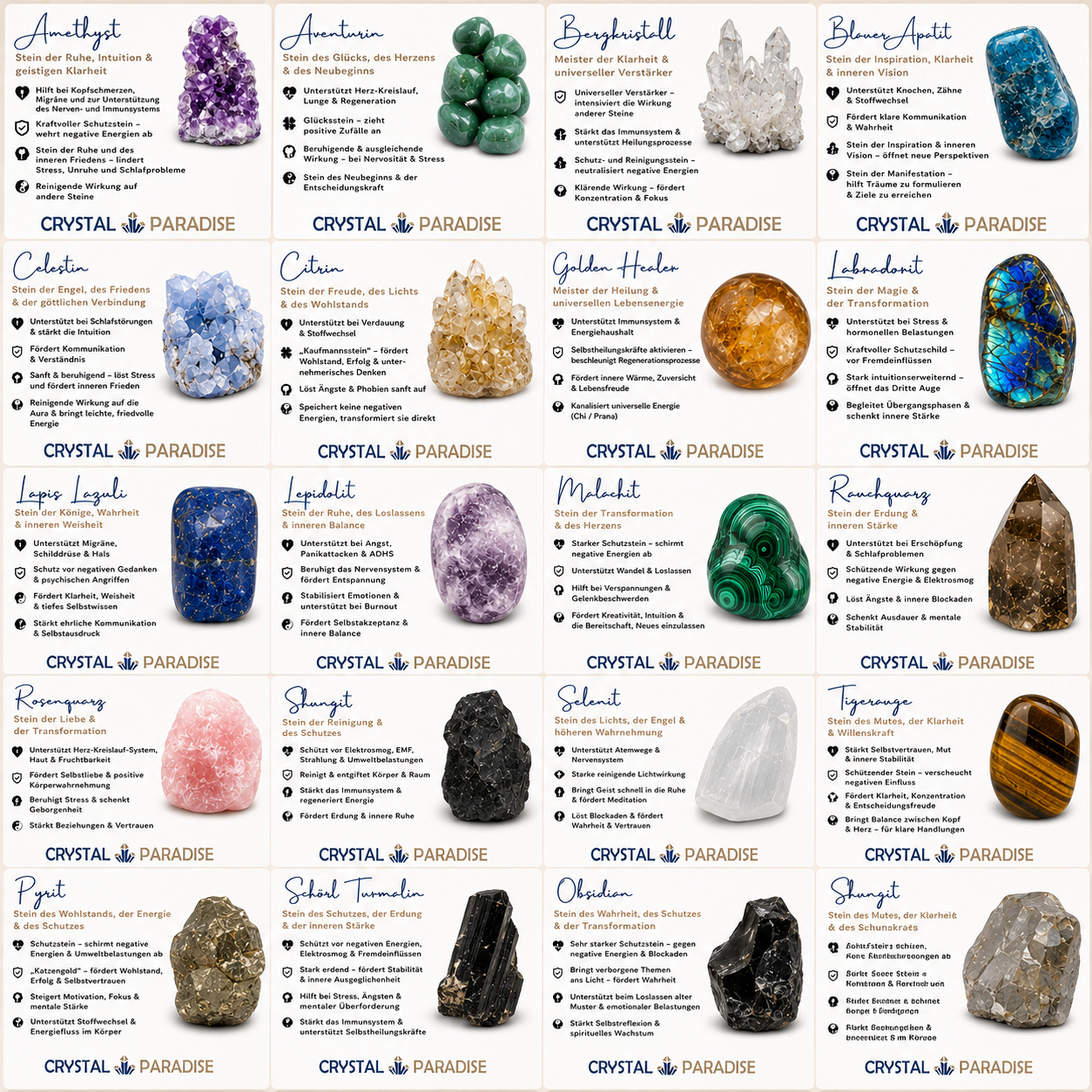
Beyond its mineralogical interest, malachite has been surrounded by a rich spiritual tradition for centuries. In crystal healing, malachite is traditionally considered a stone of transformation and change. It is believed to help release emotional blockages and promote inner strength.
Quartz is regarded in many cultures as a universal energy amplifier. According to tradition, it is said to support clarity and focus. Dolomite, in turn, is associated with grounding and stability in crystal healing.
The combination of all three minerals in one formation is therefore particularly valued by spiritually interested individuals – as a symbolic interplay of change, clarity, and rootedness.
Note: The mentioned effects are spiritual traditions without scientific proof.
Care and Handling: How to Keep Your Piece Beautiful
Malachite is more delicate than many other minerals. Anyone who owns a piece of Malachite Congo Quartz should observe a few simple care instructions.
- No Acid Contact: Malachite reacts even to weak acids such as citric acid or vinegar. Never bring it into contact with acid-containing cleaning agents.
- Gentle Cleaning: A slightly damp, soft cloth is entirely sufficient. Do not use ultrasonic cleaners or steam cleaners.
- Observe Temperature: Extreme temperature fluctuations (above 40 °C or below -5 °C) can promote cracks in the crystal structure.
- Dust Protection: Placed in a display case or on a pedestal, the piece stays fresh longer and requires less frequent cleaning.
- No Direct Sunlight: Intense UV radiation can affect the color intensity of malachite long-term – especially on polished surfaces.
Decorative Possibilities: How to Showcase the Formation
Malachite Congo Quartz specimens are true all-rounders in interior design. Their organic form and natural color play make them vibrant art objects.
On a simple, light-colored base, the intense green appears particularly powerful. In a modern, minimalist interior, such specimens add a stylish accent. They also unfold their calm presence in offices, practices, or meditation areas.
Those who combine several minerals can play with color contrasts. A malachite specimen next to a light rose quartz sphere creates a harmonious interplay of green and pink – both colors are considered balancing and energetically valuable in Feng Shui tradition.
Malachite variations in processed form – such as malachite obelisks or malachite slices – are also excellent for complementing a collection or as standalone decorative objects.
External reference on the geology of the Congo Basin: The Mineralogical Record regularly documents significant finds from the Copperbelt and offers in-depth scientific background on malachite formations.
Further mineralogical basics on carbonate minerals can be found on the scientific reference site Mindat.org – Malachite, the world's leading mineral database.
Frequently Asked Questions

What makes malachite from Congo particularly valuable?
Malachite from Congo – especially from the Kambove region – is considered particularly high quality because the deposits there produce exceptionally pure and richly colored specimens. The Copperbelt has supplied reference pieces for collections worldwide for decades. The additional combination with quartz and dolomite in a single natural formation significantly increases its mineralogical and aesthetic value.
Is Malachite Congo Quartz suitable for beginners or only for experienced collectors?
Both groups benefit from these specimens. Beginners are captivated by the visual impact: the vibrant green, the glittering quartz crystals, and the organic form are immediately appealing. Experienced collectors also appreciate the geological origin, the rarity of the triple combination, and the mineralogical precision of such natural formations. We always recommend looking for documented provenance when purchasing.
How can I identify genuine malachite from Congo?
Genuine malachite shows characteristic concentric band patterns in various shades of green in cross-section. The botryoidal surface is slightly glossy and velvety. In combination with Congo Quartz and Dolomite Matrix, the clear quartz crystal tips and the whitish-cream-colored dolomite matrix are also recognizable. Be cautious with strikingly uniformly colored, smooth stones – these could be dyed or synthetic. At Crystal Paradise, we guarantee the authenticity and natural origin of all our minerals.
Can I use Malachite Congo Quartz as a water stone?
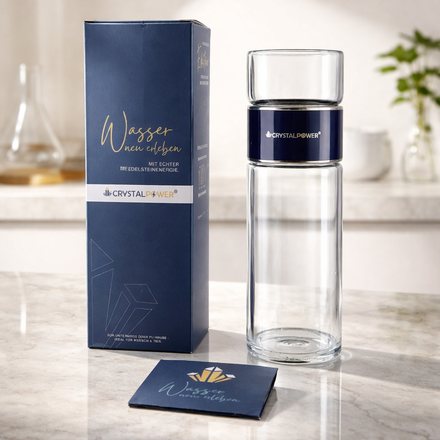
No. Malachite contains copper compounds and should never be used in direct contact with drinking water. Direct immersion in water is also not recommended. Those who wish to make gemstone water should use harmless stones. Crystal Paradise offers specially tested water stones in its crystalpower® range for this purpose.
Note: The mentioned spiritual effects are traditional beliefs without scientific proof. Crystal Paradise makes no medical healing claims.

Written by Christian Neumayer


Leave a comment
This site is protected by hCaptcha and the hCaptcha Privacy Policy and Terms of Service apply.