








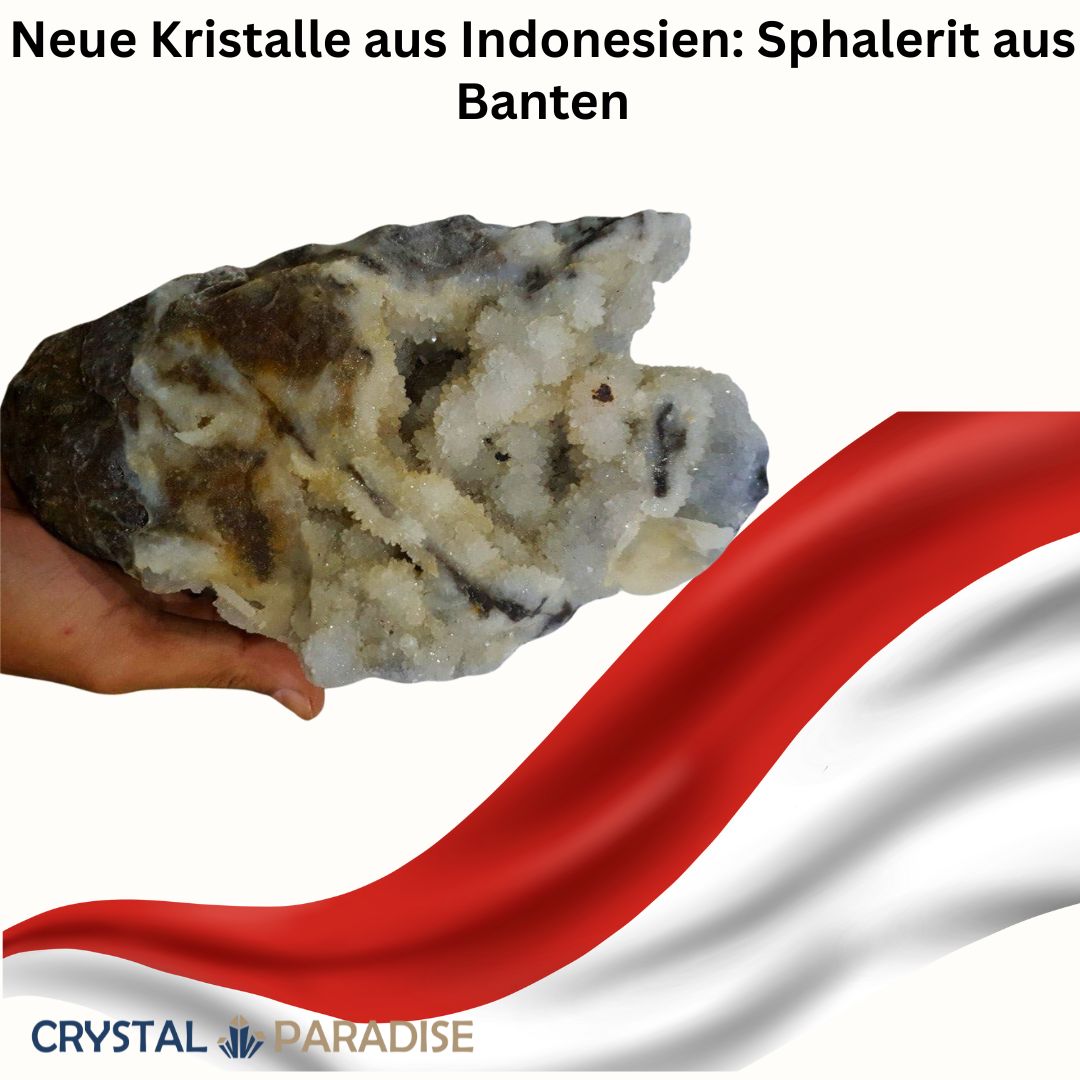
New crystals from Indonesia: Sphalerite from Banten
Sphalerite from Indonesia – A Radiant New Arrival at Crystal Paradise

Sphalerite Indonesia – this term stands for a mineral that captivates collectors and crystal enthusiasts worldwide. Sphalerite is a zinc sulfide mineral with the chemical formula ZnS and is considered one of the most brilliant minerals of all. Its refractive index even exceeds that of diamond. Our latest find comes from the province of Banten on the island of Java – a region that has so far barely been in the focus of the international mineral trade. We are delighted to now present these extraordinary pieces in our shop and showroom in Feldkirchen near Munich.
In the following lines you'll learn everything about the origin, the mineralogical特征, the traditionally attributed properties, and the proper care of this fascinating mineral from the Indonesian archipelago.
Origin: Sphalerite Indonesia – Banten on Java
The province of Banten lies at the westernmost tip of the island of Java. It borders the Sunda Strait, which separates Java from Sumatra. This geologically active zone is rich in hydrothermal ore bodies. It is precisely there that the conditions arise under which sphalerite thrives.
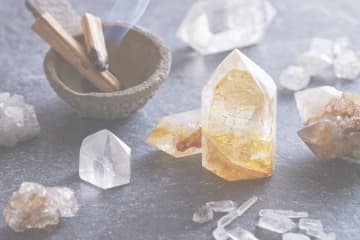
Banten is best known for its historic Sultanate palace from the 16th century. As a source of minerals, however, the region remains largely undiscovered. This makes our find all the more exciting. The sphalerite specimens from Banten display an intense honey to dark brown coloration with an occasional reddish shimmer. These hues result from small amounts of iron within the crystal lattice.
The pieces were mined in small quantities by local miners. They occur as natural specimens or as individual crystal clusters on matrix – often accompanied by galena, pyrite, or quartz. This gives each piece a distinctive, mineralogically diverse character.
You can find more exciting minerals from this part of the world in our collection Minerals from Indonesia for sale.
Mineralogical Classification: What Makes Sphalerite So Special?
Sphalerite belongs to the sulfide group of minerals. It crystallizes in the cubic system and often forms tetrahedral or octahedral crystals. Its Mohs hardness ranges from 3.5 to 4 – making it comparatively soft. This makes it more delicate than many other collector stones.
Physical Properties at a Glance
- Chemical formula: ZnS (zinc sulfide), often with iron, manganese, or cadmium impurities
- Crystal system: Cubic (isometric)
- Mohs hardness: 3.5 – 4
- Refractive index: 2.37 – one of the highest among all natural minerals
- Density: approx. 3.9 – 4.1 g/cm³
- Color: Yellow, honey brown, dark brown to black (variety: marmatite); rarely red or green
- Luster: Adamantine to resinous – very high luster
- Cleavage: Perfect in six directions
The name "sphalerite" is derived from the Greek word sphaleros, meaning "deceptive." In the past, it was often mistaken for other ore minerals. Sphalerite's most significant economic importance lies in its role as the main ore for zinc. Worldwide, more than 13 million tons of zinc are extracted annually from sphalerite deposits.
Well-known deposits worldwide include Spain (Picos de Europa), Mexico, the USA (Tri-State District), and Bolivia. The Indonesian variety from Banten adds a geologically interesting source from Southeast Asia to this list. Anyone enthusiastic about rare minerals from special regions will also find Pyrite and Rainbow Pyrite from West Kalimantan with us – also a more recent find from Indonesia.
Fluorescence and Optical Features
Many sphalerite specimens exhibit pronounced fluorescence under UV light. Depending on trace elements, they glow in orange, yellow, or blue. The specimens from Banten show, under shortwave UV light, a soft orange fluorescence in some cases – a fascinating display for any collector.
Traditionally Attributed Properties in Crystal Healing

In crystal healing, sphalerite is traditionally associated with energy, vitality, and grounding. According to tradition, it is considered a stone that is said to support the mobilization of inner strength and finding clarity in difficult situations.
Traditionally Attributed Effects
- Traditionally described as a grounding stone said to promote stability in everyday life
- In crystal healing, it is regarded as a companion for people who wish to strengthen their perseverance
- According to tradition, it is said to support the ability to use energy purposefully and avoid overexertion
- In some traditions, it is associated with the root chakra
Important: These attributions come from spiritual traditions and do not constitute medical recommendations. Please read our note at the end of the article.
Care and Handling: Keeping Your Sphalerite Beautiful
Due to its comparatively low hardness of 3.5 to 4 on the Mohs scale, sphalerite requires special care. Here we share our most important recommendations, based on our own experience, for handling this delicate mineral:
Care Instructions for Collectors
- Store dry: Sphalerite is sensitive to moisture. With prolonged exposure to dampness, the surface can tarnish or oxidize.
- Store separately: Since it is soft, it should not be stored together with harder minerals. There is a risk of scratching even from contact with quartz (hardness 7).
- No ultrasonic cleaner: The perfect cleavage makes sphalerite susceptible to mechanical shocks. Ultrasound is off-limits.
- Gentle cleaning: A slightly damp, soft cloth at room temperature is enough for cleaning. Do not use aggressive cleaning agents.
- Protect from heat: Temperatures above 100 °C can affect the crystal structure and cause the surface to become matte.
- Mind light exposure: Very pale, iron-poor specimens can fade slightly with prolonged strong UV exposure.
Sphalerite from Banten at the Crystal Paradise Showroom
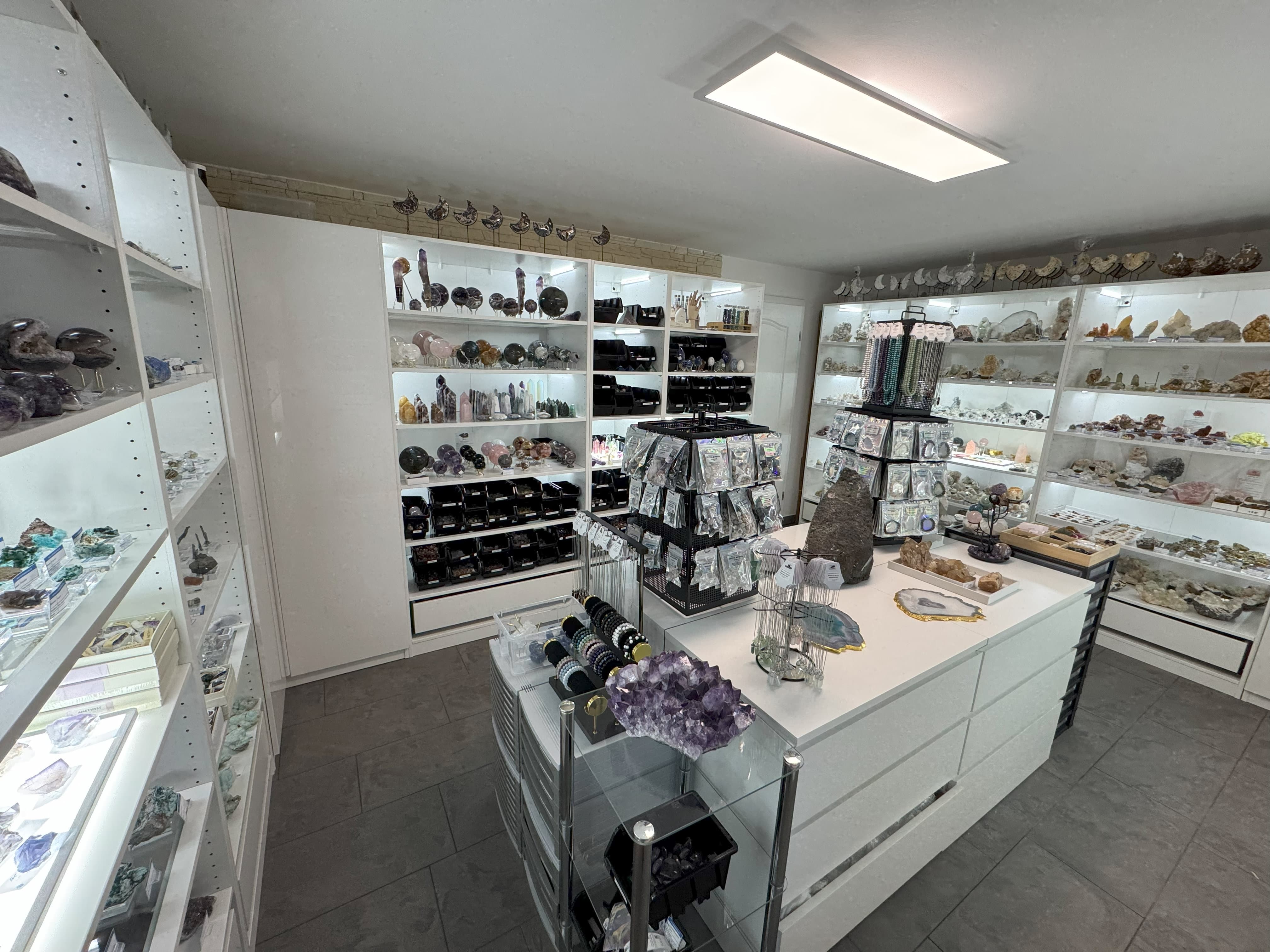
Anyone who wants to experience our sphalerite specimens from Banten in person is warmly welcome. At the Crystal Paradise Showroom in Feldkirchen near Munich, we present the most beautiful pieces from our current new arrivals – including select specimens of this Indonesian rarity. For more than a decade, we have been curating hand-selected minerals from around the world and understand the significance of a personal encounter with a stone.
In the showroom, you can hold the pieces in your hands, feel their weight, and observe the play of light on the crystal faces – something that's hardly reproducible in photos. We especially recommend a visit if you're looking for a special individual piece or are unsure which stone suits you. Our team will be happy to advise you personally.
You can learn more about our current exhibition options in our article about the new display cases at the Crystal Paradise Showroom Feldkirchen.
Sphalerite as a collector's piece remains something of an insider tip in the world of minerals. Unlike quartz or amethyst, it is significantly rarer to find in good collector quality. Anyone looking for sphalerite from Indonesia will find hand-selected pieces of documented provenance quality with us – a rarity in the German-speaking market. Learn more about our global mineral selection at Minerals from around the world.
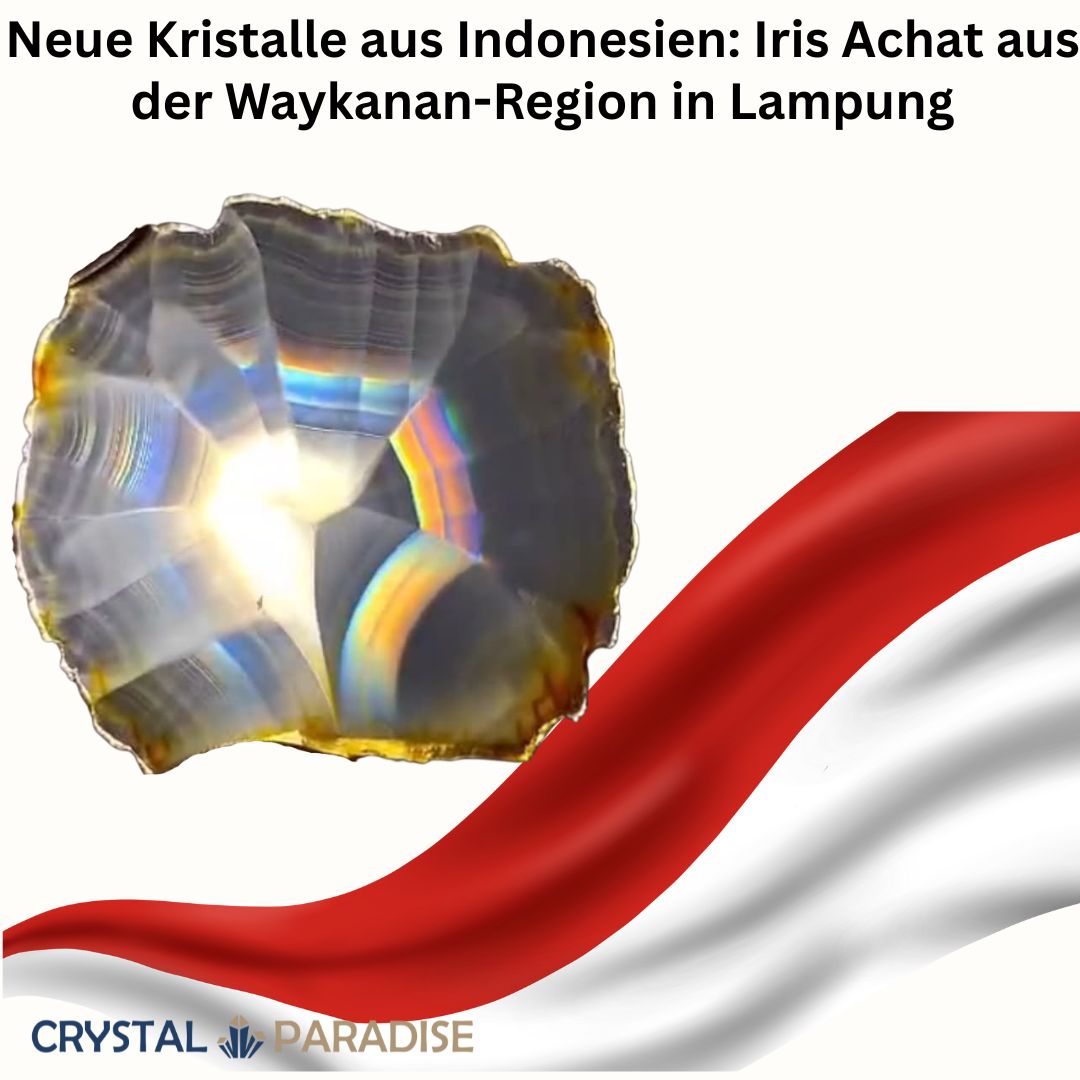
We present another exciting Indonesian new arrival in our article about the Iris Agate from the Waykanan region in Lampung – a visual spectacle of a special kind.
For external information on the mineralogy of sphalerite, we recommend taking a look at the mineral database entry on Mindat.org as well as the Wikipedia article on sphalerite, which offers well-founded mineralogical background information.
Frequently Asked Questions

What is sphalerite and why does it come from Indonesia?
Sphalerite is a zinc sulfide mineral (ZnS) with a cubic crystal structure and a Mohs hardness of 3.5 to 4. It forms in hydrothermal ore deposits, such as those found in volcanically active zones. The island of Java – particularly the province of Banten – lies in exactly such a geologically active zone. The sphalerite deposits there yield pieces in characteristic honey to dark brown shades, caused by iron impurities.
How can I identify genuine sphalerite?
Genuine sphalerite has a very characteristic adamantine luster – almost like diamond. It has perfect cleavage in six directions, which is visible under a magnifying glass. Its density of approximately 4.0 g/cm³ makes it surprisingly heavy. Under UV light, many specimens show an orange to yellowish fluorescence. If in doubt, we recommend expert advice, such as we offer in our showroom in Feldkirchen.
Can I wear or use sphalerite daily?
As a gemstone for everyday wear, sphalerite is not ideal due to its low hardness (3.5 – 4). It is excellently suited as a collector's piece, decorative object, or for calm handling in meditation or mindfulness practice. Worn as a ring or bracelet, it would be too fragile for everyday use. As a display piece on a desk or in a display case, however, it makes an excellent impression.
Where else is sphalerite found worldwide?
Important deposits for collector quality include Picos de Europa in Spain, the Tri-State District in the USA (Missouri, Kansas, Oklahoma), Potosí in Bolivia, and various locations in Mexico and China. Sphalerite from Banten, Indonesia, on the other hand, is a newer and still comparatively rare origin on the international collector's market.
Note: The described effects of gemstones and minerals are based on traditional experiences and beliefs. They are not scientifically proven and do not replace medical treatment or therapy.

Written by Christian Neumayer

Leave a comment
This site is protected by hCaptcha and the hCaptcha Privacy Policy and Terms of Service apply.