









Consciously Living Sustainability in Mineral Trading
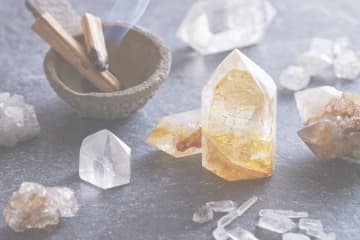
A crystal can be millions of years old before it reaches your hands. This deep connection to its origin is exactly what makes it so special - and it makes sustainability in the mineral trade a question that goes far beyond packaging and shipping. Choosing an amethyst, a clear quartz point, or a unique mineral is not choosing mass-produced goods. It's about a one-of-a-kind piece of nature whose history deserves respect.
Trading sustainably when buying minerals doesn't mean expecting perfection. Sources are often located in remote regions, supply chains are complex, and not every step can be fully controlled. Conscious selection therefore begins with honest questions, traceable origin, and the wish to appreciate natural beauty for a long time.
What sustainability really means for minerals
Minerals don't regrow and aren't an arbitrarily available resource. Every raw stone, every geode, and every polished sphere has been taken from the earth, sorted, transported, and often processed by hand. Sustainability is therefore first shown in how mindfully this material is handled.
A responsible mineral trade makes sure not to treat pieces as interchangeable decoration. A carefully chosen smoky quartz, a labradorite full of character, or a natural specimen may have edges, inclusions, and small irregularities. These very traces tell the story of its formation. They are not a flaw, but part of its truth.
Longevity matters too. A crystal that you consciously choose, care for, and keep as a companion for years is more valuable than a quick impulse purchase that soon disappears into a drawer. This applies to powerful home accents just as much as to jewelry, palm stones, or a meaningful personal gift.
Sustainability in the mineral trade starts with origin
The most important question is: where does a stone come from? For some minerals, the source is well documented; for others, the path leads through several dealers and processing stations. Especially with small businesses, artisanal cutting workshops, or regional sources, the supply chain can look very different.
Reputable dealers should not use origin as a mere marketing term. They speak openly when a source is known, and avoid promises that can't be substantiated. Especially with rare minerals, it's worth taking a closer look: Is the name correct? Is it a natural mineral, a dyed material, a reconstruction, or an artificially made variant? Transparency protects not only nature, but also your enjoyment of the chosen piece.
Natural, processed, or treated?
Not every treatment is automatically problematic. Many minerals are cut, ground, or polished so that their color, structure, and play of light become visible. A freeform can beautifully highlight the natural pattern of an agate, while a polished sphere can serve as a calm centerpiece of a room.
What matters is that treatments are clearly stated. Heated, dyed, coated, or reconstructed stones have their place when offered honestly. If you're looking for as original a natural piece as possible, you can specifically ask for raw crystals, natural specimens, or untreated pieces. It always depends on what matters to you: pure collector's joy, decorative effect, jewelry suitability, or a personal ritual.
Fair paths are more than a label
Fairness concerns the people along the entire chain - from mining through sorting to processing and sale. Full transparency isn't always easy to achieve in the international mineral trade. It's all the more important to build long-term supplier relationships, take questions about working conditions seriously, and not follow the lowest price alone.
A strikingly cheap stone can be tempting. But a price often also tells of effort, quality, and care. Handpicked individual pieces, expert examination, and responsible selection take time. That's why Crystal Paradise doesn't focus on anonymous mass goods, but on the joy of finding special natural pieces with character.
Choose consciously instead of collecting quickly
A more sustainable crystal selection doesn't have to mean buying only rarely. It means choosing with more feeling and clarity. Take a moment before buying: Which stone truly draws you in? What size will fit permanently in your home? Do you want a raw individual piece, a jewelry companion, or a gift carrying a personal message?
Four questions help with a decision that still feels right even after months:
- Is the type of stone, possible treatment, and origin described as clearly as possible for this piece?
- Am I choosing this crystal because of its individual character - not just because it's currently trending?
- Does its size, shape, and energy really fit my everyday life or the person who will receive it?
- Can I care for it long-term, keep it, or later pass it on with a good feeling?
Care extends the enjoyment of a natural piece
Sustainability continues at home. Minerals usually don't need elaborate treatment, but they benefit from mindful handling. Protect sensitive pieces from impacts, direct intense sunlight, and strong temperature fluctuations. Amethyst, rose quartz, and some fluorites in particular can lose color intensity with prolonged sun exposure.
A soft, dry cloth is often enough for cleaning. Water isn't suitable for every mineral: selenite, pyrite, malachite, or halite are sensitive and should be cared for dry. If you want to cleanse crystals energetically, choose a method suited to the material - such as incense, sound, moonlight, or mindfully placing it on a suitable surface.
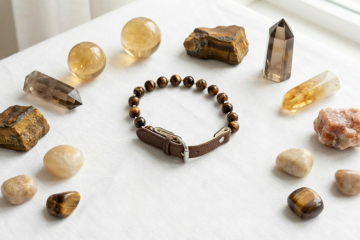
Attention is also worthwhile for jewelry. Take off bracelets and pendants during sports, showering, or housework. This keeps settings, bands, and surfaces looking good for a long time. A beloved stone that is well cared for may accompany you through years of change, calm, and reorientation.
Considering shipping, packaging, and returns mindfully
A crystal's journey doesn't end at the source. Shipping material, protective packaging, and returns are also part of the responsibility. Minerals are heavy and fragile, so secure shipping needs sufficient protection, especially for points, specimens, and spheres. Less packaging isn't automatically more sustainable if the piece arrives damaged and has to be replaced.
Sensible packaging protects appropriately and is used as mindfully as possible. As a buyer, you can help by reading product dimensions, looking carefully at images, and seeking advice before purchase if unsure. This reduces avoidable returns and increases the chance that exactly the right crystal comes to you.
If a piece still doesn't feel right, an uncomplicated return may of course be part of a trustworthy shopping experience. Buying mindfully doesn't mean giving up security. It means making decisions with information, calm, and appreciation.
A mineral doesn't have to be flawless to feel precious. Perhaps its strongest feature lies precisely in a natural line, a small indentation, or an inclusion that no other stone carries in the same way. Choose pieces that truly touch you, give them a permanent place, and let a purchase grow into a long-term connection to the beauty and power of nature.


Leave a comment
This site is protected by hCaptcha and the hCaptcha Privacy Policy and Terms of Service apply.