







Buying Lapis Lazuli: How to Recognize Genuine Quality
Buying Lapis Lazuli: How to Recognize Real Quality
When we pick up a Lapis Lazuli, we first pay attention to one single thing: that blue. Not the pale blue shimmer of dyed howlite, not the dull gray-blue of inferior batches – but the deep, rich royal blue that has fascinated painters, rulers, and collectors alike for thousands of years. At the same time, we immediately feel whether the surface is truly evenly polished – no scratches, no porous spots, no area that feels different under the thumb than the rest. And we deliberately turn the piece into side light to see whether the pyrite inclusions flash metallically or just look flat and painted on. These three checks – color impression, feel, pyrite check in the light – happen within the first few seconds for us. Buying Lapis Lazuli means really engaging with this stone. It means seeing differences, understanding origin, and feeling quality. This guide gives you the tools for that – from the perspective of people who select, inspect, and buy these stones themselves.
Why Origin Is Crucial When Buying Lapis Lazuli
Lapis Lazuli is not a rare mineral in the geological sense – but high quality certainly is. This is mainly due to origin. The world's most famous and mineralogically significant deposit is located in the Sar-e-Sang Valley in Badakhshan Province, Afghanistan. These deposits have been mined for over 6,000 years and are still considered the benchmark for color depth and purity.
Why Afghanistan? The rock there is of metamorphic origin: Lapis Lazuli forms there through contact metamorphism in limestone formations that were transformed by magmatic intrusions. The result is a rock with an exceptionally high lazurite content – the main blue mineral in Lapis Lazuli – combined with characteristic golden pyrite flecks and white calcite veins.
Other deposits exist: Chile produces Lapis Lazuli in larger quantities, often with stronger calcite veining and a paler blue. Russia (Lake Baikal region) also supplies material, but it rarely reaches the color saturation of Afghan pieces. The difference is clearly visible to a trained eye.
When buying Lapis Lazuli, you should therefore insist on transparent origin information. If it's missing, caution is advised. At Crystal Paradise, the origin of every piece is stated – because it's a genuine quality indicator, not a marketing promise.
Tip for collectors: The Lapis Lazuli Collection at Crystal Paradise exclusively features pieces with clear origin information – each individually selected and photographed.
Identifying Features of Genuine Lapis Lazuli Quality
Lapis Lazuli is not a mineral, but a rock – a mixture of several minerals. This distinction is crucial when assessing quality. The main components are lazurite (responsible for the characteristic blue), pyrite (golden metallic inclusions), and calcite (white to gray veins or spots). The ratio of these three components largely determines the quality grade.
Color: The blue of a high-quality Lapis Lazuli is intense, rich, and warm – often with a slight violet undertone. Dull, grayish, or unevenly lightened blue indicates a lower lazurite content or heavy calcite intrusion. Uniformity is valuable, but complete uniformity is unusual in natural stone – and should make you think twice.
Pyrite Inclusions: The golden pyrite flecks are both an authenticity signal and an aesthetic feature. Too much pyrite can dominate the color, too little makes the piece appear flat. Finely distributed, clearly visible pyrite flecks are considered a sign of good quality. Caution: dyed howlite or jasper are sometimes sold as Lapis Lazuli – both completely lack natural pyrite inclusions, or they appear painted on.
Calcite Content: White veins are natural, but a high calcite content lowers the quality grade. In top quality (sometimes referred to as "Persian quality," even though the material today comes from Afghanistan), the calcite content is low or barely visible.
Polish and Surface: A well-polished Lapis Lazuli has an even, velvety-smooth surface without scratches, pores, or dull spots. Scratches in the polish indicate poor workmanship – or subsequent oiling to conceal flaws. Rub a suspicious piece dry and check it in side light.
Different Product Forms When Buying Lapis Lazuli
Lapis Lazuli comes in very different forms in the trade – and each form reveals different aspects of quality. It's worth knowing the differences before you buy.
Raw Stones and Hand Specimens: These show the natural fracture structure of the rock. You see how the material occurs in nature – with all its color transitions, pyrite nests, and calcite veins. For collectors, raw specimens are especially interesting because they show the character of the found piece unaltered.
Polished Freeforms: These free forms are carved out of larger pieces and then polished. Polishing significantly enhances the color depth – a high-quality polished Lapis Lazuli practically glows. Weight and size vary greatly. At Crystal Paradise you'll find polished freeforms directly from Afghanistan, for example the Lapis Lazuli Freeform, polished, from Afghanistan (444g) – intense blue – a piece that stands out through its color saturation alone.
Tumbled Stones: Smaller, rounded pieces with a smooth surface. A good entry point for Lapis Lazuli beginners – pleasant feel, manageable size, easy to compare.
Special Shapes: Spheres, eggs, and discs require even, well-workable material. A Lapis Lazuli sphere with homogeneous color is demanding to craft and therefore proof of quality in both material and workmanship. Crystal Paradise's range includes polished eggs, spheres, and discs – all with proof of origin from Afghanistan.
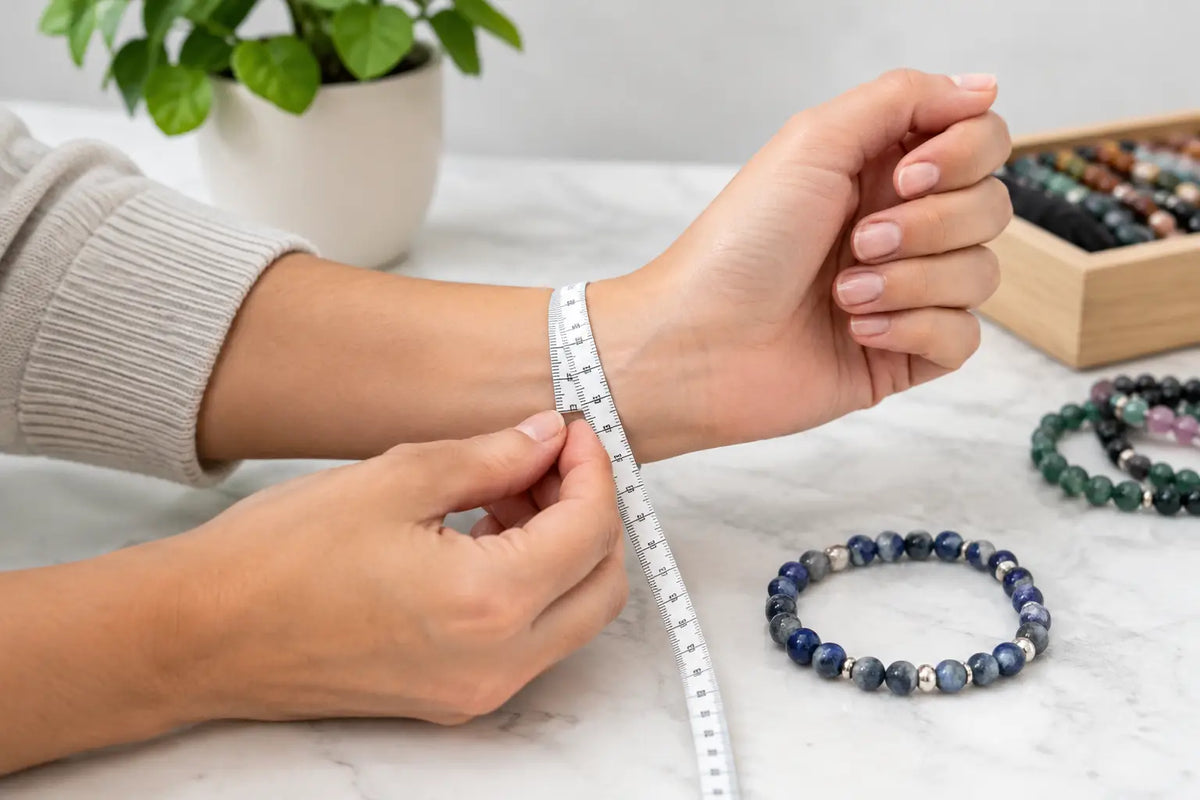
Jewelry: A bracelet made of Lapis Lazuli beads combines aesthetics with wearability. Here too, pay attention to color consistency between the individual beads.
For those who want to dive deeper into mineral literature: Crystal Paradise also carries specialist literature and Lapis mineral magazines – ideal for anyone who wants to systematically expand their knowledge of Lapis Lazuli and other minerals.
What to Look for When Buying Lapis Lazuli
Here are the concrete checks we ourselves apply at Crystal Paradise when selecting pieces:
1. Color check in daylight: Hold the stone up to natural light – no artificial light, no shop-window spotlight. The blue of a high-quality Lapis Lazuli stays rich and vivid in daylight. Lower qualities often look flat or grayish as soon as warm artificial light is removed.
2. Estimating calcite content: White spots and veins are natural, but their proportion should be low in quality pieces. A stone that shows more white than blue is mineralogically Lapis Lazuli – but not a quality piece.
3. Checking pyrite: Genuine pyrite inclusions have a metallic shine and a crystalline structure. Golden color alone is not proof – some imitations are treated with gold-colored mica. In direct comparison, real pyrite is hard and sharply defined.
4. Feeling the surface: A high-quality polish is even and free of tactile irregularities. Scratches, dents, or porous spots are workmanship flaws.
5. Asking about origin: A reputable source states the find location without hesitation. "From Afghanistan" is a statement you can verify and one that comes with a price difference – rightly so.
6. Price-to-weight ratio: Lapis Lazuli is a dense rock. A heavy piece has its price. Extremely cheap offers for large, color-intense pieces should raise suspicion – check then especially carefully for dyeing or imitation.
At Crystal Paradise, every piece is individually selected, photographed from all sides, and offered with an honest description. What you see in the 360° photos is exactly what you get.
Frequently Asked Questions About Buying Lapis Lazuli
How do I know if my Lapis Lazuli is genuine?
Genuine stones show a deep, intense blue with natural pyrite inclusions – recognizable by their metallic shine and crystalline structure. Dyed imitations like howlite appear too uniform in blue and show no genuine pyrite flecks. A high-quality polish has no scratches or porous spots. Transparent origin information – for example, Afghanistan – is a reliable quality signal.
Which Lapis Lazuli form is suitable for beginners?
Tumbled stones offer a good starting point: manageable size, pleasant feel, easily comparable quality features. Those who want to see more of the natural structure go for raw stones or hand specimens. For collectors, freeforms and special shapes like spheres or eggs are interesting – they require even material and demonstrate the workmanship quality of the processing. A bracelet made of Lapis Lazuli beads combines aesthetics with everyday use.
Why is Afghan Lapis Lazuli more expensive?
Afghanistan, specifically the deposits in Badakhshan, supplies Lapis Lazuli with a particularly high lazurite content, pronounced color saturation, and characteristic pyrite inclusions. Mining is demanding and the extraction area is limited. This combination of quality, rarity, and mining effort is reflected in the price – and is an understandable investment for discerning collectors.
Can you polish Lapis Lazuli yourself?
Yes, with the right equipment and patience, this is possible. A step-by-step approach is recommended: from coarse grinding (200 to 400 grit) through finer stages (up to 1500 grit) to the actual polishing with polishing paste on a soft surface. With a hardness of 5 to 6 on the Mohs scale, Lapis Lazuli is soft enough for hand processing, but forgives few mistakes – uneven pressure leaves visible marks. For even results, craft experience is helpful.
Is there a difference between Lapis Lazuli and Lazurite?
Yes, and the difference is mineralogically important: Lazurite is a single mineral of the sodalite group and the main carrier of the characteristic blue color. Lapis Lazuli, on the other hand, is a rock – a mixture of lazurite, pyrite, calcite, and other minerals. High-quality Lapis Lazuli contains a high proportion of lazurite. Both terms are often used synonymously in trade, but strictly speaking describe different things. If in doubt, it's worth consulting good mineral literature – or simply asking directly.
Where can I buy high-quality Lapis Lazuli?
What matters is a provider who transparently states origin, weight, and characteristics – and who shows what they're actually selling. Photos from different angles, clear statements of origin, and no claims of effects are good signs. In the Lapis Lazuli Collection at Crystal Paradise you'll find raw stones, polished freeforms, tumbled stones, spheres, eggs, discs, and jewelry – all individually selected and documented with 360° photos.

Leave a comment
This site is protected by hCaptcha and the hCaptcha Privacy Policy and Terms of Service apply.