







Article: Hematoid Quartz: The Collector's Favorite This Fall
Hematoid Quartz: The Collector's Favorite This Fall
Hematoid Quartz: The Collector's Favorite This Fall
When we unpack a new shipment at Crystal Paradise, there are stones that spark excitement instantly. Hematoid Quartz almost always belongs to that group. I still remember clearly one of the first Hematoid pieces I ever held in my hands – a Brazilian raw crystal with deep red veins that seemed to glow against the light. That moment has never left my fascination for Iron Quartz. This quartz variety – also called Iron Quartz or Quartz with Hematite – carries a natural pattern that no design studio in the world could invent: deep red tones, rust-brown veins, sometimes almost blood-red clouds running through clear quartz material. Every specimen looks different. And that's exactly what makes selection a true curatorial task. We check piece by piece – for color intensity, clarity, and growth quality. What ends up in our shop has passed this selection process. This article explains what makes Hematoid Quartz mineralogically distinctive, how to recognize good quality, which forms exist, and why fall is a particularly interesting season for collectors to expand their own collection.
What Is Hematoid Quartz Really?
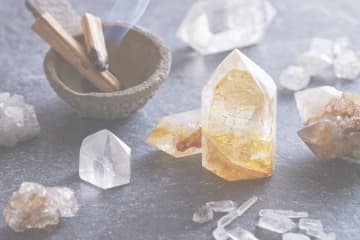
Hematoid Quartz is a variety of mineral quartz (SiO₂) that gets its characteristic coloring from natural inclusions of hematite (Fe₂O₃). The term "hematoid" derives from the Greek word for blood – and anyone who has ever held an intensely red Iron Quartz in their hands understands this association immediately.
The formation of these inclusions is geologically well documented. Hematoid Quartz forms predominantly in hydrothermal quartz veins. In this process, iron compounds oxidize into hematite during or after the crystallization phase. These hematite particles deposit within the growing quartz crystals – either as fine dots, as flat clouds, or as clearly defined veins. The result is a mineral with a glassy to silky luster and a transparency that ranges, depending on the hematite content, from translucent to nearly opaque.
The Mohs hardness of 7 makes Hematoid Quartz a robust collector's stone. Important deposits are located in Brazil, Madagascar, the United States, and Switzerland. Each region of origin brings a slightly different color character. Brazilian stones often show strong reddish-brown tones, while specimens from Switzerland are often more finely patterned.
Our team of longtime mineralogists and collectors at Crystal Paradise pays particular attention, when selecting stones, to specimens where the hematite pattern is unmistakable and expressive. For us, that's the first quality criterion – even before size or shape.
Quality Criteria: How Do I Recognize High-Quality Hematoid Quartz?
Not all Hematoid Quartz is the same. There are significant quality differences that affect beginners and experienced collectors alike. When buying, we rely on four criteria, which we share transparently here.
Color intensity: The red to brown hematite veins should be clearly visible and evenly distributed within the quartz. Pale, barely recognizable coloring indicates a low hematite content. Particularly high-quality pieces show deep contrasts between the clear quartz and the intense iron inclusions.
Clarity of the quartz material: The quartz itself should appear transparent to translucent. Cloudy, dull-looking quartz material significantly diminishes the visual effect of the hematite pattern.
Growth structure: For crystal points, a straight, undamaged termination is the most important feature. For clusters, the stability of the crystal group counts. Loose, broken crystal points or glued spots are clear downgrading criteria.
Weight and substance: More solid stones with good density appear more impressive in direct comparison. An unusually light stone for its size can indicate porous or heavily fractured material.
So you can truly assess every stone before making a decision, we at Crystal Paradise offer 360° photos of all one-of-a-kind pieces. What you see is exactly what you get. No sample images, no surprises.
Hematoid Quartz Forms: Cluster, Point, Raw Form
Hematoid Quartz is available in various growth forms. Which one is right for you depends on collecting interest, display space, and personal taste.
Cluster: Crystal groups made of multiple intergrown individual crystals. Clusters offer the greatest visual variety in the smallest space – the hematite pattern spreads across many crystal faces, creating a lively overall appearance. They are especially suited for display cases and as a stable collector's base. We check every cluster for base stability and intactness of the crystal points.
Points (individual crystals): Prismatic single crystals with a clearly formed termination. They appear more graphic and can be placed deliberately. In good specimens, the hematite inclusions are often especially impressive when viewed with light shining through. Look for an undamaged point – that's the main quality criterion for this form.
Raw pieces: Natural, unpolished pieces straight from the deposit. They retain the mineral's original surface and appeal to collectors who appreciate the raw stone character. On rough surfaces, the hematite structures are sometimes even more clearly visible than on polished faces.
If you're interested in the different quartz varieties overall, you'll find helpful orientation on various quartz types and their characteristics in our lexicon article Clear Quartz or Rose Quartz: Which One Fits?.
Why Collect Hematoid Quartz in the Fall?
Fall is traditionally the season when collectors reassess and expand their collections. That's not only because of the longer evenings, which allow more time for organizing, photographing, and cataloging. It's also due to the colors of the season itself.
The warm earth and red tones of Hematoid Quartz harmonize noticeably well with fall decor, wood surfaces, and the softer light of these months. Stones that may have seemed too restless in summer take on a different presence in fall. Warm iron tones and cool quartz transparency create a contrast that stands out particularly well by candlelight.
For collectors who organize their collections thematically, Hematoid Quartz offers a natural bridge between mineral quality and decorative integration into the home. It's a stone that never goes out of style – because its coloring grew geologically and is therefore timeless.
Fall months are also the time when trade shows and shipments from the countries of origin often become more frequent. We actively use this period for new purchases – which means our selection of Hematoid Quartz is often particularly freshly stocked in the fall.
Crystal Paradise One-of-a-Kind Pieces: Direct Origin and Transparency
What sets Crystal Paradise apart when purchasing Hematoid Quartz is direct access to suppliers in the countries of origin. We work with trustworthy partners from Brazil and Madagascar – without multiple intermediaries in between. This has practical consequences: we know where a stone comes from. We can trace origin and quality. And we can reject pieces that don't meet our selection criteria – without pressure from a long supply chain.
Every Hematoid Quartz that comes into our shop is personally inspected. We document every stone with 360° photos. You see exactly the piece you're buying – no stand-in images, no surprises when unpacking.
Many of our Hematoid Quartz pieces are true one-of-a-kind specimens: once sold, not available again. That's not a sales tactic, but geological reality – no stone grows the same way twice.
If you're also interested in other quartz varieties and want to understand how different stones are used in different contexts, it's worth taking a look at our article Cleaning & Charging Rose Quartz – The Guide. The care principles described there for quartz can generally be applied to other quartz varieties as well.
Transparency about origin is not a marketing promise for us, but part of the purchasing process. We name deposits because we know them – not because it sounds good.
Frequently Asked Questions About Hematoid Quartz
Is Hematoid Quartz the Same as Iron Quartz?
Yes, Hematoid Quartz and Iron Quartz are synonyms. Both terms describe quartz with hematite inclusions. Iron Quartz is the more mineralogically common designation, while Hematoid Quartz is the term more frequently used in trade and among collectors. The stones behind them are identical.
How Does High-Quality Hematoid Quartz Differ From Lower-Quality Hematoid Quartz?
High-quality stones show intense, evenly distributed hematite veins and transparent to translucent quartz material without fractures. Lower-quality specimens appear cloudy, have uneven or pale coloring, or show hidden cracks. Especially with clusters, it's worth carefully checking the base and the crystal points.
Can I Display Hematoid Quartz in the Sun?
Yes, Hematoid Quartz is generally sun-resistant. The red coloring comes from hematite – an iron oxide that does not fade from light exposure. Direct sunlight can, however, warm the stones. Anyone wanting to protect sensitive wood surfaces should place them in more moderately lit spots.
How Do I Recognize Fake or Treated Hematoid Quartz?
Genuine Hematoid Quartz has naturally grown hematite structures: irregularly distributed and varying in density and shape. Fake or treated stones often appear too uniformly colored or show artificial-looking, symmetrical patterns. At Crystal Paradise, we source stones directly from vetted partners – authenticity is not an optional feature for us.
Are Larger Hematoid Quartz Pieces Automatically More Valuable?
No. Size is a factor, but not the decisive one. The quality of the hematite pattern, the clarity of the quartz material, and the intactness of the growth form play an equally important role. A small, perfectly patterned crystal with intense coloring can be significantly more interesting to a collector than a large, cloudy piece with weak hematite distribution.

Leave a comment
This site is protected by hCaptcha and the hCaptcha Privacy Policy and Terms of Service apply.