







Which healing stone can protect and support me in times of change?
Labradorite as a Protective Stone in Times of Change – What's Behind the Shimmer?

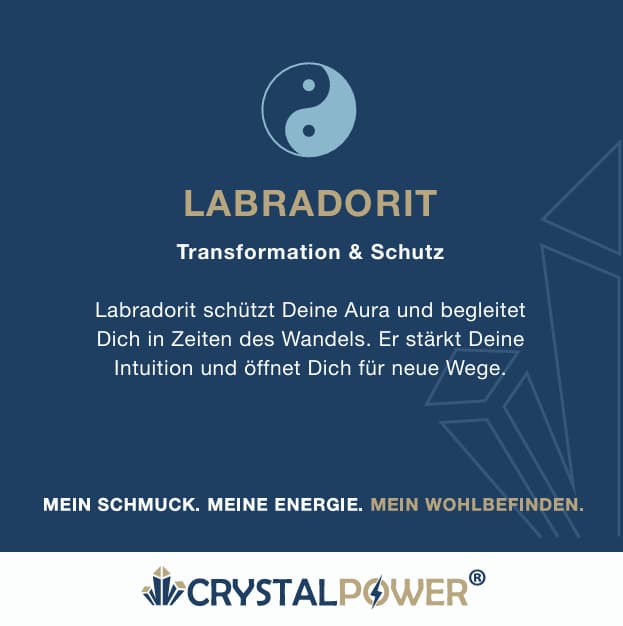
The Labradorite protective stone is considered in crystal healing lore to be one of the most effective companions during phases of transition. In short: Labradorite is a feldspar mineral with a hardness of 6 to 6.5 on the Mohs scale. It is known for its characteristic play of colors – the so-called labradorescence. Traditionally, it is said to shield the aura and to serve as an inner anchor in times of change. This makes it, for many people, the ideal spiritual companion when life is undergoing fundamental change.
Change can be exhausting. A new job, a breakup, a move – or simply the feeling that something is shifting within you. It is precisely in such moments that many people look for an anchor point. Healing stones like labradorite can serve as a symbolic and energetic companion – not as a substitute for professional support, but as a daily reminder of one's own inner strength.
Labradorite: Mineralogical Classification and Origin
Labradorite belongs to the plagioclase group within the feldspar family. Its chemical composition ranges between albite (NaAlSi₃O₈) and anorthite (CaAl₂Si₂O₈). The stone forms in igneous rocks, particularly in gabbros and basalts, but also in metamorphic rocks.
The stone owes its name to the Labrador Peninsula in Canada, where it was first scientifically described in 1770. Today, the most significant deposits come from:
- Madagascar – known for intense color play in blue, green, and gold
- Finland – spectrolite, a particularly colorful variety
- Canada (Labrador) – the namesake origin
- Russia – especially from the Karelia region
- Mexico and Australia – less common, but of high quality
The optical phenomenon of labradorescence arises from the refraction of light on thin layers inside the stone. This effect is unique in mineralogy and makes each stone a true one-of-a-kind piece. In our showroom in Feldkirchen near Munich, we see every day how customers become speechless at the first sight of a high-quality labradorite – the play of colors seems almost alive.
Labradorite Protective Stone: What Crystal Lore Says
In crystal healing lore, labradorite is traditionally considered one of the strongest protective stones of all. This mainly concerns a specific kind of protection: protecting one's own energy against outside influences.
Aura Protection and Energetic Shielding
According to tradition, labradorite is said to form a protective shell around the aura. It is called a "guardian stone" that is said to prevent foreign energies from entering one's own energy field. This is especially recommended for people who are easily influenced by other people's moods or who feel drained after social situations.
You can find more on the energetic protective effect in our detailed article: Labradorite as a Protective Stone – Aura & Boundaries.
Change and Transformation
Labradorite is traditionally said to accompany transitional phases. In traditional crystal lore, it is considered the "stone of change." According to spiritual tradition, it is said to support letting go of old structures and opening up to the new. At the same time, it is said to sharpen intuition – a valuable impulse when important decisions must be made during a phase of change.
If you're interested in the connection between intuition and inner guidance, we recommend our article: Healing Stones for Intuition and Femininity – What Tradition Says.
Mental Clarity in Uncertain Times
In crystal healing lore, labradorite is also considered clarifying for the mind. According to tradition, it is said to support organizing thoughts and focusing on what matters most. Especially in phases when a lot is happening at once, many people appreciate this symbolic anchor. Our article introduces other stones associated with mental clarity: Healing Stones for Clarity – Tradition and Meaning.
Using Labradorite in Everyday Life – Practical Tips
From years of experience working with healing stones, we at Crystal Paradise know: regular, conscious interaction with a stone is key to its personal effect. Here are concrete ways you can integrate labradorite into your everyday life:
- As a pocket stone – Carry a small labradorite stone in your pants pocket or handbag. This way it's always present.
- As jewelry – Rings, pendants, or bracelets with labradorite allow for continuous skin contact.
- At the workplace – A labradorite freeform on the desk is regarded in crystal lore as a symbol of calm and focus and can serve as a silent companion throughout the day.
- While meditating – Hold the stone in both hands during meditation and consciously direct your intention.
- Under the pillow – Traditionally, it is recommended to place labradorite near the head at night to support dream work.
Take a look at our handpicked Labradorite Freeforms – each piece is a one-of-a-kind with an individual play of colors and comes from controlled trade.
Caring for Your Labradorite – How to Keep the Stone in Top Condition

Labradorite, with a hardness of 6 to 6.5, is relatively durable but still sensitive to scratches from harder minerals. Additionally, intense UV radiation can affect the play of colors over the long term. You should keep these care tips in mind:
- Clean labradorite with lukewarm water (no more than 30 °C) and a soft cloth.
- Do not use aggressive cleaning agents or ultrasonic cleaners.
- Store the stone separately from harder minerals like quartz (hardness 7).
- Avoid prolonged direct sunlight – a spot in partial shade is ideal.
- Cleanse it energetically on a regular basis, for example with incense smoke or under running water.
Detailed instructions for energetic cleansing can be found in our overview: Cleansing Healing Stones – How to Properly Discharge and Clear Crystals.
Which Other Stones Complement Labradorite in Times of Change?
Labradorite doesn't have to work alone. In crystal healing lore, it is traditionally combined with other stones said to bring similar or complementary qualities. Proven combinations according to tradition are:
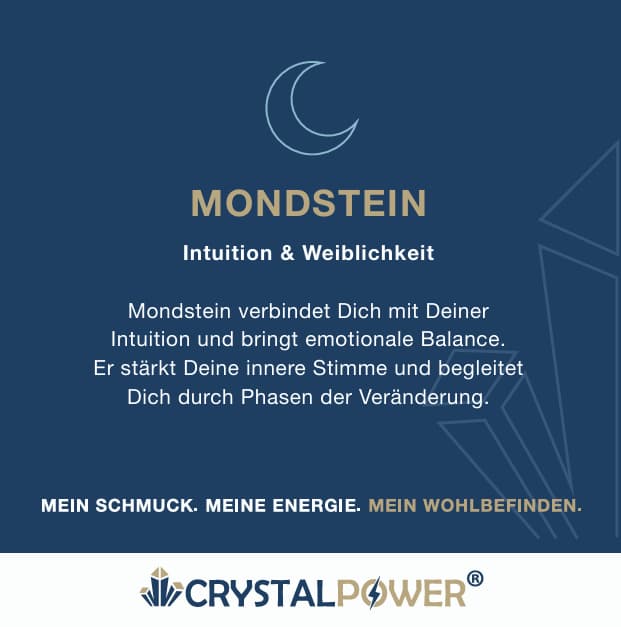
- Moonstone – said, according to tradition, to enhance intuition and emotional sensitivity.
- Smoky quartz – said to keep one grounded and reduce stress.
- Black tourmaline – considered a classic protective stone against negative energies.
- Amethyst – traditionally associated with inner calm and transformation.
According to an overview by the mineral database Mindat, labradorite belongs to the silicate class and was first described in detail mineralogically in 1780 – a stone with a long history and well-established scientific classification.
Information on the mineral classification of feldspars is also offered by the Mineralienatlas, one of the most extensive German-language mineral databases.
Crystal Paradise Recommendation: Experience Labradorite in Person
We recommend, from our own experience: anyone who truly wants to feel labradorite should hold it in their hand in person at least once. In our showroom in Feldkirchen near Munich (just a few kilometers from downtown Munich), we show you handpicked pieces – from small pocket-stone formats to impressive freeforms to polished spheres with an intense play of colors.
Alternatively, you'll find a curated selection of Bestseller Healing Stones on our site, which have proven especially popular in times of change – with detailed descriptions and transparent origin information.
Frequently Asked Questions

Why is labradorite considered a protective stone?
In crystal healing lore, labradorite is traditionally said to be a protective stone because, according to tradition, it is said to form a kind of shield around the aura. It is said to help shield one's own energy field from outside influences and to reduce emotional exhaustion caused by foreign energies. Mineralogically speaking, labradorite is a feldspar with a hardness of 6 to 6.5 and a unique optical phenomenon – labradorescence.
How do I best wear labradorite during phases of change?
The most direct way is to wear it as jewelry – pendants or bracelets allow for continuous contact. Alternatively, a small pocket stone is suitable for on the go. Conscious intention is important: hold the stone in both hands in the morning, take a deep breath, and mentally formulate what you wish for the day. This small ritual routine can be a powerful daily reminder of your inner strength.
How does labradorite differ from moonstone?
Both stones belong to the feldspar family and display a special play of light. Moonstone shows the so-called adularescence phenomenon – a milky-white shimmer. Labradorite, on the other hand, produces labradorescence with intense blue, green, and gold tones. In crystal healing lore, moonstone is traditionally said to have a stronger connection to femininity and emotionality, while labradorite is more associated with protection, transformation, and intuition.
Do I need to clean labradorite regularly?
In crystal healing lore, it is considered advisable to clean healing stones regularly – depending on how often they are used, weekly or monthly. For labradorite, incense smoke, running water, or placing it on clear quartz are suitable methods. Be sure not to use water warmer than 30 °C and not to leave the stone in the sun

Written by Christian Neumayer

Leave a comment
This site is protected by hCaptcha and the hCaptcha Privacy Policy and Terms of Service apply.