







Rock crystal - fascinating and versatile gemstone
Rock Crystal: Definition, Properties, and Fascinating Variety

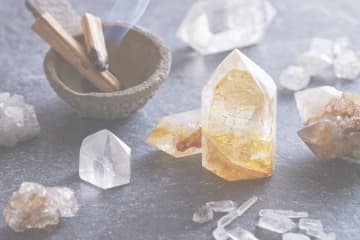
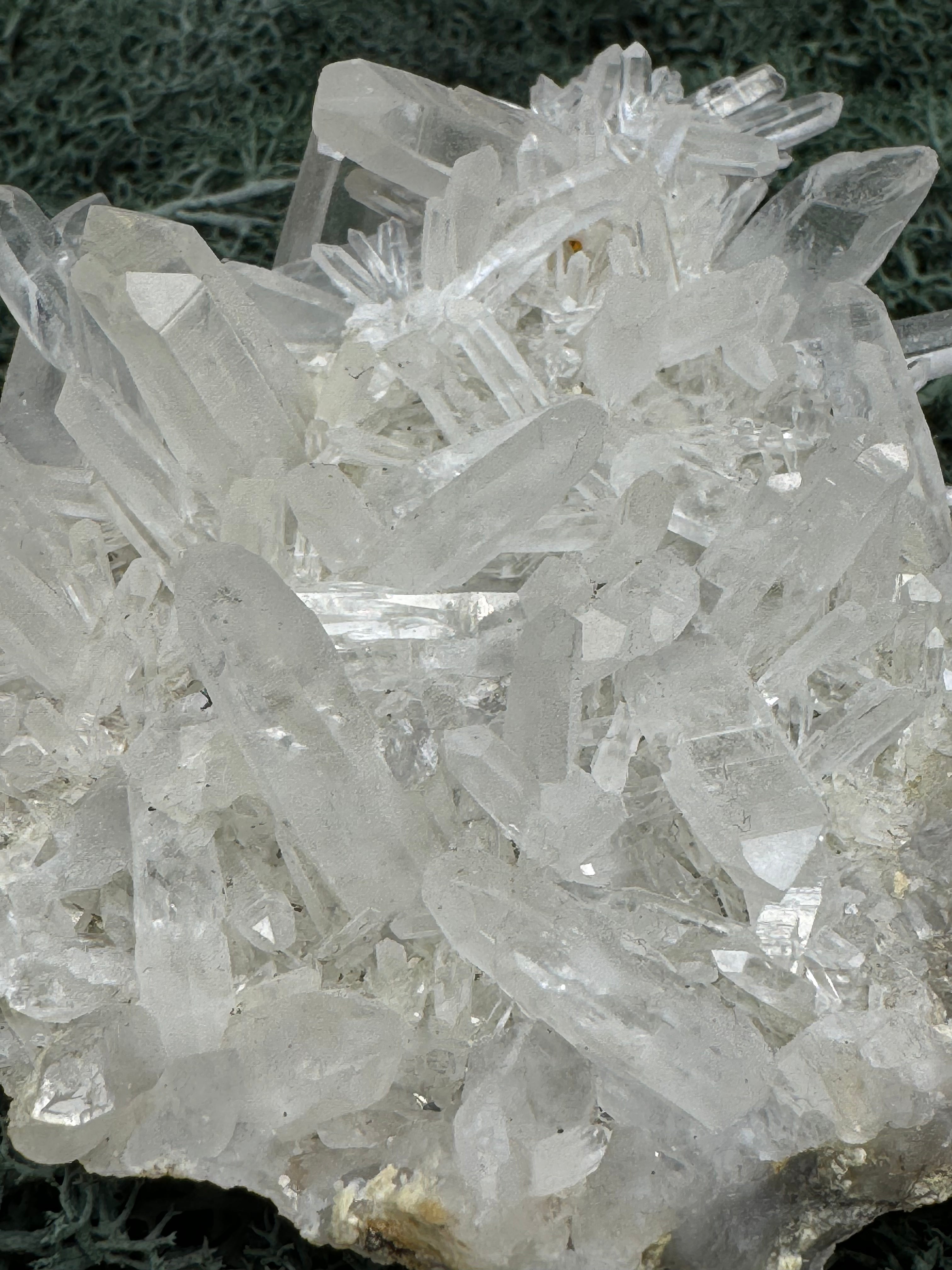
Rock crystal is a colorless, transparent variety of the mineral quartz (SiO₂) with a Mohs hardness of 7 and a trigonal crystal system. It is one of the most common minerals in the Earth's crust and forms in hydrothermal veins at temperatures between 100 and 300 °C. Despite its widespread occurrence, rock crystal has fascinated people for millennia with its glass-clear purity, characteristic six-sided prisms, and unique inclusions. In this article, you'll learn everything essential – from geology and origin to spiritual traditions and care and purchase.
Mineralogical Fundamentals of Rock Crystal
Rock crystal belongs to the quartz group and is chemically pure silicon dioxide. Its crystal structure is trigonal-trapezohedral. It grows in six-sided prisms terminated by rhombohedra. These natural points are its unmistakable feature.
According to the renowned mineralogical database Mindat.org, quartz is one of the most frequently documented minerals worldwide – with over 40,000 documented localities. This global distribution makes rock crystal an ideal entry-level stone for collectors and mineral enthusiasts alike.
Physical Properties at a Glance
- Chemical formula: SiO₂ (silicon dioxide)
- Hardness: 7 on the Mohs scale
- Density: 2.65 g/cm³
- Refractive index: 1.544–1.553
- Crystal system: Trigonal
- Color: Colorless to slightly milky white
- Luster: Vitreous luster on prism and fracture surfaces
Rock crystal is piezoelectric. This means: it generates a measurable electrical voltage under mechanical pressure. This property makes it industrially significant – for example in quartz watches, oscillators, and ultrasound devices. The piezoelectric effect was first demonstrated by the brothers Pierre and Jacques Curie in 1880. To this day, quartz remains one of the most widely used technical minerals in the world.
Inclusions Make Every Stone Unique
Many rock crystals grow together with other minerals. These inclusions are particularly appealing both mineralogically and visually:
- Rock crystal with epidote: Green, needle-shaped inclusions – a rare interplay of two minerals. Discover our rock crystals with epidote.
- Rock crystal with schorl (tourmaline): Black tourmaline needles in clear quartz create dramatic contrast pieces. Here you'll find our rock crystals with schorl tourmaline.
- Rock crystal with pyrite: Golden shimmering pyrite crystals inside create a metallic shine effect.
- Rutilated quartz: Golden or reddish rutile needles – commonly known as "Venus hair."
These combinations occur when other minerals become trapped during crystal growth. Collectors especially value such unique pieces.
Regions of Origin: Where Does Rock Crystal Form?
Rock crystal is found on all continents. Quality and appearance vary greatly depending on the locality.
Classic Alpine Occurrences
The Swiss and Austrian Alps have been considered legendary localities since the Middle Ages. Swiss "Strahler" – professional crystal hunters – find exceptionally clear specimens at altitudes above 2,000 meters. Well-known localities include the Haslital in the Bernese Oberland and the Zillertal in Tyrol. Alpine rock crystals are distinguished by their exceptional purity and often remarkable size. In our shop you'll find hand-selected alpine rock crystals sourced directly from these regions.
International Occurrences
Besides the Alps, the following regions produce high-quality specimens:
- Brazil (Minas Gerais): The largest source of rock crystal worldwide. Huge specimens and pointed crystals of impressive quality form here.
- Madagascar: Known for exceptionally clear single crystals and rare special forms.
- USA (Arkansas): The so-called "Quartz Capital of the World" has produced rock crystal in industrial quantities since the 1930s.
- China and India: Supply affordable mass-produced goods, but also selective quality pieces for specialty retailers.
- Colombia and Peru: High-quality Andean crystals with characteristic growth features and natural surfaces.
In our showroom in Feldkirchen near Munich, you can hold and compare pieces from these localities in person. From years of experience in the mineral trade, we recommend: always pay attention to provenance information and avoid offers without traceable locality documentation.
Rock Crystal in Crystal Healing and Spirituality

Rock crystal holds deep symbolic meaning in many cultures. In ancient Greece, it was believed to be frozen water – hence the name "krystallos" (Greek for ice). Japanese shamans used it in rituals. Medieval healers attributed purifying powers to it – a tradition passed down through many cultures and centuries. Even in antiquity, it was a valuable trade good, transported over thousands of kilometers.
Spiritual Traditions
In crystal healing, rock crystal is traditionally regarded as a universal amplifier. According to traditional lore, it is said to promote clarity and inner focus. It is traditionally attributed with sharpening awareness and supporting inner balance. Many practitioners use it specifically in meditation – learn more in our article on Rock Crystal Meditation & Use.
Its clear, pure appearance makes it a symbol of purity and truth in many spiritual traditions. According to traditional lore, it is said to help order thoughts and gain new perspectives.
Rock Crystal vs. Amethyst: Which Suits You?
Rock crystal and amethyst are frequently compared. Both are quartz – yet their symbolism and appearance differ significantly. You'll find a detailed comparison in our blog article: Amethyst or Rock Crystal – Which Suits You Better?
The significance of quartz in spiritual and cultural practices is also scientifically documented – for example in the standard gemological reference work of the Gemological Institute of America (GIA), which describes quartz as one of the most culturally significant minerals in human history.
Care, Cleaning, and Charging of Rock Crystal
With proper care, your rock crystal retains its brilliance permanently. The good news: it's robust and easy to maintain.
Cleaning
Thanks to its hardness of 7, rock crystal can be easily cleaned with lukewarm water and a soft cloth. Avoid aggressive cleaning agents and ultrasonic cleaners. These can damage fine inclusions. Remove stubborn deposits carefully with a soft toothbrush.
For energetic cleansing, practitioners recommend various methods: moonlight, smudging, or briefly soaking in saltwater. However, saltwater is not suitable for crystals with delicate inclusions. Detailed information can be found in our article Cleaning & Charging Rock Crystal.
Storage
Store rock crystals separately from softer minerals. Quartz with a hardness of 7 easily scratches softer stones like calcite (hardness 3) or fluorite (hardness 4). A soft cloth or a padded box reliably protects both your rock crystal and other collector's pieces.
Caution with Heat
Rock crystal is light-insensitive – unlike amethyst, which can fade under strong UV exposure. Extreme temperature fluctuations above 50 °C should nevertheless be avoided. Thermal stress can cause fine cracks inside the crystal.
Buying Rock Crystal: Forms and Uses
Rock crystal is available in many processed forms. Each form has its own aesthetic character:
- Points: The classic shape with a natural or polished tip. Ideal for shelves, altars, or as an energy focus. Discover our rock crystal points.
- Spheres: Perfectly polished spheres – elegant, decorative, and a highlight of any collection. Here you'll find the rock crystal spheres.
- Slices: Thin quartz slices with visible internal structure – modern and decorative at the same time.
- Jewelry: Pendants, rings, and bracelets made of genuine rock crystal as portable companions for everyday life.
- Specimens and rough pieces: Natural specimens with original crystal faces and maximum authenticity.
In our showroom in Feldkirchen near Munich, we always keep a curated selection from all categories on hand. We recommend: buy in person whenever possible – the feeling of holding a stone in your hand cannot be replaced by any product photo.
Frequently Asked Questions

How Can I Identify Genuine Rock Crystal?
Genuine rock crystal feels cold and warms up slowly. Glass imitations, on the other hand, warm up noticeably faster. Rock crystal has a hardness of 7 and easily scratches glass. Growth lines visible with a magnifying glass, natural inclusions, or slight clouding are signs of authenticity. Glass imitations are usually too perfect – without any internal structure. When in doubt, always buy from a specialized dealer with traceable provenance documentation.
Which Forms of Rock Crystal Are Most Valuable?
Value depends on clarity, size, origin, and inclusions. Particularly valuable specimens are alpine rock crystals with documented locality as well as pieces with rare inclusions such as rutile needles, epidote, or schorl tourmaline. Large, glass-clear single crystals from Switzerland or Austria can command prices in the four-figure range. Mass-produced crystals from Brazil are

Written by Christian Neumayer
%20with%20a%20Mohs%20hardness%20of%207%20and%20a%20trigonal%20crystal%20syste...)
Leave a comment
This site is protected by hCaptcha and the hCaptcha Privacy Policy and Terms of Service apply.