







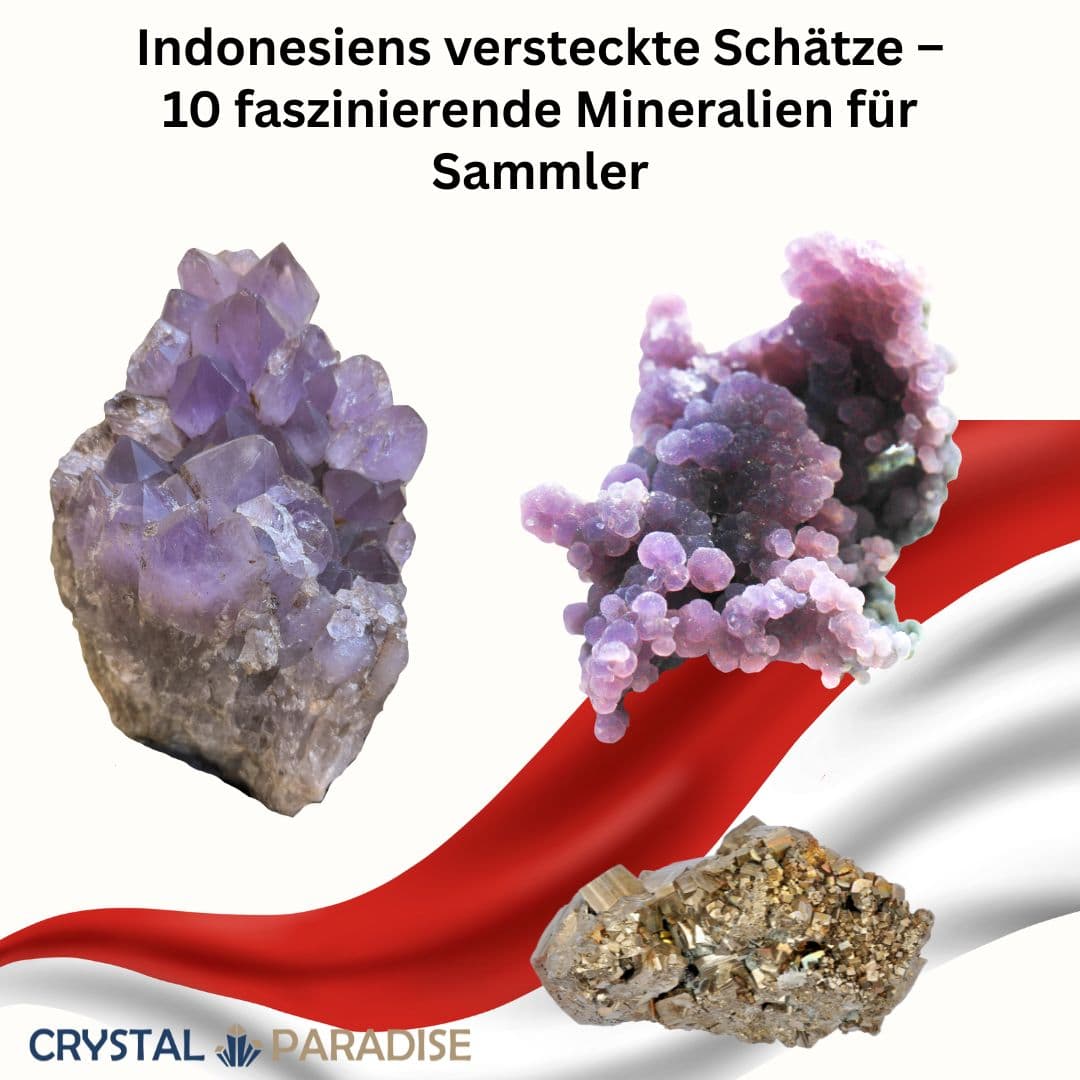
Indonesia's hidden treasures – 10 fascinating minerals for collectors
Minerals from Indonesia – Why the Archipelago is a Treasure Trove for Collectors

Indonesia consists of more than 17,000 islands and is one of the mineralogically richest regions on Earth. The archipelago lies within the so-called Pacific Ring of Fire – a zone of intense volcanic and tectonic activity. These very geological forces have, over millions of years, given rise to extraordinary minerals from Indonesia. Sulfides, silicates, oxides, and rare phosphates grow here under extreme conditions into specimens and crystal clusters that make collectors' hearts beat faster worldwide. Anyone searching for the finest examples will find a curated selection of handpicked unique pieces in our collection "Buy Minerals from Indonesia".
Why Minerals from Indonesia Are So Special – An Overview of the Geology
Indonesia borders three major tectonic plates. The Eurasian, the Australian, and the Pacific Plate meet here. These collisions generate enormous pressures and temperatures often exceeding 600 °C deep within the Earth. Hydrothermal springs transport mineralized solutions through cracks in the rock. As they cool, rare mineral forms crystallize.
The islands of Java, Sumatra, Sulawesi, Borneo, and Papua are especially mineral-rich. Papua produces world-class specimens from the Grasberg complex. Sulawesi is known for spectacular nickel minerals. Java and Sumatra mainly yield sulfides and halides.
From our own experience, we at Crystal Paradise know: Indonesian minerals repeatedly captivate visitors at trade shows with their unusual crystal shapes and intense coloration. They are especially sought after by advanced collectors.
10 Fascinating Minerals from Indonesia – The Finest Treasures at a Glance
1. Stibnite (Antimonite) – Mirror-Bright Needles from Java
Stibnite is an antimony sulfide with the chemical formula Sb₂S₃. It has a Mohs hardness of only 2. Nevertheless, it grows into impressive, metallic-silvery needle crystals. Indonesian specimens from Java often show crystal lengths of up to 20 centimeters. In traditional stone lore, stibnite is associated with transformation and clarity. You can learn more about this fascinating stone in our blog article about antimonite.
2. Rhodonite – Deep Red Manganese Silicate
Rhodonite is a chain silicate with a hardness of 5.5 to 6. Its typical color ranges from bright pink to deep carmine red, streaked with black manganese inclusions. Sulawesi produces rhodonite specimens of impressive quality. In traditional stone lore, rhodonite is considered a stone of emotional balance and inner strength.
3. Pyrite – Golden-Gleaming Cubic Crystals
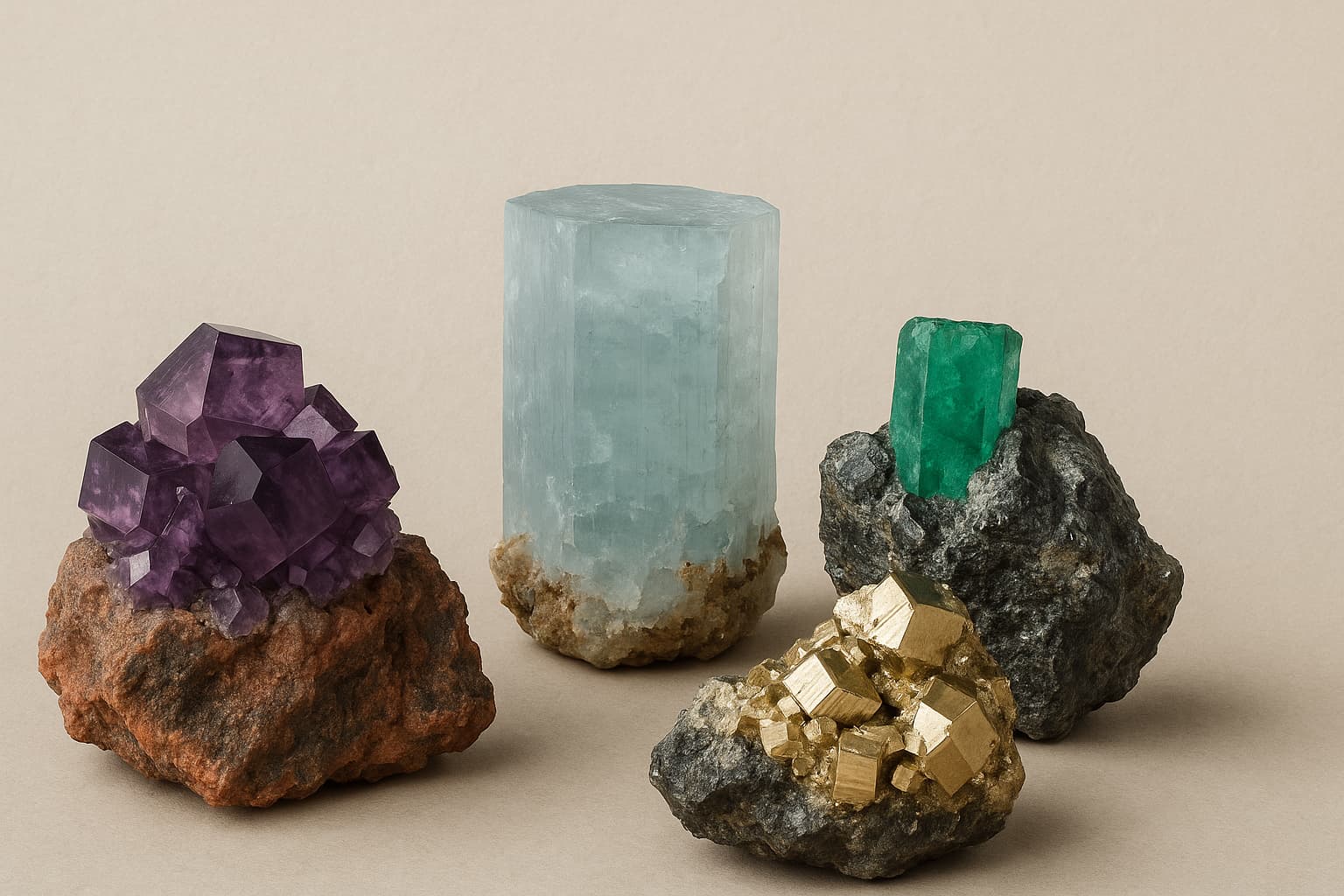
Pyrite – also called "fool's gold" – is an iron disulfide (FeS₂) with a hardness of 6 to 6.5. On Sumatra, pyrite forms perfect cubic crystals with mirror-smooth surfaces. Its bright golden-yellow color historically deceived even experienced miners. Pyrite has been revered since antiquity as a symbol of protection and strength.
4. Arsenopyrite – Metallic Luster with Rarity Value
Arsenopyrite (FeAsS) has a hardness of 5.5 to 6 and displays typical rhombic crystal shapes. Indonesian specimens from Borneo stand out for their knife-sharp metallic luster. The stone is a coveted collector's item that rarely occurs in museum quality.
5. Wulfenite – Orange Plates from Ore Rock
Wulfenite is a lead molybdate (PbMoO₄) with a hardness of only 2.75 to 3. It forms characteristic square to rectangular plates in orange, yellow, or red. Deposits in West Papua produce specimens of exceptional transparency. Wulfenite is considered by collectors to be one of the most photogenic minerals of all.
6. Chalcopyrite – Colorful Iridescent Crystal
Chalcopyrite (CuFeS₂) is the world's most important copper ore. With a hardness of 3.5 to 4, it shows a golden-yellow to brassy shimmer. Weathering produces brilliant iridescence in blue, purple, and green – a true spectacle of nature. Indonesian finds from Java impress with their intense richness of color.
7. Prehnite – Mint-Green Collector's Favorite
Prehnite is a calcium-aluminum silicate with a hardness of 6 to 6.5. The mint-green to yellowish-green geodes appear almost translucent. Deposits on Java produce specimens that reflect light like tiny lanterns. In traditional stone lore, prehnite is associated with inner calm and foresight.
8. Niccolite (Nickeline) – A Rarity from Sulawesi
Niccolite is a nickel arsenide (NiAs) with a hardness of 5 to 5.5. Its copper-red color is unmistakable. Sulawesi is one of the world's most significant deposits for nickel minerals. Niccolite is rare and especially prized by experienced collectors.
9. Calcite – Highly Varied and Loved Worldwide
Calcite (CaCO₃) occurs on nearly every Indonesian island. Crystal forms range from pointed scalenohedra to flat rhombohedra. Indonesian calcite often shows milky to honey-yellow tones. With a hardness of exactly 3, it is easy to work with and popular in lithotherapy.
10. Hematite – Deep Red Luster from Volcanic Rock
Hematite (Fe₂O₃) has a hardness of 5.5 to 6.5. On Sumatra, it forms mirror-like, rosette-shaped crystal clusters. Its name derives from the Greek word for blood. In traditional stone lore, it is considered a grounding companion with a stabilizing effect.
Tips for Buying and Caring for Indonesian Minerals

Anyone wishing to purchase Indonesian minerals should keep a few important points in mind. We recommend the following approach:
- Check authenticity: Buy only from certified dealers with traceable provenance information.
- Examine crystal structure: Natural growth faces, inclusions, and irregularities are signs of genuine natural unique pieces.
- Mind storage: Never store delicate minerals such as stibnite (hardness 2) together with harder stones.
- Cleaning: Never place sulfides like pyrite and chalcopyrite in water – they oxidize. Dusting with a soft brush is sufficient.
- Test UV reaction: Some calcite specimens from Indonesia fluoresce in astonishing colors under UV light. More on this in the article The Magic of UV Minerals.
- Display: Minerals with metallic luster (pyrite, arsenopyrite) look especially striking as eye-catchers against a dark background.
Advanced collectors will find further practical guidance in our blog article "Choosing Minerals for Collectors the Right Way".
Where to Buy Indonesian Minerals – Our Recommendations
In our showroom in Feldkirchen near Munich, collectors can hold Indonesian specimens in their own hands. Years of experience in the mineral trade have taught us: no photo can replace the direct experience of a crystal. Light, weight, and surface texture only fully reveal themselves in the showroom.
Those who want to browse online will find a wide selection under Minerals from Indonesia as well as in the overview category Minerals from Around the World. For beginners, we also recommend the category Minerals for Beginners – there you'll find well-labeled specimens with brief explanations of origin and mineral type.
An independent scientific classification of Indonesia's geology is provided by the Mineralogical Society of Great Britain & Ireland. Extensive data on individual mineral species is offered by the globally recognized database Mindat.org – the world's largest free mineral information portal.
Frequently Asked Questions

Which minerals from Indonesia are especially suitable for beginners?
Calcite and pyrite are ideal starter stones. Calcite is affordable, highly varied, and easy to find. Pyrite impresses with its golden luster and perfect crystal structure. Both minerals occur in Indonesia in fine quality and are robust enough for everyday handling.
Is it legal to acquire Indonesian minerals?
Yes, commercial trade in minerals from Indonesia is legal, as long as no protected nature reserves are affected and export regulations are complied with. Crystal Paradise sources its pieces exclusively from vetted suppliers with complete proof of origin.
How do I care for delicate sulfides such as stibnite from Indonesia?
Stibnite should never come into contact with water. Clean it with a soft, dry brush. Store it separately in a box with foam padding. Direct sunlight can cause the surface to tarnish. A cool, dry, and light-protected storage location is ideal.
What sets Indonesian minerals apart from other localities worldwide?
Indonesia lies within the Pacific Ring of Fire. The tectonic activity produces unusually rapid crystallization processes. This often results in crystal forms not found in Europe or Africa. Sulfides and arsenides in particular show a metallic brilliance that is unmatched worldwide.
Which Indonesian minerals make a good gift?
Prehnite geodes and rhodonite specimens make ideal gifts. They are visually appealing, affordable, and carry a positive emotional meaning in stone lore. Pyrite cubes as small table sculptures delight both collectors and people who simply appreciate something beautiful from nature.
Note: The effects mentioned are spiritual traditions without scientific evidence. Crystal Paradise sells minerals and crystals as collector's items and decorative objects. They are not a substitute for medical advice or treatment.

Written by Christian Neumayer

Leave a comment
This site is protected by hCaptcha and the hCaptcha Privacy Policy and Terms of Service apply.