











Rock Crystal: Formation & Geological Origin
Rock Crystal:
Formation & Geological Origin
How hot water and silicon create one of the world's clearest crystals — millions of years of geology in one stone.
Mineralogical Basics
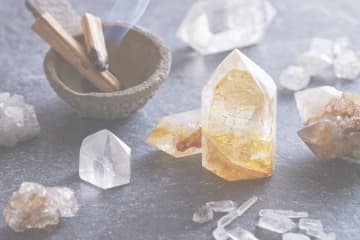
Rock crystal is the colorless, transparent variety of the mineral quartz and belongs to the mineral class of oxides. Its chemical formula is SiO₂ — silicon dioxide in its purest form. Its exceptional clarity arises because hardly any foreign atoms are incorporated into the crystal lattice.
Mineralogical Key Data — Rock Crystal (Quartz, SiO₂)
Chemical Formula
SiO₂
Mineral Class
Oxides
Crystal System
Trigonal
Mohs Hardness
7
Density
2.65 g/cm³
Refractive Index
1.544 – 1.553
Color
Colorless, water-clear
Crystal Shape
Hexagonal prism with pyramidal termination
Quartz is, alongside feldspar, the most common mineral in the Earth's upper crust and occurs in numerous varieties: amethyst (purple), smoky quartz (brown), rose quartz (pink), or citrine (yellow). All these varieties share the same basic chemical structure — the difference lies in tiny admixtures of foreign atoms or lattice defects altered by radiation. Rock crystal, however, contains hardly any impurities, which is why it appears almost completely transparent.
The Formation Process: Step by Step
The formation of a rock crystal is a geological process that can take hundreds of thousands to millions of years, depending on the conditions. At its core, it is a hydrothermal crystallization process.
Frequently Asked Questions about Rock Crystal Formation
How does rock crystal form?
Rock crystal forms through hydrothermal processes: Silicon dioxide (SiO₂) dissolves in hot, pressurized water and crystallizes upon cooling in fissures and cavities in the rock. This process takes millions of years.
What is the difference between rock crystal and quartz?
Rock crystal is the colorless, transparent variety of the mineral quartz (SiO₂). All rock crystals are quartz — but not all quartz are rock crystals. Amethyst, smoky quartz, rose quartz, and citrine are also quartz, but are colored by foreign atoms or lattice defects.
How long does rock crystal take to grow?
Discover Rock Crystal
Carefully selected rock crystals in all forms — or let our healing stone finder advise you.
| To the Collection | Healing Stone Finder |